
Nepal Airlines A330 Grounded at Tokyo Narita: Himalayan Flight Disruption Guide 2026

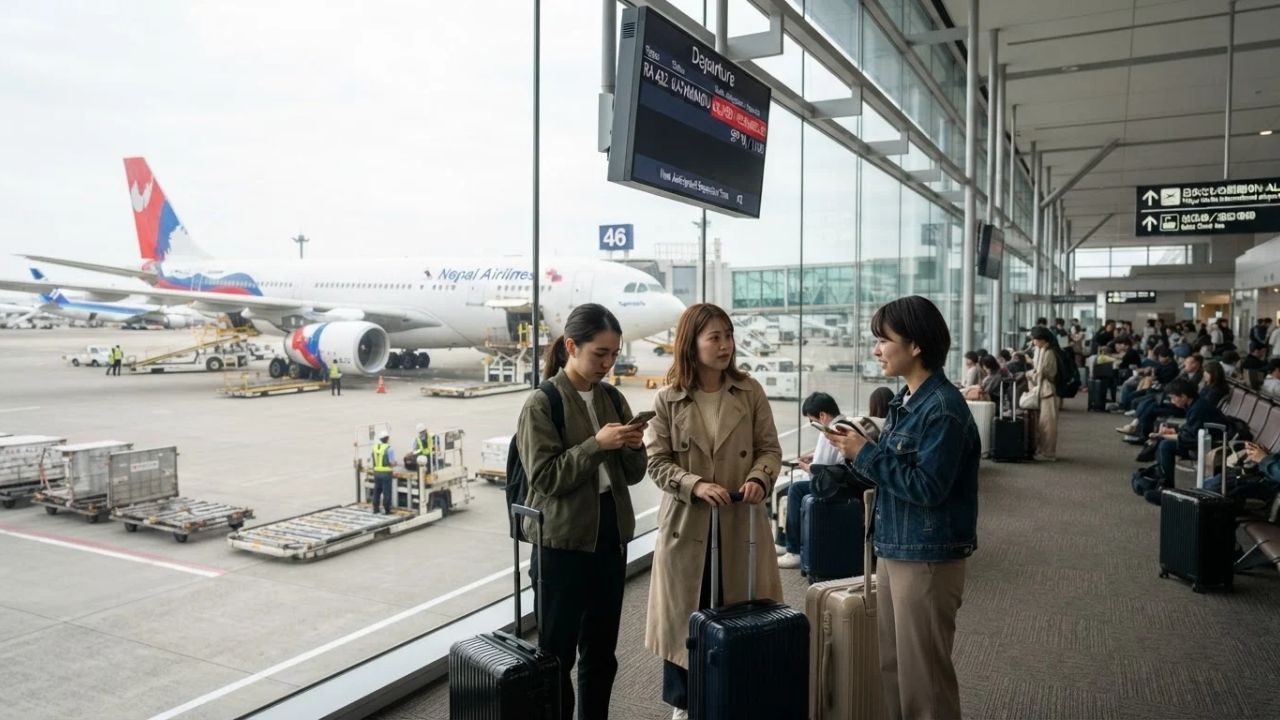
Few international flight routes rely on a narrower operational margin than the direct link between Tokyo and Kathmandu, where a single damaged turbine blade can bring an entire trans-Asian air bridge to an abrupt halt. On September 15, 2026, Nepal Airlines grounded its Airbus A330 at Tokyo’s Narita International Airport after engineers discovered damage to one of the 26 fan blades inside its No. 2 engine, immediately stranding 226 passengers and setting off rolling cancellations that ripple across the Himalayas and the Gulf.
For trekkers, mountaineering expeditions, and families embarking on long-planned autumn journeys, the sudden cancellation of the direct Narita–Kathmandu service transforms a seven-hour direct flight into a multi-day logistical test. With the national flag carrier operating just one active widebody twin-aisle jet across its entire international network, the incident underscores the vulnerability of landlocked mountain nations to supply-chain friction thousands of miles away.
Turbine Trouble at Narita: The Anatomy of a Long-Haul Grounding
The grounded aircraft had completed its routine outbound rotation from Tribhuvan International Airport in Kathmandu, touching down at Narita on Sunday night. Trouble surfaced during mandatory pre-departure airworthiness inspections ahead of its scheduled Monday return flight, which was slated to depart Tokyo at 10:30 a.m. local time and arrive in Kathmandu around 3:00 p.m.
Routine borescope checks and visual inspections revealed that one blade among the 26 precision fan blades in the aircraft’s No. 2 engine was damaged beyond operational limits. Aviation safety regulations enforced by Japan's Civil Aviation Bureau and international regulators strictly prohibit commercial passenger operations under such conditions until the blade is extracted, inspected, and replaced with an airworthy, certified component.
Because Nepal Airlines maintains no dedicated maintenance base or spare parts inventory in Japan, technical teams immediately began exploring emergency procurement channels. Mechanics in Tokyo worked to establish whether a compatible replacement blade could be sourced locally from Japanese inventory or through regional carriers such as Thai Airways, or whether a replacement assembly would have to be flown directly from Kathmandu.
To prevent passengers from waiting indefinitely in terminal concourses, Nepal Airlines issued an official schedule revision on September 14:
- Flight RA433, originating from Kathmandu to Narita and originally scheduled for September 15, was deferred to September 17 with a planned departure at 10:30 p.m. local time.
- Flight RA434, the return sector from Narita to Kathmandu originally booked for September 16, was postponed to September 18 at 10:30 a.m. local time.
The disruption left 226 ticketed travelers at Narita needing immediate re-accommodation, while throwing downstream itineraries into disarray.
What Makes the Tokyo–Kathmandu Air Corridor Unique
The direct flight between Tokyo and Kathmandu is far more than a typical commercial connection. It represents the only nonstop aerial gateway between Japan and Nepal, serving a vibrant mix of Japanese Himalayan trekking groups, Nepalese diaspora professionals, academic researchers, and high-altitude development specialists.
The core challenge facing Nepal Airlines is an acute shortage of long-haul airframes. While the carrier’s fleet roster officially records four aircraft, only two are widebody Airbus A330s. According to reporting from The Kathmandu Post, the airline's second A330 has been out of service in Italy undergoing extended heavy maintenance to rectify an engine C-duct malfunction. With that aircraft unavailable, the grounding of the sister A330 at Narita completely exhausted the carrier's international widebody capacity.
The operational shockwave quickly spread beyond East Asia. Simultaneously on September 14, Nepal Airlines published disruption notices affecting its high-volume Doha route, where 269 passengers faced severe delays on services between Qatar and Kathmandu. With both long-haul routes reliant on the same airframe rotations, a mechanical fault on the runway at Narita instantly compromised the carrier’s Middle Eastern schedule.
For international travelers holding separate domestic tickets in Nepal—such as Twin Otter flights to Lukla for the Everest Base Camp trek or turboprop hops to Pokhara for the Annapurna Circuit—missing the Kathmandu arrival window risks invalidating peak-season trail permits, scheduled trekking guides, and prepaid tea-house lodges.
Visitor Insider Tips
When unexpected technical groundings disrupt journeys through Tokyo Narita or Kathmandu Tribhuvan, knowing how to pivot quickly can protect your travel investment and transform downtime into an unplanned cultural exploration.
First, take control of airport re-accommodation in Japan. Narita International Airport (NRT) is situated roughly 60 kilometers outside central Tokyo. Instead of waiting inside sterile terminal boarding areas, take a 10-minute taxi ride or local train to Narita City. Visit the magnificent 1,000-year-old Narita-san Shinsho-ji temple complex, renowned for its towering pagodas and serene forested gardens. Along the historic Omotesando street leading to the temple, sample freshly grilled unagi (freshwater eel) prepared over binchotan charcoal at historic ryokans that have served pilgrims for centuries.
Second, protect your Himalayan connecting arrangements. If your flight to Kathmandu is delayed by 48 hours, immediately notify your trekking agency or domestic airline in Nepal. Regional carriers such as Yeti Airlines and Buddha Air frequently allow ticket rescheduling for minimal change fees if contacted before scheduled flight times, but classify passengers as "no-show" if informed after departure.
Third, explore transit rail options from Narita. If you need to stay in Tokyo proper during an extended delay, use the Keisei Skyliner from Narita Terminal 1 or 2 to reach Ueno in just 36 minutes, or the JR Narita Express to reach Tokyo Station and Shinjuku. Secure an electronic Suica or Pasmo digital transit pass on your smartphone for effortless subway and convenience store payments across the metropolitan area.
Fourth, understand airline passenger assistance policies. Under Japanese civil aviation guidelines and international conventions, airlines encountering mechanical disruptions provide meal vouchers, hotel accommodation, and communication support for affected international travelers. Keep all receipts for food, local transit, and emergency lodging in Narita or Tokyo for travel insurance reimbursement claims.
Cultural and Environmental Context
The autumn season in Nepal marks the sacred period of Dashain and Tihar, alongside the opening of the premier high-altitude trekking window across the Himalayas. For thousands of Nepalese expatriates working in Japan, flying home in September is a cherished annual homecoming to celebrate ancient family rituals in ancestral mountain villages.
Simultaneously, conservation in the shadow of Mount Everest relies heavily on well-managed tourist flows. Sacred valleys and historic settlements protected by UNESCO World Heritage—including the Kathmandu Valley's medieval Durbar Squares and the pristine alpine expanses of Sagarmatha National Park—depend on tourism revenues to fund earthquake reconstruction and biodiversity monitoring. The Nepal Tourism Board collaborates with local Sherpa communities to balance trekking permits with environmental preservation.
In Japan, sustainable travel promoted through the Japan National Tourism Organization highlights rural heritage conservation and community-run craft traditions. When long-distance transit pauses due to technical bottlenecks, travelers gain a firsthand reminder of the delicate mechanical infrastructure that unites these contrasting cultural worlds. A single turbine blade forged from titanium alloys embodies the complex global supply chain required to bridge the ancient traditions of Japan's forested shrines with the soaring granite peaks of the Himalayas.
FAQ: Visiting Nepal and Japan Flight Disruptions 2026
What caused the Nepal Airlines grounding at Tokyo Narita on September 15, 2026? Engineers discovered damage to one fan blade inside the No. 2 engine of Nepal Airlines' Airbus A330 during pre-flight inspections, grounding the aircraft until certified replacement parts and airworthiness checks could be completed.
What is the revised schedule for the affected Narita–Kathmandu flights? Flight RA433 from Kathmandu was rescheduled to September 17 at 10:30 p.m., while the return service RA434 from Narita was rescheduled to depart on September 18 at 10:30 a.m. local time.
What should travelers do if their Kathmandu domestic connection is missed? Contact your domestic Nepalese carrier or trekking agency immediately to roll over mountain flight tickets to Pokhara or Lukla. Inform lodge operators to preserve peak-season accommodations and trekking guide bookings.
What can travelers visit near Narita Airport during extended flight delays? Take a 10-minute train ride to Narita City to explore the historic Narita-san Shinsho-ji temple, stroll the traditional Omotesando merchant avenue, and savor authentic grilled unagi without traveling into central Tokyo.
In the high mountains as on the tarmac, patience is not merely a virtue—it is the quiet compass that guides every traveler safely home.
Related Travel Guides
Disclaimer
This article is for informational and educational purposes only. It does not constitute legal, financial, or professional advice. While we strive to provide accurate and up-to-date information, travel policies, regulations, and conditions change rapidly. Always verify information with official sources before making travel decisions. Nomad Lawyer makes no representations about the accuracy, reliability, completeness, or suitability of the information provided. Readers should consult qualified professionals for advice specific to their circumstances. The views expressed in this article are those of the author and do not necessarily reflect the views of Nomad Lawyer.
Raushan Kumar
Founder & Lead Developer
Full-stack developer with 11+ years of experience and a passionate traveller. Raushan built Nomad Lawyer from the ground up with a vision to create the best travel and law experience on the web.
Learn more about our team →