
Iran and Turkey to Construct Khavaran-Tabriz-Marand-Cheshmeh Soraya Cross-Border Railway in 2026
Iran and Turkey are advancing the Khavaran–Tabriz–Marand–Cheshmeh Soraya railway project to create a strategic transit bridge between Asia and Europe, expanding regional freight capacity.
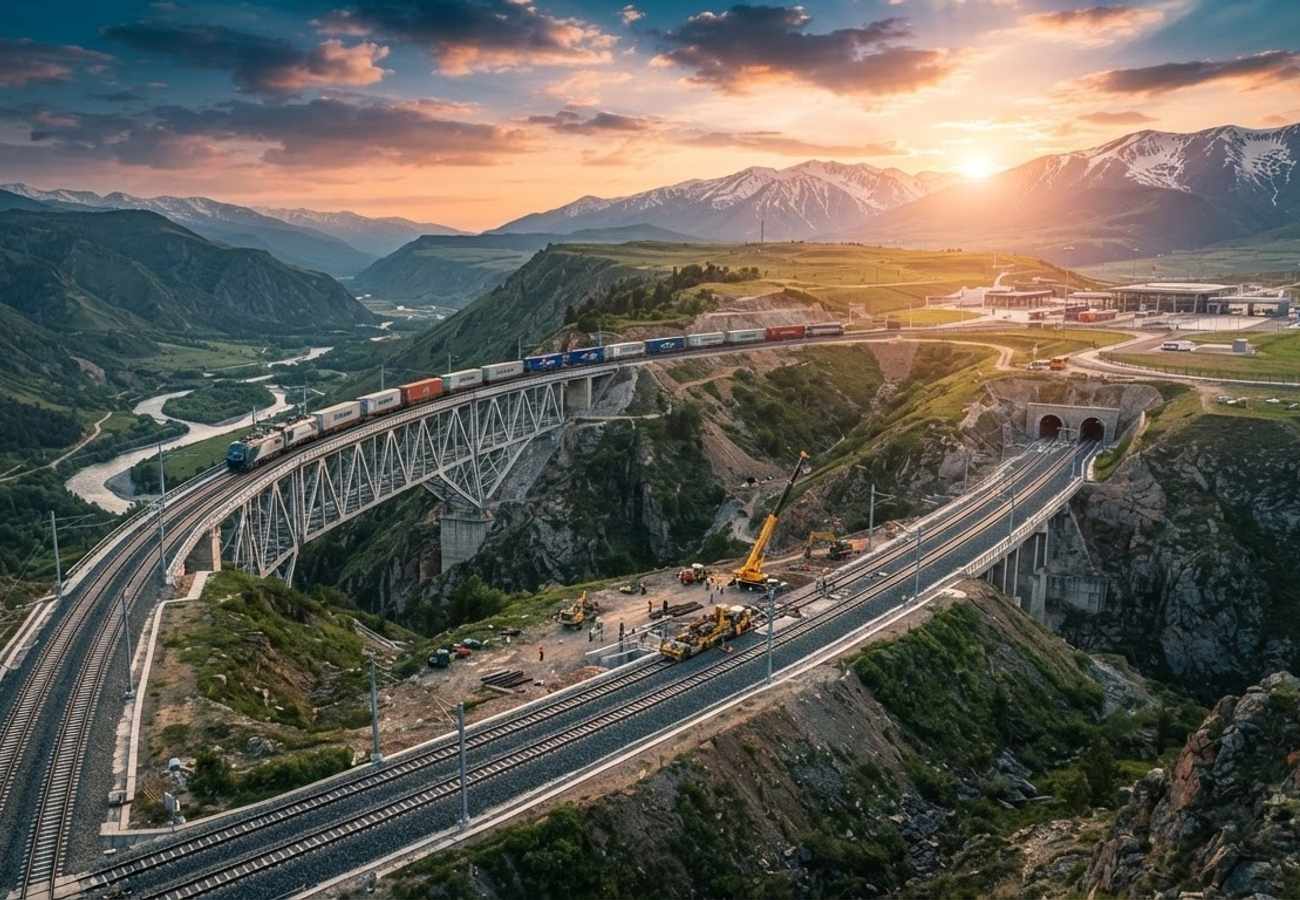
Image generated by AI
Iran and Turkey are initiating the construction of a major trans-border railway corridor designed to link the two nations' rail networks and solidify Iran's role as a primary transport bridge between Asia and Europe.
The project, centered on the Khavaran–Tabriz–Marand–Cheshmeh Soraya corridor, has moved into the execution phase following the completion of preliminary technical assessments and government approvals. This infrastructure development aims to diversify regional transport options and increase the volume of railway trade between eastern and western markets.
The development will utilize an Engineering, Procurement, and Construction (EPC) framework. Under this model, final contractual requirements and detailed engineering studies will be completed immediately before construction begins across multiple designated sites.
Project Specifications and Route Alignment
The corridor is not a standalone local project but a critical segment of Iran's broader east-west rail strategy. It is designed to link the northeastern region near Sarakhs with the northwestern border areas adjacent to Turkey.
To ensure operational efficiency and safety, the project has adopted uniform engineering standards. This consistency is required to integrate the new line seamlessly into the wider national and international network.
Core Technical Details:
- Project Name: Khavaran–Tabriz–Marand–Cheshmeh Soraya railway.
- Final Route Length: 324 kilometres.
- Previous Estimate: 294 kilometres (revised for technical standardization).
- Execution Model: Engineering, Procurement, and Construction (EPC).
- Primary Objective: Establishment of a new rail gateway via the Cheshmeh Soraya border crossing.
Corridor Logistics and Regional Impact
By establishing a secondary cross-border route, the project intends to alleviate congestion on existing transport channels. For freight operators, this means more reliable transit times and a reduction in bottlenecks at current border crossings.
The expansion is expected to stimulate economic growth in the regions flanking the corridor. Local logistics services, industrial hubs, and commercial operations will gain direct access to international markets, potentially attracting new foreign investment into the northwestern Iranian and eastern Turkish border zones.
Strategic Infrastructure Data
| Feature | Detail |
|---|---|
| Total Distance | 324 km |
| Key Border Point | Cheshmeh Soraya |
| Connecting Hubs | Khavaran, Tabriz, Marand |
| Strategic Link | Sarakhs (NE) to Turkey (NW) |
| Framework | EPC (Engineering, Procurement, Construction) |
Why This Matters: Industry Analysis
From a logistical perspective, this project is less about passenger travel and more about the "Middle Corridor" strategy. Our analysis of the route map suggests that by adding the Cheshmeh Soraya gateway, Iran reduces its dependency on a single point of failure for Turkey-bound freight.
For trade analysts, the shift from 294 km to 324 km is significant. It indicates a move toward "standardized corridors," meaning the rail will likely support heavier axle loads and higher speeds, making it competitive with road haulage. This move directly challenges the dominance of trucking for trans-continental cargo by offering a more sustainable, high-capacity alternative.
The real impact for businesses will be the reduction in transit volatility. By creating a redundant path between Asia and Europe, the corridor provides a critical hedge against geopolitical or technical disruptions at other border crossings.
Forward Outlook
Expect the immediate next phase to be the signing of the formal construction agreement and the mobilization of EPC contractors. Once the initial segments are operational, the focus will shift to the synchronization of customs procedures at the Cheshmeh Soraya crossing to ensure that the physical infrastructure is matched by administrative efficiency.
A strategic pivot toward rail-centric trade between the Middle East and Europe.
Related Travel Guides
Disclaimer
This article is for informational and educational purposes only. It does not constitute legal, financial, or professional advice. While we strive to provide accurate and up-to-date information, travel policies, regulations, and conditions change rapidly. Always verify information with official sources before making travel decisions. Nomad Lawyer makes no representations about the accuracy, reliability, completeness, or suitability of the information provided. Readers should consult qualified professionals for advice specific to their circumstances. The views expressed in this article are those of the author and do not necessarily reflect the views of Nomad Lawyer.