
Iran-US F-14 Fighter Jets: Cold War Legacy Reshaped Mideast Aviation
Iran's acquisition of US F-14 Tomcat fighters during the Cold War fundamentally altered Iran-United States military relations. This 2026 analysis explores how Tehran obtained and operated these advanced jets despite Washington's opposition, reshaping regional geopolitical dynamics.

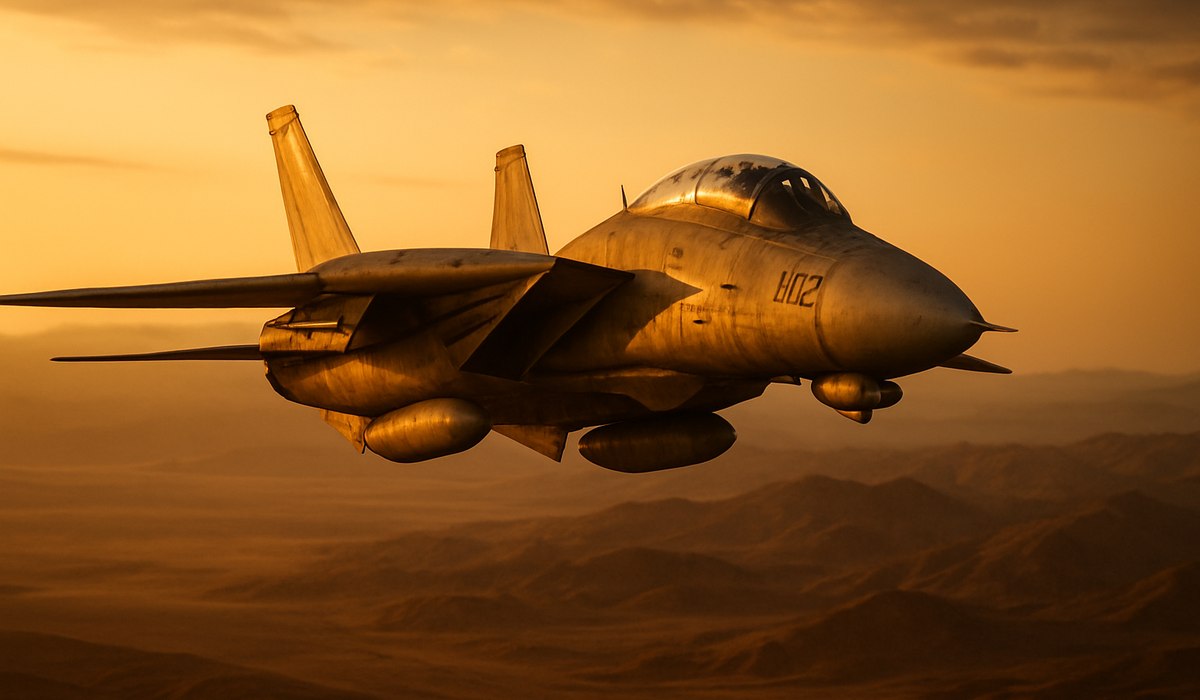
Image generated by AI
Iran's Controversial F-14 Arsenal: A Cold War Strategic Turning Point
Iran's acquisition of the American F-14 Tomcat fighter jets remains one of the most consequential military technology transfers of the Cold War era, fundamentally reshaping Iran-United States relations for decades. When the iron curtain descended across Europe in the late 1940s, both Washington and Moscow raced to fortify their spheres of influence through aggressive armament of allied nations. Iran, occupying a critical geographic position between Soviet Russia and Western interests, became a strategic prize in this ideological competition, ultimately securing one of the world's most sophisticated fighter platforms despite American reservations that would echo through subsequent decades.
The Cold War Arms Race and Iran's Strategic Position
The geopolitical chessboard of the mid-twentieth century positioned the Iran-United States relationship at the epicenter of Cold War calculations. Following World War II's conclusion, the Soviet Union expanded its influence across Eastern Europe and the Middle East, threatening Western petroleum interests and strategic trade routes. The United States, determined to contain Soviet expansion, cultivated client states throughout Asia, Africa, and the Middle East, providing advanced military systems to friendly regimes.
Iran's Shah Mohammad Reza Pahlavi viewed military modernization as essential to maintaining sovereignty amid superpower competition. The Shah pursued relationships with both Western powers and regional allies, systematically building one of the Middle East's most formidable air forces. American defense contractors eagerly supplied advanced weaponry, recognizing Iran as a reliable, well-funded purchaser with ideological alignment against Soviet expansion. This strategic partnership initially flourished, establishing Iran as a bulwark against Soviet regional ambitions and securing critical American military sales contracts worth billions across the 1960s and 1970s.
How Iran Obtained the F-14 Fleet
In 1974, Iran placed the initial order for F-14 fighter jets, acquiring 80 aircraft from Grumman Corporation through formal U.S. government authorization. The decision reflected both Iran-United States strategic alignment and Tehran's determination to possess cutting-edge military technology. The F-14 Tomcat represented the pinnacle of American naval aviation engineering—a twin-engine, variable-sweep wing fighter equipped with advanced radar systems and long-range air-to-air missiles.
Iran's acquisition proved controversial within American defense circles. Critics warned that exporting such advanced systems violated implicit principles of military restraint and created potential for technology proliferation. The Pentagon expressed concern that sophisticated systems, if captured or compromised, could provide adversaries valuable intelligence about American capabilities. However, Cold War logic prevailed: maintaining the Shah's pro-Western regime took precedence over long-term technological security concerns.
Approximately 79 F-14 Tomcats were ultimately delivered to Iran between 1976 and 1979, arriving during the final years of the Shah's rule. Training programs at American military installations prepared Iranian pilots to operate these complex systems. The aircraft came equipped with AIM-54 Phoenix missiles, an advanced radar system capable of engaging multiple targets simultaneously at considerable range—a technological advantage no rival regional power possessed.
Operational History and Current Status of Iran's Tomcats
Following the Iranian Revolution of 1979, the relationship between Iran-United States fundamentally transformed from strategic partnership to open hostility. The new Islamic Republic captured the American embassy, held 52 hostages for 444 days, and severed military ties with Washington. Despite revolutionary upheaval and international isolation, Iran retained control of its F-14 fighter jets, incorporating them into the Revolutionary Guards Air Force.
Iran's Tomcats saw extensive operational use throughout the brutal eight-year Iraq-Iran War (1980-1988). These aircraft achieved documented air-to-air victories, demonstrating superior capabilities against Soviet-supplied Iraqi fighters. Iran developed indigenous maintenance protocols and reverse-engineered components to sustain the fleet despite U.S. embargo restrictions preventing spare parts imports. The Tomcats proved instrumental in defending Iranian airspace and interdicting Iraqi bombing raids.
Over subsequent decades, aging and attrition reduced operational numbers. Decades of conflict, limited maintenance resources, and international sanctions degraded Iran's once-formidable F-14 fleet. By 2026, fewer than a dozen aircraft remain in active service, with many others cannibalized for spare parts or permanently grounded. Successive Iranian administrations attempted modernizing remaining Tomcats with domestic avionics upgrades, achieving only marginal improvements to capabilities that reflected 1970s technology standards.
US Regret and Geopolitical Consequences
American defense establishment decision-makers came to view the Iran F-14 fighter jets sale as a strategic miscalculation with lasting consequences. The 1979 revolution eliminated any possibility of controlling how Tehran wielded these advanced weapons systems. For forty-seven years following the embassy hostage crisis, the United States pursued dual-track policies: maintaining technological embargo restrictions while simultaneously acquiring intelligence about Iranian military capabilities.
The Tomcat transfer exposed vulnerabilities in Cold War-era foreign military sales protocols. Analysts questioned whether Washington had adequately evaluated regime stability before exporting systems capable of projecting power across the Persian Gulf. The experience informed subsequent American defense export policies, establishing stricter oversight mechanisms and requiring contingency planning for potentially hostile acquirers.
Beyond military implications, the Iran-United States relationship's deterioration following the revolution isolated both nations, contributing to regional instability, proxy conflicts, and diplomatic gridlock spanning decades. The F-14 transaction symbolized a broader Cold War calculation that prioritized immediate strategic containment of Soviet influence over long-term geopolitical consequences. Modern analysts increasingly recognize this decision as representative of Cold War logic's limitations—a strategy that achieved short-term tactical objectives while creating enduring strategic complications.
Historical Impact and Regional Aviation Development
Iran's F-14 fighter jets acquisition catalyzed regional military modernization competitions, prompting neighboring states to enhance their air defense systems and fighter acquisitions. Saudi Arabia, Iraq, and other regional powers accelerated weapons procurement programs, intensifying arms race dynamics throughout the Persian Gulf and Middle East.
The incident demonstrated how advanced technology transfers reshape international power balances in ways Cold War policymakers struggled to anticipate. Iran's ability to sustain and operationalize complex American systems despite revolutionary upheaval and international isolation surprised Western strategists. The experience influenced subsequent American decisions regarding military technology exports, contributing to more restrictive policies and enhanced oversight mechanisms.
| Aspect | Details |
|---|---|
| Aircraft Type | Grumman F-14 Tomcat twin-engine fighter |
| Original Order | 80 aircraft (1974) |
| Delivered | Approximately 79 aircraft (1976-1979) |
| Primary User | Islamic Republic of Iran Air Force & Revolutionary Guards |
| Combat Service | Iraq-Iran War (1980-1988) and subsequent operations |
| Current Fleet Status | Fewer than 12 operational by 2026 |
| Key Weapons | AIM-54 Phoenix air-to-air missiles, M61 Vulcan cannons |
| Radar System | AWG-9, advanced for era, multi-target capable |
| Notable Achievement | Documented aerial victories against Iraqi fighters |
| Operational Lifespan | 47+ years, well beyond typical service expectations |
What This Means for Travelers
While historical military developments rarely impact tourist operations directly, understanding regional geopolitical context enhances travel planning for Middle East destinations. Iran's aviation infrastructure reflects Cold War legacies and sanctions-related constraints that affect civilian transportation networks.
Traveler Action Checklist:
- Verify Current Travel Advisories – Consult U.S. State Department, UK Foreign Office, and your home country's travel guidance before booking Iran travel, as geopolitical tensions periodically
Disclaimer
This article is for informational and educational purposes only. It does not constitute legal, financial, or professional advice. While we strive to provide accurate and up-to-date information, travel policies, regulations, and conditions change rapidly. Always verify information with official sources before making travel decisions. Nomad Lawyer makes no representations about the accuracy, reliability, completeness, or suitability of the information provided. Readers should consult qualified professionals for advice specific to their circumstances. The views expressed in this article are those of the author and do not necessarily reflect the views of Nomad Lawyer.
Raushan Kumar
Founder & Lead Developer
Full-stack developer with 11+ years of experience and a passionate traveller. Raushan built Nomad Lawyer from the ground up with a vision to create the best travel and law experience on the web.
Learn more about our team →