
Italy's Easter Travel Nightmare: Milan, Venice, Bologna Airports Implement Fuel Crisis Restrictions Stranding Thousands
Northern Italy's major airports face catastrophic fuel shortage during Easter peak season, forcing urgent restrictions on short-haul flights and threatening thousands of travelers.

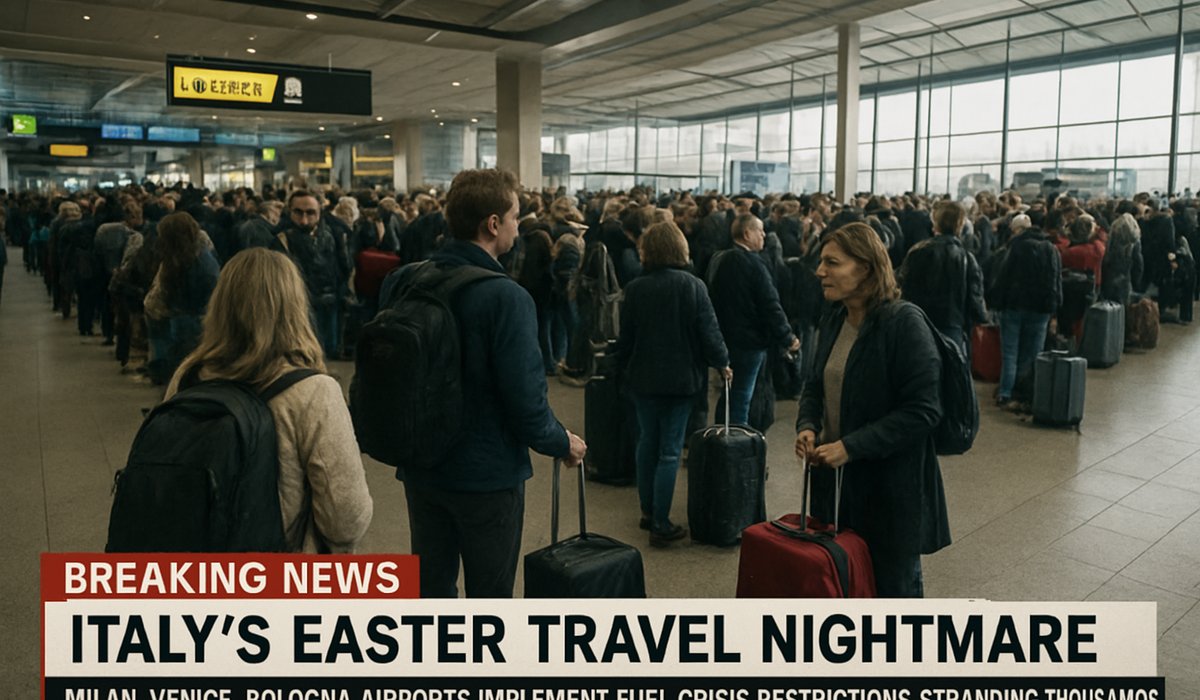
Image generated by AI
Italy is experiencing a catastrophic fuel crisis that has sent shockwaves through Northern Europe's aviation network, with Milan Linate, Venice Marco Polo, Bologna Guglielmo Marconi, and Treviso Antonio Canova airports implementing emergency restrictions that threaten to derail Easter holiday plans for thousands of international travelers. The crisis, triggered by severe logistical disruptions in fuel supply combined with geopolitical tensions affecting global shipping routes, has forced authorities to implement a strict priority system that leaves short-haul passengers facing potential delays, cancellations, and rerouted flights through at least April 9, 2026. As one of Europe's busiest travel periods collides with this unprecedented aviation fuel shortage, travelers heading to or through Northern Italy are bracing for what could become one of the season's most significant travel disruptions.
The fuel shortage gripping Milan, Venice, Bologna, and Treviso airports stems from a perfect storm of supply chain complications and international geopolitical tensions. Air BP Italia, the primary aviation fuel supplier for Northern Italy's critical airport infrastructure, has reported dramatically reduced fuel deliveries due to complications in its supply chain operations. Compounding this domestic crisis, ongoing geopolitical tensions in the Middle East—particularly involving Iran and the closure of the Strait of Hormuz—have forced tankers carrying Jet A1 fuel to Mediterranean refineries to take significantly longer routes, delaying critical fuel supplies to Italian airports at precisely the moment when Easter holiday travel demand reaches its annual peak. According to IATA's latest aviation fuel guidance, such supply chain disruptions can cascade rapidly through interconnected European aviation networks, affecting not just Italian airports but also downstream hubs across the continent.
The restrictions now in place at Milan Linate, Venice Marco Polo, Bologna Guglielmo Marconi, and Treviso Antonio Canova reveal a stark hierarchy of aviation priorities that leaves leisure and short-haul passengers at significant disadvantage. Air ambulances and emergency medical flights have been granted unrestricted fuel access to ensure life-saving operations continue unimpeded, while state and government flights maintain priority status for official missions. Long-haul international flights exceeding three hours of flight time receive preferential fuel allocation, ensuring that passengers on transcontinental routes can reach their destinations without requiring additional refueling stops at the affected Northern Italian airports. However, the situation deteriorates dramatically for short-haul European flights, which face a severe fuel cap of only 2,000 liters per aircraft—a restriction that creates cascading operational challenges when considering that a typical Airbus A320 or Boeing 737 consumes between 2,000 to 3,000 liters per hour of flight time.
For travelers booked on short-haul flights through Milan, Venice, Bologna, or Treviso during this crisis period, the operational implications are severe and multifaceted. Airlines operating these routes must now carry additional fuel onboard—a practice known as tankering—to compensate for the restricted fuel availability at departure airports, which directly reduces passenger capacity and baggage allowances due to weight limitations on aircraft. This fuel management strategy inevitably triggers extended boarding procedures, technical delays, and potential flight cancellations as airlines struggle to balance fuel requirements against payload capacity. Passengers should expect longer airport processing times, possible rerouting through alternative European hubs, and unscheduled technical stops at airports outside the affected region. The Easter holiday period, typically characterized by peak family travel and tourism demand to Italian destinations, now presents a genuine travel nightmare scenario where confirmed bookings offer no guarantee of on-time departure or arrival at intended destinations.
The broader implications of this fuel crisis extend far beyond the immediate inconvenience of delayed Easter travelers. Northern Italy's airports—particularly Milan Linate and Venice Marco Polo—serve as critical connection points for European and international aviation networks, meaning disruptions cascade through the entire continent's flight schedules. Tourism operators, hotel chains, and ground transportation services across Venice, Milan, Bologna, and surrounding regions face potential revenue losses as travelers experience delays or cancellations that disrupt carefully planned holiday itineraries. According to the European Commission's aviation safety guidelines, such supply disruptions can take weeks to fully resolve, particularly when geopolitical factors restrict fuel sourcing options. The ripple effect threatens not only Easter holiday plans but also subsequent weeks of European travel as aircraft positioning and crew scheduling become increasingly complicated by the fuel restrictions.
Travelers currently holding bookings through Milan, Venice, Bologna, or Treviso airports must take immediate action to protect their Easter holiday plans. Contact your airline directly through their official customer service channels to confirm your flight status, understand any potential rerouting options, and clarify baggage policies that may change due to weight restrictions. Build substantial buffer time into your travel schedule—arriving at airports at least three hours before departure for international flights and two hours for European connections—to accommodate extended fuel planning procedures and potential delays. Monitor official updates from the Italian Civil Aviation Authority and your airline's website continuously, as the fuel situation remains fluid and subject to rapid changes. Consider travel insurance that covers airline disruptions and cancellations, and maintain flexibility in your accommodation and onward travel arrangements to accommodate potential schedule changes. If your flight faces cancellation or significant delay, understand your rights under EU Regulation 261/2004, which mandates airline compensation for eligible disruptions regardless of fuel supply circumstances.
The fuel crisis affecting Milan, Venice, Bologna, and Treviso airports represents a convergence of supply chain vulnerability and geopolitical instability that has exposed critical weaknesses in Europe's aviation infrastructure during peak travel periods. As restrictions remain in effect through at least April 9, 2026, the situation demands constant vigilance from travelers, airlines, and airport authorities. The Easter holiday season, meant to bring joy and family reunions across Europe, now carries the shadow of potential travel chaos and disruption. Passengers are strongly advised to maintain continuous contact with their airlines, stay informed through official aviation authority channels, and prepare for the possibility of significant schedule modifications. This crisis serves as a stark reminder that even in modern, interconnected Europe, geopolitical tensions and supply chain disruptions can rapidly transform routine holiday travel into a genuine logistical nightmare.
Related Travel Guides
Disclaimer
This article is for informational and educational purposes only. It does not constitute legal, financial, or professional advice. While we strive to provide accurate and up-to-date information, travel policies, regulations, and conditions change rapidly. Always verify information with official sources before making travel decisions. Nomad Lawyer makes no representations about the accuracy, reliability, completeness, or suitability of the information provided. Readers should consult qualified professionals for advice specific to their circumstances. The views expressed in this article are those of the author and do not necessarily reflect the views of Nomad Lawyer.
Raushan Kumar
Founder & Lead Developer
Full-stack developer with 11+ years of experience and a passionate traveller. Raushan built Nomad Lawyer from the ground up with a vision to create the best travel and law experience on the web.
Learn more about our team →