
Intra-Asia Travel Boom 2026: High-Speed Bullet Trains, 10-Second Biometric Borders, and 24-Hour Metropolises
Intra-Asia city travel is undergoing a monumental shift. High-speed rail corridors, automated biometric borders, 24-hour urban nightlife laws, and regional nomad visas are turning multi-country itineraries into seamless overland journeys.

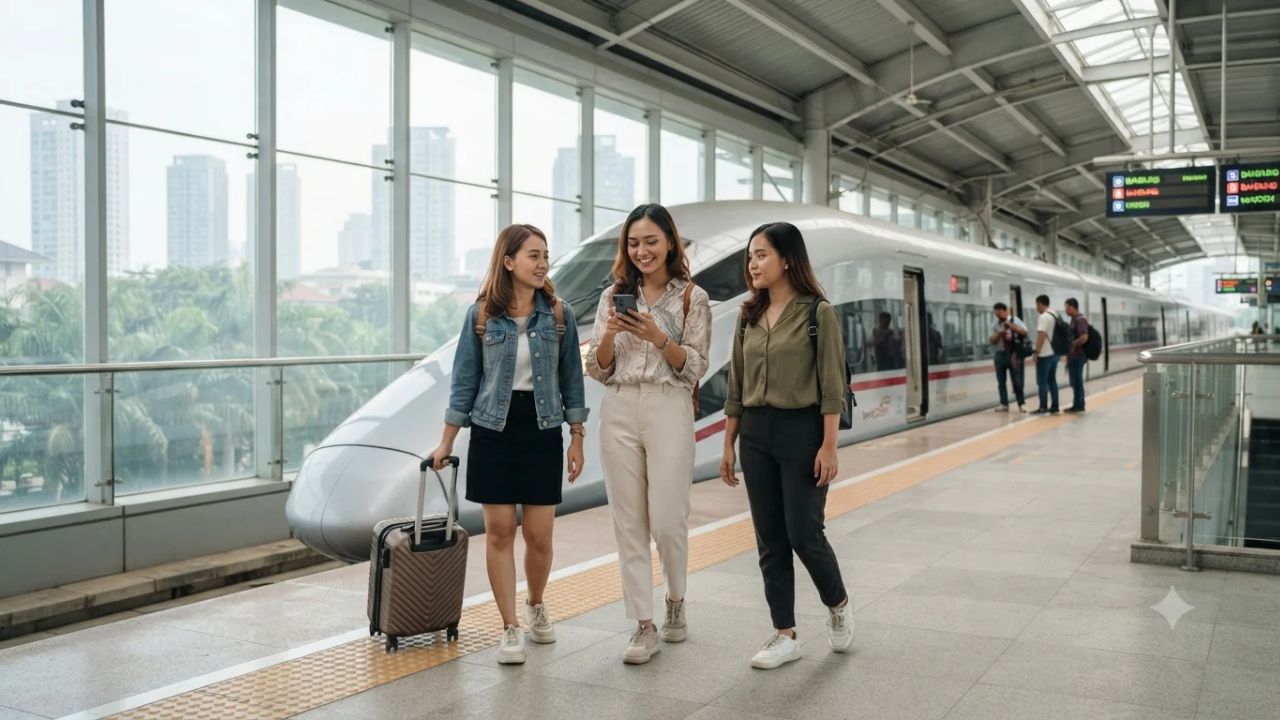
Over 400,000 international travelers bypassed Indonesia’s highway gridlock aboard Southeast Asia’s first 350 km/h bullet train in 2025 alone, marking an epochal transition in how people navigate Asia’s metropolises. The traditional model of booking disconnected short-haul flights between isolated national capitals has collapsed, replaced by high-speed overland arteries, 10-second passport-free airport gates, and night-transit systems that keep major cities running around the clock.
Across East, Southeast, and South Asia, the friction of international travel is disappearing faster than anywhere else on earth. Multi-modal railway networks are linking industrial capitals directly to cultural mountain highlands and heritage coasts. At the same time, municipal governments are extending public transit deep into the early morning hours to support after-hours creative economies, while progressive visa policies allow remote professionals to settle in secondary cities. For travelers on the ground, the result is an unprecedented level of regional mobility.
The High-Speed Rail Corridors Reshaping Overland Journeys
Ground transportation across Asia is no longer a slow alternative to flying; on several high-density routes, it has become the faster, more practical option. In Indonesia, the Jakarta–Bandung high-speed line—branded as Whoosh and operated by PT Kereta Cepat Indonesia China (KCIC)—demonstrates this shift. Stretching 142.3 kilometres from Halim Station in East Jakarta to Tegalluar Summarecon in West Java, the train reaches operational speeds of 350 kilometres per hour, shrinking a punishing three-hour highway drive into a 45-minute sprint.
Official KCIC operational figures reveal that 401,282 foreign nationals rode Whoosh in 2025, representing a 59.5% surge compared to the 251,525 international passengers recorded in 2024. Total network ridership exceeded 5.1 million passengers between January and October 2025, touching single-day records of 24,350 travelers during regional holiday peaks. Malaysian visitors form the single largest overseas group, accounting for nearly 300,000 journeys in 2025 and booking over 1,150 seats daily, followed closely by travelers from Singapore, mainland China, Japan, and South Korea. At Padalarang Station, an 18-minute dedicated feeder rail delivers passengers directly into central Bandung, enabling business delegations and weekend travelers to attend day conferences in West Java and sleep in Jakarta.
Further north, continental integration is linking mainland Southeast Asia. The State Railway of Thailand (SRT) centralized its trunk lines at Krung Thep Aphiwat Central Terminal in Bangkok, launching regular cross-border passenger train services to Vientiane, the capital of Laos. Operating as Train No. 133, the overnight Rapid train departs Bangkok at 21:25 and pulls into Khamsavath Station in Vientiane at 09:05 the next morning, covering 650 kilometres in 11.5 hours. Customs and immigration clearance is integrated between Nong Khai on the Thai side and Khamsavath in Laos. This service interfaces directly with the standard-gauge Boten–Vientiane railway, allowing travelers to journey from Bangkok through northern Laos toward southwestern China entirely on tracks.
In Peninsular Malaysia, Keretapi Tanah Melayu Berhad (KTMB) operates the Electric Train Service (ETS) along the electrified western spine at speeds up to 160 kilometres per hour. In 2025, the ETS transported 4.17 million passengers, building on 4.70 million nationwide intercity trips in 2023, with daily ridership ranging between 16,400 and 22,100 trips. The Malaysian Ministry of Transport is deploying ten new Class 94 trainsets under an RM400 million investment to expand capacity to 7.5 million annual riders. As double-tracking reaches Johor Bahru Sentral, it will link directly with Singapore via the upcoming RTS Link, establishing an uninterrupted passenger corridor connecting Singapore, Kuala Lumpur, and Bangkok.
| Urban Rail Corridor | Route Distance & Operating Speed | Average Transit Duration | 2025 Passenger Metric | Key Cross-Border / Regional Connection |
|---|---|---|---|---|
| Whoosh HSR (Indonesia) | 142.3 km @ up to 350 km/h | 45 minutes | 401,282 foreign riders (5.1M+ total Jan–Oct) | Jakarta Halim to Tegalluar + 18-min Bandung feeder |
| SRT Train 133 (Thailand–Laos) | 650 km overnight rail corridor | 11 hours 40 minutes | High second-class sleeper occupancy | Bangkok Krung Thep Aphiwat to Vientiane Khamsavath |
| KTMB ETS (Malaysia) | West Coast Spine @ up to 160 km/h | 4 hours (KL to Butterworth) | 4.17 million annual passengers | KL Sentral to Penang, extending south to Johor Bahru |
Contactless Biometrics and Ten-Second Border Clearances
The physical acceleration of rail corridors is matched by rapid digital upgrades at international aviation gateways. Long customs lines are being replaced by automated biometric recognition gates powered by facial recognition and iris scans.
At Singapore Changi Airport, the Immigration & Checkpoints Authority (ICA) completed the rollout of passport-free border gates across all four passenger terminals under its New Clearance Concept. By capturing multi-modal biometric data, average traveler processing times fell from 25 seconds to approximately 10 seconds. Over 93 million outbound passengers cleared departures without producing a physical passport in the first eleven months of deployment.
South Korea's Incheon International Airport (ICN) introduced the SmartPass facial recognition platform across Terminals 1 and 2, allowing passengers to move through boarding gates and security checkpoints without re-checking boarding cards. The airport authority integrated this onboarding directly into national mobile applications, including Toss, Naver Pay, KB Star Banking, and Shinhan SOL Bank.
Similar automated infrastructures are spreading across the continent:
- Bangkok Suvarnabhumi Airport (BKK): Airports of Thailand deployed the Automated Biometric Identification System (ABIS), creating a single biometric token at check-in that carries passengers through bag drop, security, and boarding, while expanding automated e-gates to passport holders from more than 30 nations.
- India Metropolitan Hubs: The Ministry of Civil Aviation expanded the Digi Yatra facial recognition program across New Delhi, Mumbai, and Bengaluru, logging over 19 million boardings and reducing gate verification times from 15–20 seconds to 2–3 seconds alongside Fast Track Immigration (FTI-TTP) e-gates.
- Tokyo Haneda and Narita (HND/NRT): Major carriers deployed Face Express, allowing travelers to register facial credentials at kiosks to streamline terminal navigation.
The Nocturnal Metropolis: 24-Hour Transit and Night Regulations
Asian capitals are rethinking the night-time economy to provide safe, structured transit long after standard subways close. In Bangkok, the Ministry of Interior relaxed commercial curfew rules, legalizing 4:00 AM operating hours for licensed venues across Silom, Bang Rak, RCA, and Sukhumvit. The extended hours have distributed hospitality demand across the night and generated substantial economic returns for transport operators and street vendors without requiring massive new infrastructure spending.
To move nighttime workers and travelers safely, the Seoul Metropolitan Government launched the Owl Bus network, operating across 14 to 15 designated routes between midnight and 05:00. City planners designed these routes by analyzing 3 billion anonymized mobile phone records and 5 million nighttime T-Money taxi trips across 1,250 hexagonal spatial cells. The Owl Bus carries between 7,900 and 10,000 riders every night, eliminating roughly 2.3 million private car journeys per year, reducing carbon output by 500 metric tons, and saving riders an estimated $13 million in aggregate transit costs.
In Taipei, municipal investments upgraded utility lines, digital payment systems, and grease-trap filtration across traditional night markets like Shilin, Raohe, and Ningxia. Meanwhile, Ho Chi Minh City expanded dedicated pedestrian zones along Bui Vien and Nguyen Hue in District 1 to create regulated evening walking corridors.
Remote Work Visas and the Rise of Secondary Hubs
High-speed transit and flexible migration rules have encouraged location-independent professionals to move away from congested tier-one capitals and settle in regional creative hubs.
Thailand’s Destination Thailand Visa (DTV) grants a 5-year multiple-entry status allowing stays of up to 180 days per entry, extendable once domestically for 1,900 THB. Applicants must demonstrate 500,000 THB (approximately $14,000 to $15,000) in liquid assets. The visa has channeled digital professionals toward Chiang Mai, where local businesses have converted hotel inventories into long-term co-living spaces with fiber-optic workstations.
Malaysia’s DE Rantau framework, managed by MDEC, offers a 3- to 12-month Professional Visit Pass renewable up to 24 months. The program certifies dedicated co-working hubs and living spaces across Penang, Langkawi, Ipoh, and Malacca, granting pass holders access to automated immigration autogates at Kuala Lumpur International Airport.
South Korea structured its F-1-D Workcation Visa around per-capita Gross National Income (GNI, set at KRW 52.41 million). While applicants based in Seoul must show an income of 1.5× to 2.0× GNI, the threshold for regional areas like Busan drops to 1.0× GNI (KRW 52.4 million, roughly $38,000) for applicants aged 18 to 34. This financial incentive has turned Busan’s coastal Haeundae district into a remote-work magnet, connected back to Seoul in just over two hours via KTX bullet trains.
In response, hospitality providers are adapting properties in Da Nang’s An Thuong quarter, Kyoto’s heritage machiya districts, and Bengaluru’s Whitefield tech corridor, shifting from traditional short-term hotel rooms toward extended-stay serviced apartments with shared communal kitchens.
Visitor Insider Tips
- Timing Your Whoosh Trips: If traveling between Jakarta and Bandung on weekends, reserve tickets at least 48 hours in advance through the official KCIC mobile app. Avoid Monday morning eastbound trains and Friday evening westbound trains, which run near 100% capacity with corporate commuters.
- Navigating Bangkok–Vientiane Customs: When boarding SRT Train 133 at Krung Thep Aphiwat, keep your Lao visa-on-arrival documentation and USD cash ready in your carry-on. Immigration checks take place at Khamsavath Station; having small bills ready prevents delays at the Lao customs counter.
- Penang Transit Connection: Take the KTM ETS directly to Butterworth Station, then walk through the covered intermodal walkway to the Penang Sentral ferry terminal. The ferry across to George Town costs under RM2 and drops you right at the historic UNESCO World Heritage Site zone.
- Seoul Night Travel: Download the KakaoBus app and load a T-Money card before midnight. Owl Buses display the letter "N" before their route number (e.g., N13, N26, N61) and accept standard contactless card taps.
Cultural and Environmental Context
The transition to electrified intercity rail is reducing regional aviation emissions across key Asian travel corridors. Replacing short-haul domestic flights between Jakarta and Bandung, or Kuala Lumpur and Penang, directly lowers the carbon intensity per passenger kilometre while relieving airspace congestion above major hubs.
Equally important is the distribution of economic yield. By linking primary hubs with regional destinations like Ipoh, Taiping, Nong Khai, and Vientiane, overland transport spreads traveler spending into family-run food stalls, local guesthouses, and regional craft markets. Respecting local residential tranquility remains vital: when exploring designated late-night entertainment districts and historic walking streets in cities like Bangkok, Taipei, or Kyoto, visitors should follow local noise regulations and use municipal public transit rather than private ride-hailing services to minimize congestion.
FAQ: Visiting Asian Rail Corridors 2026
How fast is the Whoosh train between Jakarta and Bandung?
Whoosh operates at commercial speeds up to 350 km/h, covering the 142.3-kilometre distance between Jakarta Halim and West Java in approximately 45 minutes, with an 18-minute connecting feeder train into central Bandung.
Can foreign tourists use automated biometric gates in Singapore?
Foreign nationals must present physical passports during their initial entry into Singapore. However, all outbound passengers can use automated passport-free clearance lanes at Changi Airport departure gates using iris and facial biometrics.
What are the main requirements for Thailand's Destination Thailand Visa (DTV)?
The DTV is a 5-year multiple-entry visa allowing 180 days per stay. Applicants must show proof of at least 500,000 THB in liquid savings, verified employment or freelance contracts, and clean criminal record documentation.
How does the Seoul Owl Bus operate after midnight?
Seoul's Owl Bus network runs across 14 to 15 dedicated routes marked with an "N" between 00:00 and 05:00, connecting major districts like Gangnam, Hongdae, and Jongno using standard T-Money smartcards.
From 350 km/h bullet trains to 10-second biometric gates, the future of Asian exploration belongs to those who travel overland.
Related Travel Guides
Disclaimer
This article is for informational and educational purposes only. It does not constitute legal, financial, or professional advice. While we strive to provide accurate and up-to-date information, travel policies, regulations, and conditions change rapidly. Always verify information with official sources before making travel decisions. Nomad Lawyer makes no representations about the accuracy, reliability, completeness, or suitability of the information provided. Readers should consult qualified professionals for advice specific to their circumstances. The views expressed in this article are those of the author and do not necessarily reflect the views of Nomad Lawyer.
Kunal K Choudhary
Co-Founder & Contributor
A passionate traveller and tech enthusiast. Kunal contributes to the vision and growth of Nomad Lawyer, bringing fresh perspectives and driving the community forward.
Learn more about our team →