
ASEAN Clean Tourist City Revolution 2026: How University–City Coalitions Transform Secondary Destinations in Asia
Secondary cities across the Philippines, Malaysia, Laos, and Vietnam are achieving ASEAN Clean Tourist City certifications by partnering with state universities to pioneer electric water taxis, zero-waste river basins, and youth-led heritage conservation.

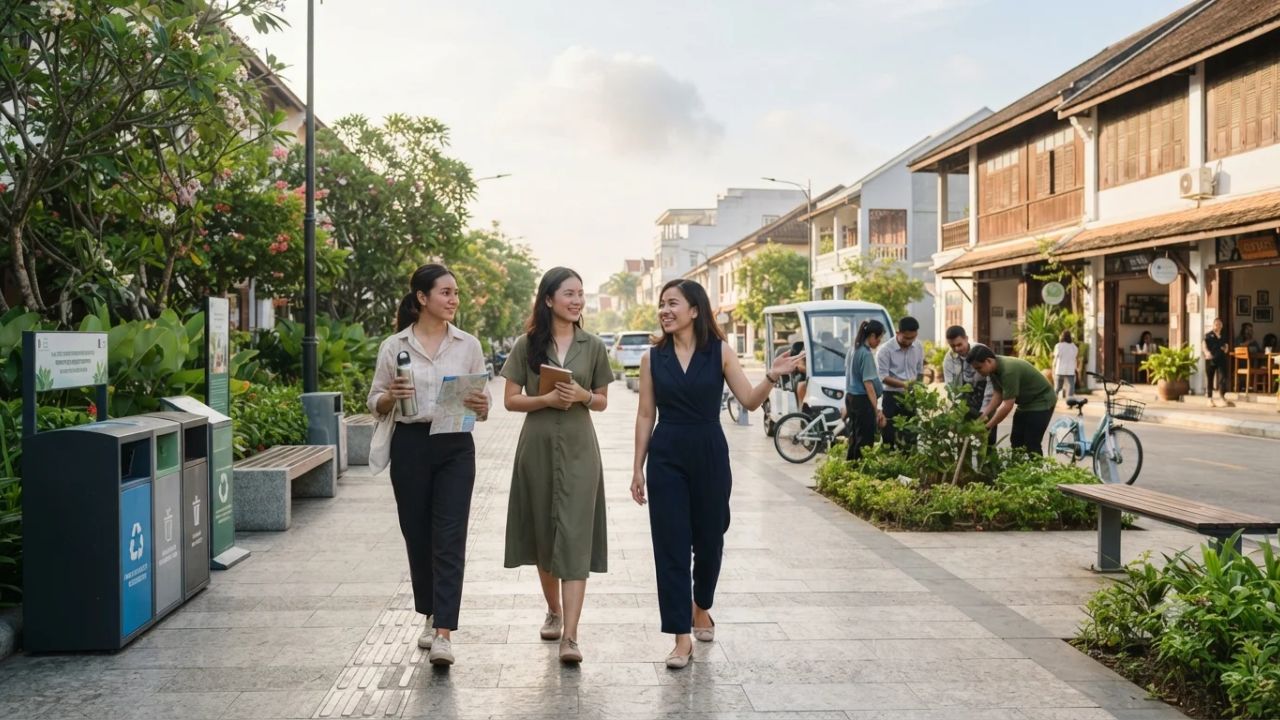
While overtourism strains famous island gateways from Boracay to Phuket, a quiet urban transformation is unfolding across Southeast Asia's secondary cities. By pairing municipal governance with state university research laboratories, destinations like Ilagan in the Philippines, Kuching North in Malaysia, Luang Prabang in Laos, and Hue in Vietnam have secured the prestigious ASEAN Clean Tourist City Standard (ACTCS) for 2026–2028, proving that sustainable travel thrives through civic science and youth mobilization.
Rather than chasing unchecked visitor volume that overwhelms local wastewater systems and roads, emerging intermediate destinations are focusing on urban livability, heritage protection, and environmental metrics. Audited across seven rigorous indicators under the ASEAN Tourism Strategic Plan—including ambient air quality, waste segregation, green space per capita, and public hygiene—these cities demonstrate how academic research departments and student volunteers can manage destination carrying capacities with scientific precision.
The Quad-Nation Benchmark: Four Cities Pioneering Clean Tourism
The 2026–2028 ACTCS evaluation cycle highlights how regional municipalities have institutionalized long-term coalitions with higher education institutions to turn environmental compliance into everyday civic culture.
In northern Philippines, the City of Ilagan in Isabela Province achieved Hall of Fame status by securing its third consecutive ASEAN Clean Tourist City title, while dominating the inaugural Dayaw Regional Tourism Excellence Awards organized by the Department of Tourism (DOT) Cagayan Valley. Guided by Mayor Josemarie L. Diaz and Vice Mayor Jayve Diaz under the Liveable City 2030 roadmap, the municipality partnered with Isabela State University (ISU) Ilagan Campus. Led by CEO Engr. Alfonso R. Simon, ISU researchers conducted ecological carrying-capacity studies along the Abuan River basin, while student leader Chester Ivan Lim mobilized youth teams to document folk traditions under the "AuthentiCITY of Ilagan" initiative.
Across the South China Sea in Sarawak, Malaysia, the Commission of the City of Kuching North (DBKU) received its 2026–2028 ACTCS award at the ASEAN Tourism Forum in Cebu, Philippines. Under Datuk Bandar Dato Hilmy Othman, DBKU partnered with Universiti Malaysia Sarawak (UNIMAS) to achieve a Five-Star rating in the 2026 Technical Audit Star Rating System (PBAT). UNIMAS scientists developed circular economy workshops converting domestic cooking oils into biodegradable soaps, while DBKU modernized urban mobility by transitioning paper parking to the digital Pay & Go system and converting traditional wooden perahu tambang passenger boats on the Sarawak River from two-stroke engines to clean electric powertrains.
| Secondary City & Country | Municipal Governance Body | Partner State University | ACTCS Milestone | Key Eco-Tourism & Infrastructure Initiative |
|---|---|---|---|---|
| Ilagan City (Philippines) | Local Government Unit of the City of Ilagan | Isabela State University (ISU) Ilagan Campus | 3-Time Consecutive Awardee (Hall of Fame 2026–2028) | Abuan River Eco-Park, Capital Arena sports complex, and student-led watershed monitoring |
| Kuching North (Malaysia) | Commission of the City of Kuching North (DBKU) | Universiti Malaysia Sarawak (UNIMAS) | 2026–2028 Cycle Winner (Presented at ATF Cebu) | Electric perahu tambang boat conversions, Pay & Go smart parking, and community plogging |
| Luang Prabang (Laos) | Luang Prabang District Administration & DPWT | Souphanouvong University (Faculty of Sustainable Tourism) | Multi-Cycle ACTCS Certified Heritage Town | ADB-backed sanitary landfill upgrades, temple carrying-capacity controls, and monk-student river cleanups |
| Hue City (Vietnam) | People’s Committee of Thua Thien Hue | Hue University (School of Hospitality & Tourism) | Centrally Governed ASEAN Clean Tourist City | Erasmus+ TOURIST Competence Centre, "Green Summer" river cleanup drives, and plastic bans |
Heritage Preservation and River Basin Protection in Laos and Vietnam
In northern Laos, the historic town of Luang Prabang balances its status as a UNESCO World Heritage Site with expanding overland arrivals. The town collaborates closely with Souphanouvong University's Faculty of Sustainable Tourism Studies, whose researchers evaluate social and environmental thresholds within the historic core. Supported by the Asian Development Bank’s Southeast Asia Urban Services Facility (TA 9554-REG), municipal authorities replaced open dumpsites with engineered sanitary landfills, safeguarding the Mekong and Nam Khan river basins while student volunteers join Buddhist monastic networks for temple maintenance.
In central Vietnam, Hue City—internationally celebrated for the Complex of Hué Monuments—integrates academic research directly into civic management. The School of Hospitality and Tourism at Hue University, directed by Assoc. Prof. Tran Huu Tuan, operates the EU-funded Erasmus+ TOURIST Competence Centre for the Development of Sustainable Tourism. Through the annual "Green Summer" (Mùa Hè Xanh) campaign, university students clear waste along the Perfume River and work with market stallholders to eliminate single-use plastics ahead of Vietnam's 2030 national target.
What Makes These Secondary Destinations Different
Unlike commercial tourism strips where profits leak into multinational booking engines and outside resort developers, secondary cities operating under ACTCS guidelines ensure traveler spending circulates locally. In Ilagan, visitors participating in Abuan River adventures dine on heirloom corn delicacies produced by local agrarian cooperatives. In Kuching, travelers cross the Sarawak River aboard silent, emission-free electric boats operated by local rivermen.
Furthermore, these cities maintain strict environmental baselines. Rather than treating clean air and water as marketing slogans, university laboratories conduct weekly tests on municipal runoff, monitor air quality indices, and calculate seasonal visitor quotas for fragile heritage monuments.
Visitor Insider Tips
- Navigating Kuching's Riverfront: Skip automobile taxis and use the electric perahu tambang boats to travel between the Kuching North riverbank and downtown attractions. Download the Pay & Go app for parking if you rent a vehicle to explore nearby Bako National Park.
- Exploring Ilagan's Abuan River Basin: Book excursions to the Abuan River Eco-Park through the City Tourism Office at the Ilagan Sanctuary. Bring a dry bag, wear non-marking water shoes, and try local Isabela culinary specialties like pancit cabagan at family-run eateries near the city plaza.
- Luang Prabang Morning Alms Etiquette: When observing the early-morning Tak Bat (almsgiving) ceremony along the main temple streets, maintain a respectful distance of at least five metres, keep your shoulders and knees covered, and never use flash photography.
- Hue Cycling Corridors: Rent a bicycle or electric scooter to explore the imperial tombs outside Hue’s citadel. Quiet paved roads along the Perfume River lead to lesser-known monuments like the Tomb of Emperor Thieu Tri, which see a fraction of the tour bus crowds visiting Tu Duc.
Cultural and Environmental Context
The university-LGU coalition model solves the acute resource constraints that historically challenged non-capital cities. By utilizing student volunteers and faculty researchers, municipalities gain access to GIS mapping, water analysis, and digital heritage archiving without draining limited municipal budgets.
Importantly, this model combats regional "brain drain." By involving undergraduate and postgraduate students in municipal planning, environmental monitoring, and sustainable tourism management, secondary cities retain young professionals committed to developing their home regions. For travelers, choosing these certified cities means directly supporting local livelihoods and participating in genuine community-led conservation.
FAQ: Visiting ASEAN Clean Tourist Cities 2026
What is the ASEAN Clean Tourist City Standard (ACTCS)?
ACTCS is an official regional certification awarded to Southeast Asian cities that satisfy strict performance criteria across environmental management, waste segregation, green spaces, public safety, and tourism infrastructure.
How do I travel to Ilagan City from Manila?
Travelers can take a 60-minute domestic flight from Manila (MNL) to Cauayan Airport (CYZ), followed by a 45-minute overland taxi or van transfer north to Ilagan City.
Are traditional water taxis in Kuching safe and eco-friendly?
Yes. Kuching North has converted historic wooden perahu tambang boats on the Sarawak River to clean electric motors, providing quiet, zero-emission transit between riverfront heritage sites.
What should visitors keep in mind when visiting temples in Luang Prabang and Hue?
Dress modestly with clothing covering shoulders and knees, remove footwear before entering temple halls, and support local community conservation by carrying reusable water bottles.
Where civic governance and student passion unite, Southeast Asia’s clean cities offer a refreshing vision of travel in harmony with nature.
Related Travel Guides
Disclaimer
This article is for informational and educational purposes only. It does not constitute legal, financial, or professional advice. While we strive to provide accurate and up-to-date information, travel policies, regulations, and conditions change rapidly. Always verify information with official sources before making travel decisions. Nomad Lawyer makes no representations about the accuracy, reliability, completeness, or suitability of the information provided. Readers should consult qualified professionals for advice specific to their circumstances. The views expressed in this article are those of the author and do not necessarily reflect the views of Nomad Lawyer.
Naina Thakur
Contributor & Travel Specialist
Travel enthusiast and legal writer covering visa regulations, responsible tourism, and cultural journeys across global destinations.
Learn more about our team →