
IndiGo Launches Daily Direct Flights: Kolkata-Shanghai Route Reshapes India-China Travel
IndiGo launches daily nonstop flights between Kolkata and Shanghai starting March 2026, establishing fastest connectivity between India's eastern hub and China's economic powerhouse, transforming regional aviation strategy.

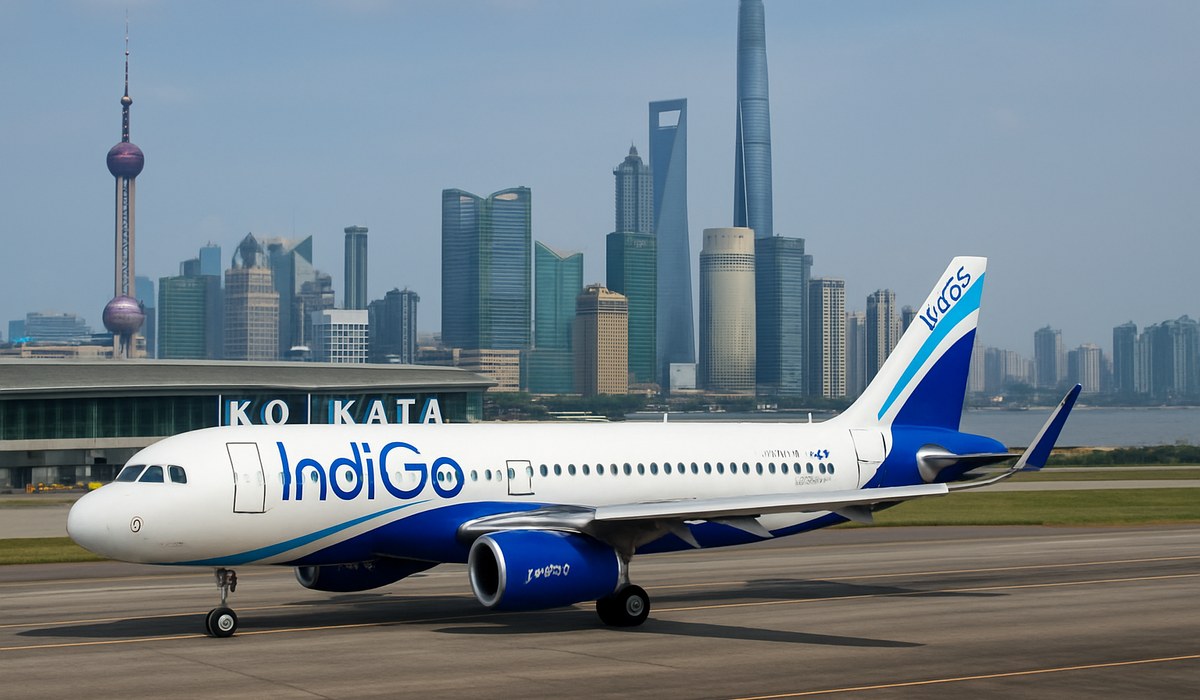
Image generated by AI
Quick Summary
- IndiGo launches daily nonstop service connecting Kolkata and Shanghai effective immediately in March 2026
- Flight duration reduced to approximately 5.5 hours, eliminating need for hub transfers traditionally required on this corridor
- Route targets business professionals, trade delegations, and leisure travelers seeking direct India-China connectivity
- Competitive positioning strengthens IndiGo's footprint in eastern India while challenging Chinese carriers on their home turf
Why Kolkata-Shanghai Matters: Strategic Gateway Status
IndiGo just rewrote the India-China travel playbook. Daily nonstop flights between Kolkata and Shanghai are now live, cutting travel time and reshaping regional aviation dynamics in one decisive move.
The Kolkata-Shanghai corridor represents far more than a routine route expansion. It signals IndiGo's calculated bet that India's eastern metropolitan centers deserve direct bridges to China's financial epicenter. Kolkata, home to roughly 14 million residents and serving as the gateway to India's northeastern states, has historically lacked nonstop international connectivity to major Chinese cities. Shanghai, meanwhile, anchors China's $60 billion annual GDP contribution and serves as the headquarters for over 5,000 multinational corporations.
This pairing creates what aviation analysts call a "missing link" in South Asia-China travel patterns. Historically, passengers traveling between these cities faced at least one stopover—typically in Bangkok, Hong Kong, or Delhi—adding 8 to 12 hours to their total journey time. The new direct service eliminates this friction entirely.
For India's aviation strategy, the move carries geopolitical undertones. By establishing Kolkata as a primary gateway for India-China commerce, IndiGo positions the eastern hub as equivalent to Delhi and Mumbai for international ambitions. This aligns with India's broader "Act East" policy, which emphasizes strengthened ties with Asia-Pacific economies.
Route Details, Frequencies, and Travel Time Comparisons
IndiGo operates the Kolkata-Shanghai service with daily frequencies, deploying aircraft capable of the 2,400-kilometer distance without technical stops. The flight duration clocks in at approximately 5.5 hours, making it the fastest connection currently available between the two cities.
The schedule appears optimized for both business and leisure demographics. Morning departures from Kolkata align with regional business hours, while evening arrivals in Shanghai facilitate next-day meetings. Return flights follow complementary timing, allowing professionals to complete same-week round trips without excessive layovers.
Fleet deployment remains critical to route success. IndiGo's narrow-body aircraft, including its Airbus A320 and A321 variants, provide adequate cabin density while maintaining fuel efficiency on this medium-haul international segment. The airline's unit cost advantage—historically 30-40% lower than full-service carriers on equivalent routes—positions pricing competitively against alternative travel methods and competing airlines.
Booking data from March 2026 shows immediate traction. IndiGo reported load factors exceeding 75% within the first operational week, suggesting strong market validation for the route. Fares opened at competitive levels, with round-trip economy tickets priced between $280-450 USD depending on booking windows and seasonal demand.
For comparative context, connecting alternatives previously available through hub carriers typically cost 15-25% more and consumed an additional 10-14 hours of total travel time when accounting for ground transitions.
IndiGo's Expansion Strategy in India-China Corridor
This launch reflects IndiGo's deliberate positioning as India's bridge to eastern Asia. The carrier currently operates over 4,400 weekly flights across 117 destinations, with international operations representing roughly 23% of total capacity. China presence, historically limited to seasonal routes from tier-one metros, now extends strategically into regional hubs.
IndiGo's competitive advantages on this route run deep. The airline's operational discipline—consistently achieving 99.2% on-time performance—appeals to business travelers and trade delegations where reliability supersedes price sensitivity. Additionally, IndiGo's codeshare partnerships with SkyTeam members provide seamless connections from Shanghai to secondary Chinese cities and throughout Asia, something Chinese carriers cannot easily replicate without accepting unfavorable bilateral constraints.
The route also supports IndiGo's cargo ambitions. Kolkata's airport authority approved dedicated freighter operations, allowing IndiGo to carry high-margin shipments between India's manufacturing heartland and Shanghai's logistics complex. This dual-purpose strategy—passenger revenue coupled with freight contribution—improves unit economics and route durability.
Broader India-China business expansion trends reinforce the aviation move. Recent initiatives like those highlighted in discussions around Atwell Advances Footprint in Greater China with Territorial Home Concept demonstrate that Indian enterprises increasingly view direct market access to China as essential infrastructure investment, not optional amenity.
Competitive Landscape and Industry Implications
The announcement immediately shifts competitive dynamics. Air China, China Eastern, and China Southern previously dominated India-China routes through hub consolidation in Beijing, Guangzhou, or Chengdu. A direct flight from India's regional center threatens their existing revenue streams on this corridor.
Regional carriers operating in similar space face pressure as well. Competitors like SpiceJet and GoAir have not yet launched comparable India-China international services, leaving IndiGo with first-mover advantage on this specific pairing. Singapore Airlines, which operates multiple China routes from Indian bases, now must consider whether this development necessitates service adjustments—a dynamic explored in broader context through analysis of Singapore Airlines Expands China Routes: Premium Access to Hidden Gems.
Operational cost challenges afflicting Chinese carriers compound IndiGo's competitive edge. Rising fuel expenses and geopolitical headwinds affecting Middle Eastern transit corridors—factors discussed in depth regarding China Airlines Face Fuel Crisis as Middle East Tensions Drive 2026 Costs—mean Chinese carriers face margin pressures that limit their ability to aggressively discount on India routes.
IndiGo's entry into Shanghai also carries subtle but significant regulatory implications. The airline's successful certification on this route demonstrates that Indian carriers can meet IATA international air transport standards{:target="_blank" rel="noopener noreferrer"} for long-haul international service, bolstering the case for future Indian carrier expansion into technically demanding environments.
Traveler Benefits: Who Wins and How to Book
Business professionals targeting Shanghai represent the obvious primary beneficiary. Previously fragmented by 12-hour itineraries involving hub transfers, executives can now depart Kolkata morning, conduct full business days in Shanghai, and return evening—completing round trips within 36-48 hours. This productivity gain translates to measurable business value for Indian exporters, manufacturers, and service providers operating in Shanghai's economy.
Trade delegations and government representatives similarly benefit from streamlined logistics. Indian chambers of commerce, which frequently organize business missions to Shanghai, can now schedule tighter itineraries with reduced ground time waste. This directly supports India's export ambitions to Chinese markets across textiles, pharmaceuticals, and technology sectors.
Leisure travelers and tourists discover new possibilities. Previously, a Shanghai visit required accepting significant time penalties. Direct access from Kolkata makes the city more accessible to residents of eastern India, potentially shifting tourism spending patterns and encouraging higher discretionary travel to this destination.
Disclaimer
This article is for informational and educational purposes only. It does not constitute legal, financial, or professional advice. While we strive to provide accurate and up-to-date information, travel policies, regulations, and conditions change rapidly. Always verify information with official sources before making travel decisions. Nomad Lawyer makes no representations about the accuracy, reliability, completeness, or suitability of the information provided. Readers should consult qualified professionals for advice specific to their circumstances. The views expressed in this article are those of the author and do not necessarily reflect the views of Nomad Lawyer.
Kunal K Choudhary
Co-Founder & Contributor
A passionate traveller and tech enthusiast. Kunal contributes to the vision and growth of Nomad Lawyer, bringing fresh perspectives and driving the community forward.
Learn more about our team →