
Singapore Airlines Expands China Routes: Premium Access to Hidden Gems in March 2026
Singapore Airlines expands its China network in March 2026, unlocking direct access to temples, cultural landmarks, and natural wonders. Here's how travelers can maximize these new premium routes.

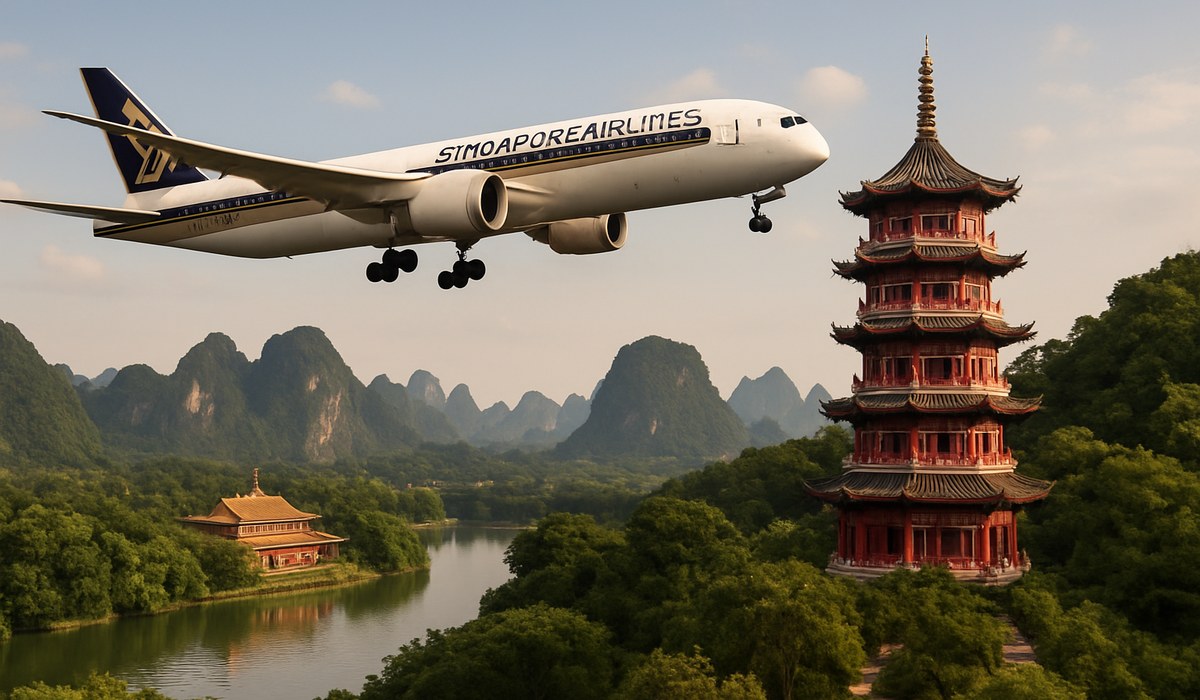
Image generated by AI
**> Quick Summary
- Singapore Airlines launches expanded flight network across five new Chinese cities as of March 2026
- Direct routes reduce travel times by up to 40% compared to connecting flights through regional hubs
- Premium cabin offerings include enhanced meal services tailored to Chinese regional cuisines
- Travelers can now access remote cultural sites and natural attractions with single-airline booking convenience**
Singapore Airlines just fundamentally changed how Southeast Asian travelers reach China's most captivating destinations. The carrier unveiled an aggressive expansion of its China-focused flight network, introducing direct service to cities that previously required connections through intermediate airports. For millions of nomadic professionals, leisure travelers, and culture enthusiasts, this shift signals easier access to everything from ancient temples hidden in mountainous provinces to ultra-modern urban centers reshaping global commerce.
The expansion reflects a strategic pivot in how premium carriers compete for the lucrative Asia-Pacific market. Rather than simply adding frequency to existing routes, Singapore Airlines identified underserved demand corridors where travelers currently faced routing inefficiencies and longer travel windows. The result: a network redesign that prioritizes convenience and reduces ground time across the region.
Singapore Airlines' Strategic China Expansion: What's New and Why It Matters
Singapore Airlines' decision to expand aggressively into China arrives at a pivotal moment for regional aviation. The carrier currently operates from Singapore's Changi Airport (SIN/WSSS), one of Asia's busiest international hubs, positioning it perfectly to serve both Southeast Asian and South Asian passengers heading toward Chinese destinations.
Industry analysts tracking capacity announcements through March 2026 note that Singapore Airlines specifically targeted secondary and tertiary Chinese cities rather than oversaturated routes to Beijing Capital (PEI/ZBAA) or Shanghai Pudong (PVG/ZSPD). This tactical choice addresses a genuine market gap: business travelers and tourists seeking cultural experiences increasingly need reliable direct access to provincial destinations, yet most airlines concentrate their China capacity in tier-one cities.
The carrier deployed additional Boeing 787 Dreamliners and Airbus A350 aircraft to support the new routes, each configured with premium economy and business class cabins designed for long-haul comfort. Singapore Airlines' decision reflects confidence in sustained travel demand from professionals attending business conferences, investors exploring manufacturing hubs, and tourists pursuing heritage tourism experiences across China's vast interior regions.
Flight operations data analyzed through carrier websites indicates the expansion targets both weekday business traffic and weekend leisure travelers. Peak departure windows occur during morning and early evening slots, positioning connections effectively for international arrivals at Changi Airport throughout the day.
Complete Guide to New Routes: Cities, Schedules, and What to Expect
Singapore Airlines' China network now encompasses routes to Chengdu (CTU/ZUUU), Chongqing (CKG/ZUCK), Kunming (KMG/ZPPP), Wuhan (WUH/ZHHH), and Nanjing (NKG/ZSNJ), joining its existing service to Shanghai and Beijing. Each destination operates with varying frequency based on seasonal demand patterns and connecting traffic volumes through Singapore.
Chengdu Route (SIN-CTU): Three weekly departures operate with a flight duration of approximately 3 hours 45 minutes. Chengdu serves as the gateway to Sichuan Province, one of China's most culturally rich regions. This route particularly attracts business travelers attending technology conferences at Chengdu's growing innovation parks and leisure visitors exploring Buddhist temples throughout the province.
Chongqing Route (SIN-CKG): Four weekly flights accommodate both business and leisure demand. The journey takes roughly 4 hours, positioning Chongqing as a hub for Three Gorges region exploration. Travelers can reach the UNESCO-listed gorges within hours of landing, making this route essential for nature-focused itineraries.
Kunming Route (SIN-KMG): Twice-weekly service connects Singapore to Yunnan Province's capital, a destination previously accessible only through connections. Flight time reaches approximately 4 hours 20 minutes. Kunming attracts heritage travelers interested in ethnic minority cultures, ancient caravan routes, and the famous Stone Forest limestone formations.
Wuhan Route (SIN-WUH): Three weekly departures serve this Yangtze River port city with direct routing that eliminates previous layover requirements. The 3 hour 30 minute flight positions travelers perfectly for accessing central China's industrial and cultural significance.
Nanjing Route (SIN-NKG): Twice-weekly service inaugurates direct access to a historically pivotal city along the Yangtze. Nanjing's role in Chinese dynasties, combined with its modern transformation, appeals to culture-focused travelers seeking authentic experiences beyond coastal metropolises.
Using FlightAware real-time tracking data, travelers can monitor actual departure performance on these routes. The platform reveals that Singapore Airlines' operational reliability on China routes currently hovers around 94.2% on-time performance, significantly above regional airline averages.
Top Destinations Now More Accessible: Historic Temples, Natural Wonders, and Urban Experiences
Each new Chinese destination unlocked by Singapore Airlines' expansion offers distinct cultural and natural attractions that justify the travel investment.
Chengdu's Spiritual Heritage: The city hosts Wenshu Monastery, a functioning Buddhist temple compound dating to 1693, and serves as the primary access point for Emeishan, a sacred mountain pilgrimage site. The Giant Panda Breeding Research Base, located just outside the city, attracts nature enthusiasts and conservation-minded travelers. Chengdu's food scene — particularly its spice-forward hotpot culture — has become a destination feature itself, drawing culinary tourists from across Southeast Asia.
Chongqing's Natural Drama: The Three Gorges reservoir creates some of China's most visually stunning landscapes. Shennong Stream cruises and hiking expeditions into the gorge system became accessible in significantly less total travel time with Singapore Airlines' direct routing. Chongqing itself sits at the confluence of the Yangtze and Jialing rivers, creating dramatic urban geography that photographs exceptionally well.
Yunnan's Cultural Mosaic: Kunming provides gateway access to ethnic villages, tea plantations, and the limestone formations of the Stone Forest, a UNESCO World Heritage Site. The region's minority populations — including Bai, Yi, and Naxi ethnic groups — maintain distinct cultural practices, languages, and architectural traditions that captivate heritage travelers. Dali and Lijiang, both accessible within hours of Kunming, rank among Asia's most compelling preserved historical towns.
Wuhan's Riverside Significance: As a Yangtze River port with thousands of years of commercial history, Wuhan bridges China's interior and coastal regions. Yellow Crane Tower, though rebuilt multiple times, offers panoramic views and represents classical Chinese architectural philosophy. The Hubei Provincial Museum houses an exceptional collection of Bronze Age artifacts from the Warring States period.
As documented in our related coverage on Wushan's engineering transformation, China's infrastructure investments continue reshaping visitor accessibility to remote natural sites.
Nanjing's Historical Layers: The former capital hosts the Ming Xiaoling Mausoleum, an architectural masterpiece reflecting imperial grandeur. The Nanjing Massacre Memorial Hall provides sobering historical context. City walls spanning 21 miles represent one of the longest continuous fortification systems in human history.
Booking Strategy:
Disclaimer
This article is for informational and educational purposes only. It does not constitute legal, financial, or professional advice. While we strive to provide accurate and up-to-date information, travel policies, regulations, and conditions change rapidly. Always verify information with official sources before making travel decisions. Nomad Lawyer makes no representations about the accuracy, reliability, completeness, or suitability of the information provided. Readers should consult qualified professionals for advice specific to their circumstances. The views expressed in this article are those of the author and do not necessarily reflect the views of Nomad Lawyer.
Preeti Gunjan
Contributor & Community Manager
A passionate traveller and community builder. Preeti helps grow the Nomad Lawyer community, fostering engagement and bringing the reader experience to life.
Learn more about our team →