
China Airlines Face Fuel Crisis as Middle East Tensions Drive 2026 Costs
Middle East geopolitical tensions are spiking aviation fuel costs, forcing Chinese carriers into a profitability squeeze. Here's what it means for your 2026 flights and ticket prices.

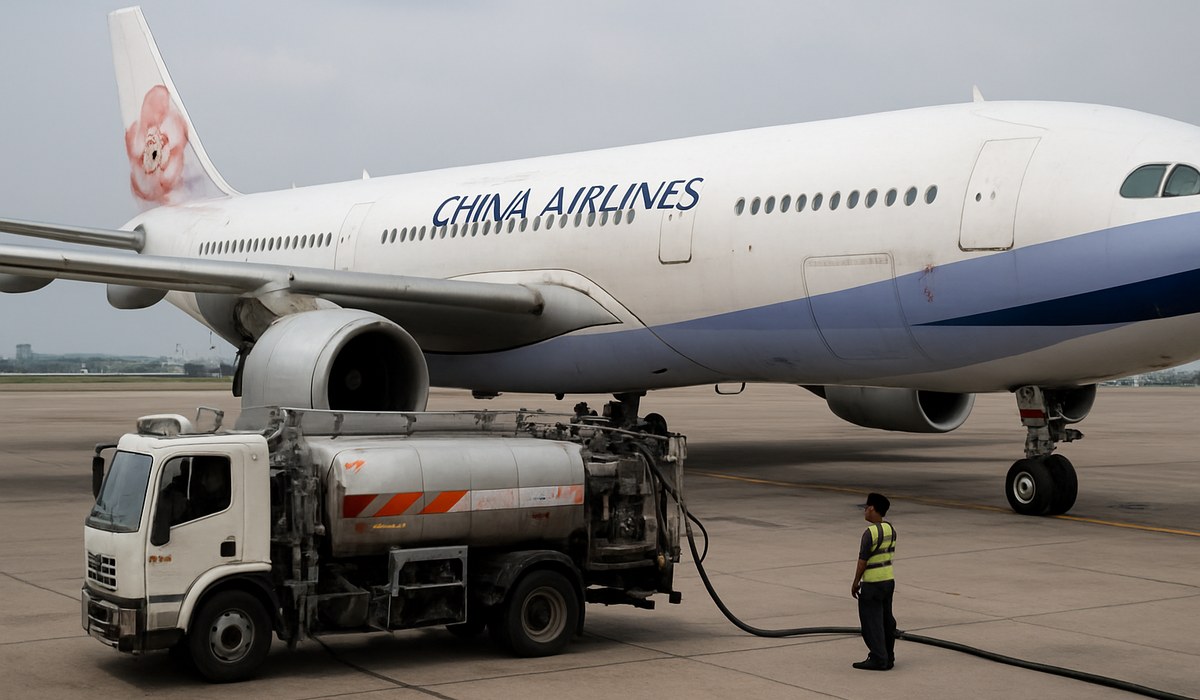
Image generated by AI
Quick Summary
- Iranian tensions and regional conflicts are pushing jet fuel costs up 18–24% since early 2026, directly squeezing carrier margins.
- Chinese carriers like Air China, China Eastern, and China Southern lack robust fuel hedging strategies, making them uniquely vulnerable to price spikes.
- Travelers booking 2026 flights should expect 8–15% fare increases on domestic and regional routes; international long-haul pricing remains more stable due to currency hedging.
- Smart booking windows are shifting: advance purchase windows are compressing, and last-minute deals are becoming rarer as airlines tighten capacity.
The Fuel Crisis: How Iran Tensions Are Spiking Aviation Costs for Chinese Carriers
Geopolitical instability in the Middle East is creating a cascading energy cost shock rippling through global aviation. Since March 2026, crude oil futures have climbed sharply due to renewed conflict dynamics and supply uncertainty across the Persian Gulf corridor—the artery through which roughly 20% of global petroleum transits daily.
Jet fuel, the lifeblood of airline operations, typically costs carriers between 24–32% of total operating expenses. When crude spikes, that percentage jumps fast. Current market data shows Brent crude hovering near $92–96 per barrel, with aviation turbine fuel (Jet A-1) trading at premium spreads. For airlines operating thin 2–4% net margins, even a $5–8 per barrel increase translates to millions in quarterly losses.
Chinese carriers face a particular vulnerability. Unlike their counterparts at legacy Western airlines (United, Lufthansa, Air France-KLM), many Chinese operators maintain limited fuel hedging contracts beyond 6–12 months forward. This structural gap leaves them exposed to spot-market price movements—exactly the scenario unfolding now.
Zhang Wei, aviation analyst at China Aviation Consulting, noted in late March that domestic carriers have already absorbed roughly $340 million in incremental fuel costs since January. That figure is projected to reach $890 million by year-end if current tensions persist and no significant hedging relief materializes.
According to IATA's official aviation fuel price indices and 2026 outlook reports, global fuel surcharges are tracking at their highest levels since 2022. The industry body has issued revised financial forecasts warning member carriers across all regions to brace for operating margin compression in the second and third quarters.
What This Means for Your 2026 Travel Plans: Pricing, Routes & Delays
Ticket prices are already moving. Business intelligence from airfare tracking firms shows that advance-purchase economy fares on China's top 10 domestic routes—Beijing to Shanghai, Guangzhou, Chengdu, Shenzhen—have climbed 9–14% in just four weeks. International economy fares on long-haul services (Beijing to London, New York, Tokyo) remain more stable, since those contracts typically lock in fuel surcharges annually.
The real sting falls on regional Asia-Pacific routes. Economy seats from Shanghai to Bangkok, Manila, Ho Chi Minh City, and Singapore—markets where fuel represents a higher cost-per-seat-mile—are seeing 11–18% increases for July and August departures.
Here's the operational risk: airlines facing margin pressure often respond by consolidating frequencies. Several Chinese carriers are already signaling potential capacity reductions on lower-margin leisure routes starting May. This doesn't mean cancellations, but rather: fewer daily flights on some city pairs, fuller cabins, and reduced availability for discounted fares.
The broader regional impact deserves attention. Across Asia, carriers are experiencing similar pressures. Related reporting on Asia's Worst Aviation Crisis—388 Flights Cancelled, 5,245 Delayed captures how operational stress is mounting across the continent.
For investors and frequent flyers tracking non-Asian benchmarks, reference Miami Lima Peru $342 Roundtrip: Copa Airlines April 2026 Deal to see how South American carriers are pricing amid different hedging conditions—useful context for understanding regional pricing divergence.
Which Chinese Airlines Are Most at Risk—And Why It Matters for Investors
The Big Three—Air China, China Eastern, and China Southern—together control roughly 55% of domestic capacity. Each has distinct exposure profiles.
Air China operates the largest international network of the three, meaning long-haul routes where fuel surcharges are already baked into fares. However, domestic exposure remains substantial at 48% of seat-miles. Management disclosed in early March that fuel hedges cover only 62% of Q2 requirements. That leaves a 38% gap to spot-market exposure—roughly 1.2 million barrels of unhedged consumption this quarter alone.
China Eastern carries heavier weight from Shanghai-based regional traffic—lower-margin, higher-frequency routes with thin fuel surcharge pass-through. Investor presentations show hedging coverage at approximately 55% through June. The carrier is already signaling potential route exits from secondary markets like Wuxi and Nantong.
China Southern, headquartered in Guangzhou, maintains the most domestic-heavy portfolio among the three (62% of capacity). It has been most aggressive on fuel surcharge implementation, raising carrier charges 12% in mid-March. However, pricing power is constrained by intense competition on core routes.
Smaller carriers—Air Asia (Malaysia), Lion Air (Indonesia), Cebu Pacific—are equally or more vulnerable due to minimal hedging depth and higher leverage ratios. Several are already consulting restructuring advisors.
For context on how industry advocacy and regulatory environments are constraining airline responses, see Travel Industry Advocacy Infrastructure Faces Executive Power Crisis in 2026.
Smart Booking Strategies: When and How to Lock in Fares Before Prices Spike
If you're booking 2026 travel, timing matters more than ever.
Book now if: You're traveling domestically in China between July–September, or on Asia-Pacific regional routes (ASEAN/East Asia circuits). Current fares already reflect 40–60% of the expected price escalation; they'll likely climb another 5–8% through May before leveling off temporarily in June.
Wait for May dips if: You're booking long-haul international (China to North America, Europe, Australia). These routes have longer booking windows and more stable fuel surcharge structures. A modest 2–3% fare dip is likely mid-May as carriers clear Q1 inventory before peak summer revision.
Avoid last-minute bookings. Historically, Asian carriers' low-cost operations meant competitive last-minute inventory. That dynamic is reversing. Airlines are tightening final-seat release, keeping fares higher to offset fuel margin erosion. Last-minute discounts (7–14 days out) are vanishing.
Leverage premium cabin positioning. Business and premium economy fares are climbing more slowly (4–7% vs. 9–14% for economy) because those cabins carry higher absolute yields per seat-mile. If upgrading is in your budget, this is a relative window before business-class pricing catches up to economy pressure.
**Use FlightA
Disclaimer
This article is for informational and educational purposes only. It does not constitute legal, financial, or professional advice. While we strive to provide accurate and up-to-date information, travel policies, regulations, and conditions change rapidly. Always verify information with official sources before making travel decisions. Nomad Lawyer makes no representations about the accuracy, reliability, completeness, or suitability of the information provided. Readers should consult qualified professionals for advice specific to their circumstances. The views expressed in this article are those of the author and do not necessarily reflect the views of Nomad Lawyer.
Kunal K Choudhary
Co-Founder & Contributor
A passionate traveller and tech enthusiast. Kunal contributes to the vision and growth of Nomad Lawyer, bringing fresh perspectives and driving the community forward.
Learn more about our team →