
IndiGo Aircraft Strikes Parking Pole at Srinagar International Airport
An IndiGo flight from Navi Mumbai to Srinagar struck a parking pole at Srinagar International Airport on Sept 4, 2026. All passengers and crew are safe.

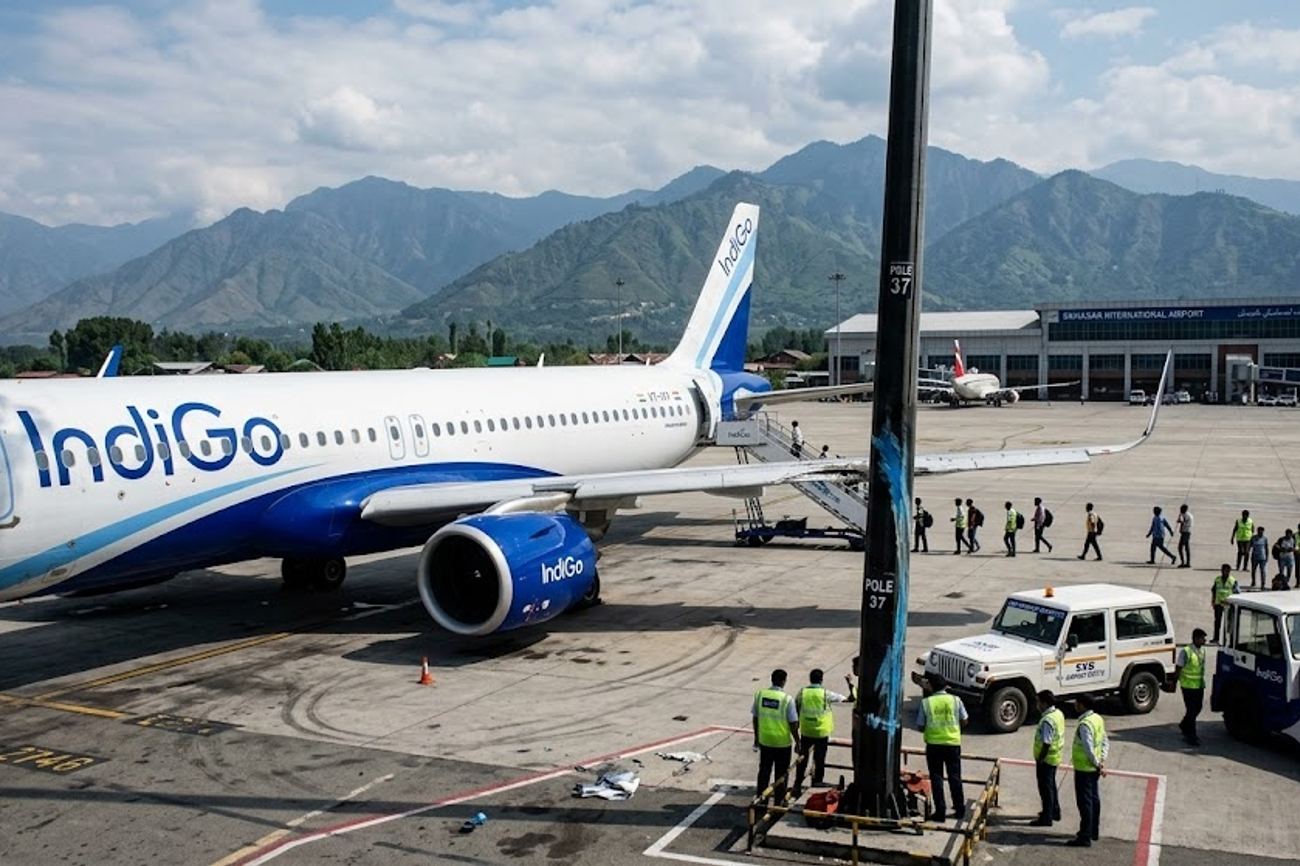
Image generated by AI
Srinagar Airport Ground Incident Involving IndiGo Flight
[Srinagar, September 4, 2026] — A ground safety incident occurred at Srinagar International Airport on September 4, 2026, when an IndiGo aircraft made physical contact with airport infrastructure during its arrival sequence. The flight, which had originated from Navi Mumbai, encountered the collision while being positioned into its designated parking bay after a successful landing.
According to reports, the aircraft was maneuvering toward Bay No. 6 when it struck a parking stand pole. The impact caused the metal pole to shift sideways. Despite the collision, there were no injuries reported among the passengers or the flight crew. The aircraft was immediately removed from active service to undergo a comprehensive safety evaluation.
Details of Flight 6E 225 Ground Collision
The incident involved IndiGo flight 6E 225. The aircraft had completed its flight path from Navi Mumbai and was in the final stages of ground movement. The collision occurred specifically during the positioning phase, a critical window where the aircraft transitions from the taxiway to the parking stand.
Industry sources indicate that the parking stand pole is part of the essential infrastructure used to guide aircraft into precise positions. While the exact cause of the contact remains under investigation, initial observations confirm that the aircraft had already landed safely before the event took place. The shift of the metal pole suggests a low-velocity impact, though aviation protocols dictate that any contact with ground equipment must be treated as a significant safety event.
Unlike mishaps that occur during the high-risk phases of takeoff or landing, this event was confined to ground operations. However, the complexity of parking a commercial jet requires seamless synchronization between the cockpit, the ground handling team, and airport guidance systems.
Passenger Evacuation and Crew Safety
Immediate priority was given to the safe egress of all individuals on board. Reports confirm that all travelers and crew members exited the aircraft without any reported injuries or medical emergencies.
The deboarding process was managed via manual aircraft stairs rather than a jet bridge, ensuring a controlled exit. Airport ground teams implemented standard safety procedures to facilitate the movement of passengers away from the affected area. There were no reports of panic or emergency evacuations, as the incident occurred after the flight had reached its destination and the aircraft had come to a stop.
The airline has stated that the safety of its staff and passengers is the primary concern. Following the incident, the carrier notified the relevant aviation authorities to initiate a formal review of the event.
Technical Grounding and Maintenance Protocols
Following the strike, the aircraft was officially grounded for mandatory maintenance inspections. In the aviation industry, any "skin-to-object" contact—regardless of how minor it may appear—triggers a rigorous inspection cycle.
Engineers are currently examining the fuselage and wing structures to identify potential structural compromises, stress fractures, or superficial damage. The aircraft will remain unavailable for flight operations until it passes all technical checks and receives formal airworthiness approval from regulatory bodies.
This grounding is a standard safety mandate designed to prevent any latent structural issues from manifesting during subsequent flights. The airline has not indicated that this will lead to long-term disruptions in its broader flight schedule, though this specific tail number remains out of service.
Operational Status of Srinagar International Airport
Despite the collision at Bay No. 6, Srinagar International Airport maintained normal operational capacity. There were no reported delays or cancellations for other arriving or departing flights.
Airport management successfully isolated the affected aircraft, ensuring that the rest of the apron remained clear for traffic. This containment prevented the incident from cascading into wider delays for other carriers.
Srinagar International Airport serves as a vital lifeline for the Jammu and Kashmir region, facilitating essential travel for business, governance, and tourism. Because of its strategic importance, any ground incident is closely monitored to ensure that regional connectivity remains uninterrupted.
The Critical Nature of Ground Movement Safety
The incident underscores the inherent risks associated with aircraft parking, a phase of flight often overlooked but fraught with logistical challenges. Maneuvering a massive aircraft into a tight parking bay requires precise coordination.
Ground movement relies on a combination of:
- Visual Guidance Systems: Docking systems that tell pilots exactly when to stop.
- Ground Crew Communication: Marshallers and tug operators providing real-time feedback.
- Infrastructure Integrity: Clearly marked boundaries and correctly positioned equipment.
A failure in any of these links can lead to ground collisions. The Srinagar event highlights that aviation safety is a continuous chain that does not end when the wheels touch the runway, but only when the aircraft is safely shut down at the gate.
Ongoing Investigation and Regulatory Review
A formal investigation is currently underway to determine the root cause of the collision. Officials are reviewing flight data, ground recordings, and crew testimonies to establish whether the incident was a result of pilot error, ground crew miscommunication, or a failure in the airport's guidance infrastructure.
Until a final report is issued, authorities are analyzing the circumstances to determine if operational changes are required at Bay No. 6 or if revised training for ground handling is necessary.
Why This Matters (Information Gain & Experience) For the traveler, this incident serves as a reminder that the "flight" doesn't end at touchdown. Ground operations are a high-stakes environment where the margin for error is slim. From a logistical standpoint, the grounding of a single aircraft for a "minor" pole strike demonstrates the uncompromising nature of aviation safety; airlines would rather lose the revenue of one aircraft for several days of inspection than risk a structural failure in mid-air. For those flying into regional hubs like Srinagar, it highlights the importance of robust ground infrastructure in maintaining the flow of critical transport links.
Related Travel Guides
Disclaimer
This article is for informational and educational purposes only. It does not constitute legal, financial, or professional advice. While we strive to provide accurate and up-to-date information, travel policies, regulations, and conditions change rapidly. Always verify information with official sources before making travel decisions. Nomad Lawyer makes no representations about the accuracy, reliability, completeness, or suitability of the information provided. Readers should consult qualified professionals for advice specific to their circumstances. The views expressed in this article are those of the author and do not necessarily reflect the views of Nomad Lawyer.
Kunal K Choudhary
Co-Founder & Contributor
A passionate traveller and tech enthusiast. Kunal contributes to the vision and growth of Nomad Lawyer, bringing fresh perspectives and driving the community forward.
Learn more about our team →