
Indian Travelers Skip Traditional Destinations for Music Festivals and Cultural Events in 2026
Indian outbound travelers are ditching bucket-list destinations for experience-driven festival tourism. Music festivals, cultural events, and community gatherings now drive travel planning more than landmarks.

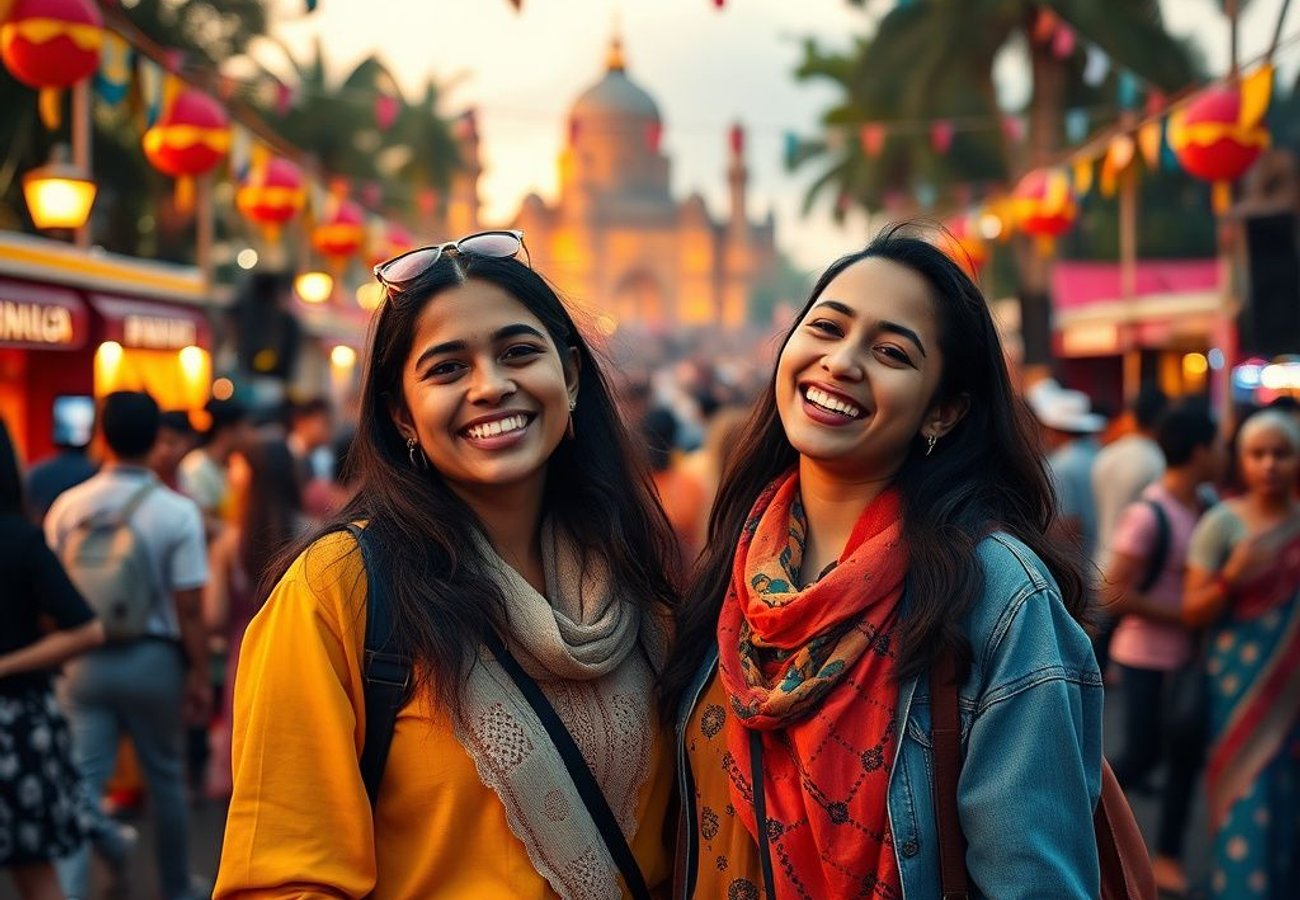
Image generated by AI
The Seismic Shift in Indian Travel Priorities
For decades, Indian outbound tourism followed a predictable script: iconic landmarks, country checkboxes, passport stamps. The Eiffel Tower. Big Ben. Taj Mahal replicas elsewhere. Traditional sightseeing ruled the itinerary.
That model is extinct.
A growing wave of Indian travelers is fundamentally rewriting the rulebook. They're no longer asking "where should I go?" Instead, the question has become: "what experience do I want to have?" And the answer increasingly points to music festivals, cultural gatherings, sporting events, and community-driven travel formats rather than geographical destinations.
This isn't a minor preference shift. This is a wholesale reorganization of how millions of Indians plan international travel.
Festivals as the New Travel Anchors
Revel Travels, a Bengaluru-headquartered company founded in 2002, has been riding this wave with surgical precision. The firm has evolved from a traditional travel services provider into a curator of immersive, event-led journeys—and the transformation reveals exactly why this trend is accelerating.
Sahil Wahid, Director of Revel Travels, crystallized the insight in a recent conversation: "We've moved from travellers checking off bucket-list destinations to people travelling repeatedly, specifically for music festivals. While mega festivals continue to have massive appeal, we're also seeing growing demand for smaller, more intimate events that offer a stronger sense of community and connection."
Revel serves as the official travel partner for Tomorrowland and UNTOLD, two of the world's most iconic electronic music festivals. The company has also developed curated programs around international festivals, luxury yacht experiences, and bespoke group itineraries inspired by formats like Yacht Week.
Reddit: "I used to travel to see places. Now I travel to feel something. Last year I went to three festivals in different countries. Same people showed up each time. That's the real trip." — r/travel
Why Experiences Trump Destinations
The phenomenon reflects a broader global tourism evolution. Large-scale events function as tourism catalysts—they don't just attract attendees; they fundamentally change how travelers engage with destinations.
Consider the mechanics: A festival brings you to a city, extends your stay naturally, forces you to explore neighborhoods beyond the main venue, connects you with local culture through shared celebration, and creates memories that stick. Traditional sightseeing? You photograph a landmark and move on.
"The evolved Indian traveller is seeking experiences that feel personal and curated," Wahid explained. "They're not just attending once—they're returning year after year because they're chasing a particular feeling and sense of belonging."
This isn't luxury tourism as the wealthy once defined it. This is a redefinition of what "premium" means entirely. Access beats amenities. Community beats comfort. Personal curation beats predictable opulence.
The Operational Complexity Nobody Discusses
Managing festival travel at scale introduces brutal logistical realities that individual travelers never encounter.
Coordinating visas for hundreds of guests simultaneously. Arranging ground transportation in foreign cities. Handling last-minute passport issues. Managing visa rejections 72 hours before departure. Absorbing the chaos when a sudden road closure forces you to reorganize transport for entire groups.
"A sudden road closure can mean reorganising transport plans for hundreds of guests," Wahid said. "Passport issues, last-minute visa rejections and unforeseen operational disruptions are realities that require dedicated systems and rapid response mechanisms."
The flip side? Companies with deep relationships with hotels, airlines, and local operators can negotiate access and experiences that independent travelers simply cannot access. Scale creates advantages that translate directly into better experiences.
The Trend Detection Problem
Here's what separates successful experiential travel companies from failing ones: staying ahead of trends before they become obvious.
Traditional tourism products remain stable for years. Experiential travel shifts with cultural currents, consumer behavior, and emerging communities. Predicting where the next wave hits requires presence, not spreadsheets.
"We're not sitting in an office analysing spreadsheets. We're attending events, travelling, speaking with fellow travellers and understanding what people are looking for before those trends become mainstream," Wahid emphasized.
This hands-on approach has surfaced growing demand for boutique festivals and niche experiences—smaller gatherings where travelers seek meaningful interactions and tight-knit communities rather than massive crowds.
Luxury Gets Redefined (Again)
The luxury travel industry is experiencing its own identity crisis, and experiential tourism is winning.
Traditionally, luxury meant premium hotels, first-class flights, exclusive amenities. Today's wealthy traveler doesn't care. They want access. They want personalization. They want community.
Yacht-based travel experiences exemplify this shift. Travelers aren't just seeking high-end settings—they're seeking other like-minded individuals. The experience of "being there with the right people" matters more than thread count or star ratings.
"Today's traveller doesn't just want to be in a beautiful destination. They want to be there with the right people, sharing the right experiences and creating meaningful connections," Wahid said.
According to industry analysis, community-based luxury travel is positioned to become a major growth segment across Indian outbound tourism over the coming decade. Memories and personal stories now outrank material purchases in consumer value hierarchies.
The Permanent Rewiring of Outbound Tourism
For India's travel industry, this represents a fundamental recalibration of outbound travel demand. Music tourism, cultural travel, and community-led experiences aren't emerging segments—they're becoming the dominant model.
As Indian travelers become more experienced and globally connected, destinations alone become commodities. Festivals, events, cultural immersion, and curated communities are the new motivators. The shift redefines how journeys are designed, marketed, and sold.
Travelers are no longer collecting countries. They're collecting moments. Building communities. Taking home stories that matter.
The future of travel isn't about where you go—it's about who you become along the way.
Related Travel Guides
Disclaimer
This article is for informational and educational purposes only. It does not constitute legal, financial, or professional advice. While we strive to provide accurate and up-to-date information, travel policies, regulations, and conditions change rapidly. Always verify information with official sources before making travel decisions. Nomad Lawyer makes no representations about the accuracy, reliability, completeness, or suitability of the information provided. Readers should consult qualified professionals for advice specific to their circumstances. The views expressed in this article are those of the author and do not necessarily reflect the views of Nomad Lawyer.
Preeti Gunjan
Contributor & Community Manager
A passionate traveller and community builder. Preeti helps grow the Nomad Lawyer community, fostering engagement and bringing the reader experience to life.
Learn more about our team →