
India Teams Up With Australia and More in P4M Summit as Travel Crisis Response Comes Into Focus
India joined other countries at the United Nations in New York on 21 September 2026 to launch Partners for Multilateralism (P

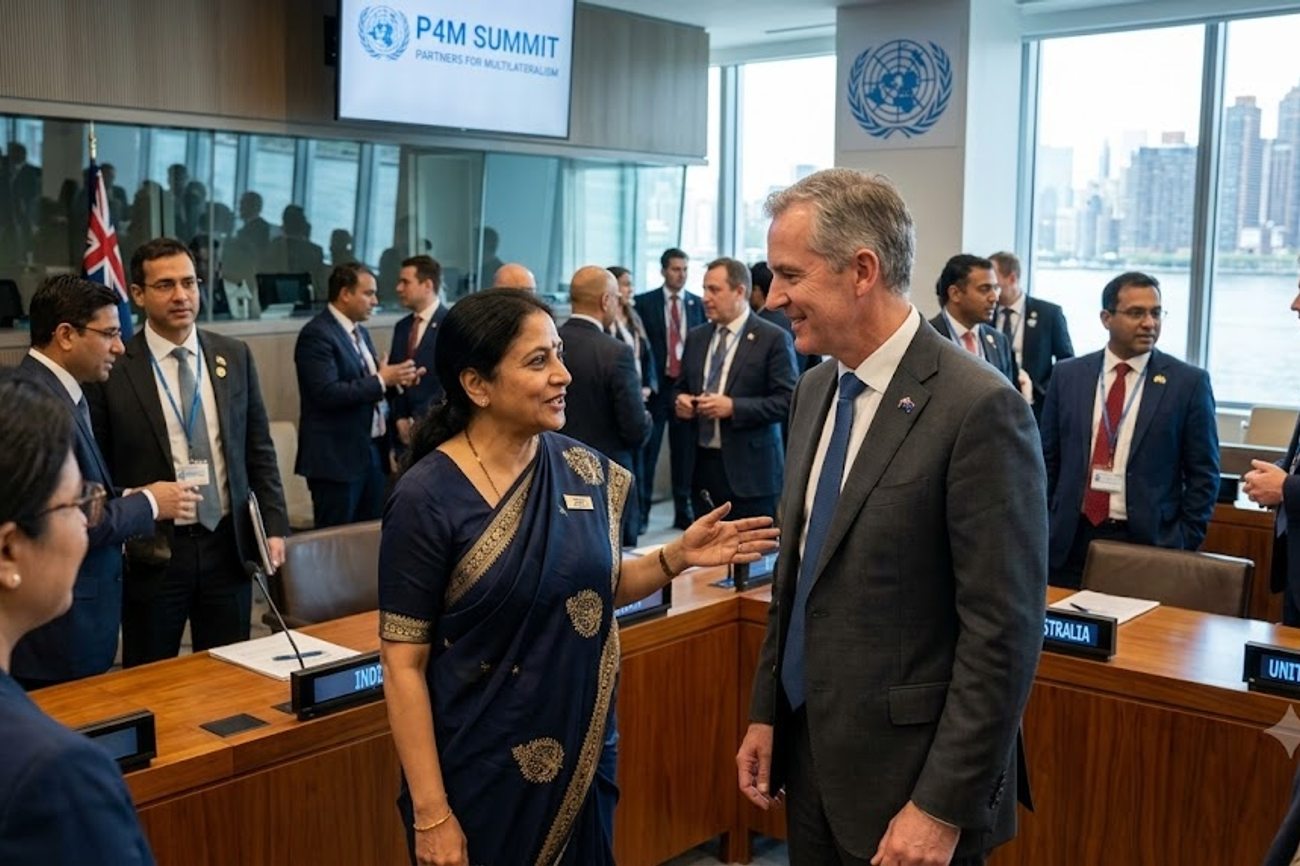
Image generated by AI
India joined other countries at the United Nations in New York on 21 September 2026 to launch Partners for Multilateralism (P4M). P4M aims to strengthen international cooperation to mitigate the challenges posed by transnational crises. Currently, it largely focuses on delivering crisis management and response to transnational crises. While improved international cooperation would likely benefit travellers, in the short term it could better alert and assist travellers when flights are cancelled and travellers are stranded. The P4M declaration does not address any of the above concerns, and therefore, it is unlikely to benefit travellers. The potential impact of P4M lies in improving government systems to deliver crisis response.
What the P4M summit agreed
The founding countries launched Partners for Multilateralism, or P4M, during the UN General Assembly’s high-level week. Its joint declaration commits them to peace, international law and stronger institutions that can respond to crises. (www.consilium.europa.eu)
The declaration also has 15 additional signatories, including Albania, Finland, Norway, Spain and Türkiye. Their participation gives the initiative a wider reach than the seven initial co-sponsors named in the headline. (www.consilium.europa.eu)
Travel and tourism are not named as P4M programmes. The agreement sets out broad goals. It does not establish a shared system for passenger alerts, emergency flights or help for visitors whose journeys are interrupted.
That distinction shapes the travel story. A diplomatic pledge cannot rebook a cancelled flight. It may, however, raise a useful question for the founding governments: when a crisis crosses borders, how will their promise of better cooperation translate into action people can see?
Why this matters beyond the summit room
International tourism depends on routes that cross several countries. A traveller may leave India, change aircraft elsewhere and arrive in a destination governed by a different set of warnings and entry rules.
Conflict can make that journey uncertain at several points. Flights may be diverted, an airport may become inaccessible, or a government may change its advice while a passenger is already away.
Australia’s Smartraveller guidance on conflict-related disruption illustrates the practical problem. It warns that airspace can close with little notice and tells travellers to check updates from airlines, travel providers and insurers. It also notes that airport, phone and internet services may be disrupted. (Smartraveller)
These are established travel risks. The P4M declaration has not changed Australia’s advice or created a new route around disruption. It places crisis response on a broader diplomatic agenda.
The P4M Summit has brought together key stakeholders from India, Australia, and other countries to discuss strategies for mitigating the impact of the travel crisis on the aviation industry. According to the International Air Transport Association (IATA), the summit aims to enhance collaboration and coordination among participating nations to ensure a more resilient and responsive travel ecosystem. This partnership is expected to yield significant benefits for passengers and airlines alike.
A large industry with no P4M travel target
The scale of international tourism explains why crisis coordination is worth examining. UN Tourism estimated 1.52 billion international tourist arrivals in 2025, up 4% on 2024. Those are global figures; they are not a measure of travel between P4M countries. (unwto.org)
The declaration publishes no visitor target, tourism revenue forecast or estimate of jobs linked to the initiative. It also announces no airline funding or airport investment.
For hotels, tour operators and local businesses, a prolonged route closure can mean changed bookings and uncertain arrival dates. That is a reasonable industry concern, but no economic benefit from P4M can yet be measured.
What governments already do for travellers
Existing services show what help looks like today. The Australian Government advises people affected by flight changes to stay in contact with their airline, travel agent and insurer. Australians needing emergency consular assistance can contact its 24-hour service. (Smartraveller)
Canada’s Registration of Canadians Abroad is a free service that allows officials to notify registered travellers about emergencies at their destination. It is a Canadian service, rather than a new P4M measure. (travel.gc.ca)
The comparison points to a reporting question: could the participating governments share useful crisis information more effectively while each remains responsible for advising and assisting its own nationals? The declaration makes no such operational commitment.
What is confirmed What has not been announced P4M members pledged to improve international crisis response. A joint system for stranded travellers.
Passenger logistics have been a major focus area for the P4M Summit, with discussions centered on streamlining travel procedures and minimizing disruptions. The Australian Government Department of Home Affairs has emphasized the importance of implementing efficient and secure border control measures to facilitate smooth travel experiences. By leveraging technology and data analytics, participating countries can optimize their passenger processing systems and reduce wait times. The initiative includes countries across several regions. Common travel advice or entry rules. Members plan regular exchanges and practical cooperation. Emergency flights, passenger funding or a launch date for a travel scheme.
The confirmed commitments come from the European Council’s declaration. The second column identifies measures the document does not announce. (www.consilium.europa.eu)
The test for airlines and destinations
For an airline, useful crisis information includes whether airspace is available and whether an airport can receive a flight. For a traveller, the immediate concerns may be simpler: whether a flight will operate, where to stay and whom to contact.
Tourism businesses face a different task. They need to explain changes clearly to guests and avoid presenting uncertain departure plans as confirmed. A tour operator also has to keep track of advice that may change during a trip.
P4M could provide a forum for wider discussion of crisis response. It has announced no aviation agreement or instructions for airlines, airports and hotels. Any story claiming new protection for their customers would go beyond the evidence available.
What travellers should do now
The summit has made no change to an existing booking. Travellers should therefore continue to use the channels that apply to their own journey and nationality.
The P4M Summit has also provided valuable insights into the tourism sector, highlighting the need for sustainable and responsible travel practices. The Incredible India tourism campaign has been showcased as a model for promoting cultural heritage and environmental conservation, while the Australian Tourism Board has shared its expertise on developing innovative and inclusive tourism initiatives. By adopting a collaborative approach, participating nations can create more appealing and sustainable tourist destinations.
Before leaving, check official advice for the destination and any transit point. Read the insurance terms for cancellations and disruption. If a flight changes, confirm its status with the airline or travel provider before heading to the airport.
While abroad, follow local authorities’ instructions and keep family or travelling companions informed. Contact the relevant embassy or consular service if urgent assistance is needed. Those steps come from existing government guidance, not from P4M. (Smartraveller)
FAQs for travellers Has P4M introduced a new emergency service?
No. The founding declaration announces no P4M traveller hotline, evacuation service or passenger assistance scheme. Use the official services provided by your government and contact your airline about your booking. (www.consilium.europa.eu)
Will joining P4M make it easier to enter member countries?
No entry or visa change is announced in the declaration. Check the current requirements issued by the destination’s immigration authority before travelling. (www.consilium.europa.eu)
What if conflict disrupts my flight?
Check the airline’s latest instructions, official advice for your location and transit points, and your insurance cover. Follow local safety instructions. If you need urgent consular help, contact the service responsible for your nationality. (Smartraveller)
Conclusion
The meeting in New York fostered cooperation to develop more effective means of international travel from India, Australia and Canada and other partners. The Travel Declaration has been signed, but its impact remains to be seen. The Declaration points to the need for more flexible, responsive international institutions, but provides no assistance for flight cancellations and stranded travelers. The international community should address the challenges and difficulties that occur when travel routes are closed and when people find themselves in other countries needing assistance. In the absence of new initiatives, travelers need to use existing res
FAQ: India Teams Up With Australia and More in 2026
What is the P4M Summit? A global meeting for crisis response in travel.
Which countries are participating? India, Australia, and other key nations.
How will it impact travelers? Enhanced safety and support during crises.
When will the summit take place? In late 2026, exact dates to be announced.
Related Travel Guides
Disclaimer
This article is for informational and educational purposes only. It does not constitute legal, financial, or professional advice. While we strive to provide accurate and up-to-date information, travel policies, regulations, and conditions change rapidly. Always verify information with official sources before making travel decisions. Nomad Lawyer makes no representations about the accuracy, reliability, completeness, or suitability of the information provided. Readers should consult qualified professionals for advice specific to their circumstances. The views expressed in this article are those of the author and do not necessarily reflect the views of Nomad Lawyer.
Preeti Gunjan
Contributor & Community Manager
A passionate traveller and community builder. Preeti helps grow the Nomad Lawyer community, fostering engagement and bringing the reader experience to life.
Learn more about our team →