
Norway Pushes Hydrogen Cruise Travel Forward With Ancona Built Ships Nearing Passenger Service
Norway Pushes Hydrogen Cruise Travel Forward With Ancona Built Ships Nearing Passenger Service

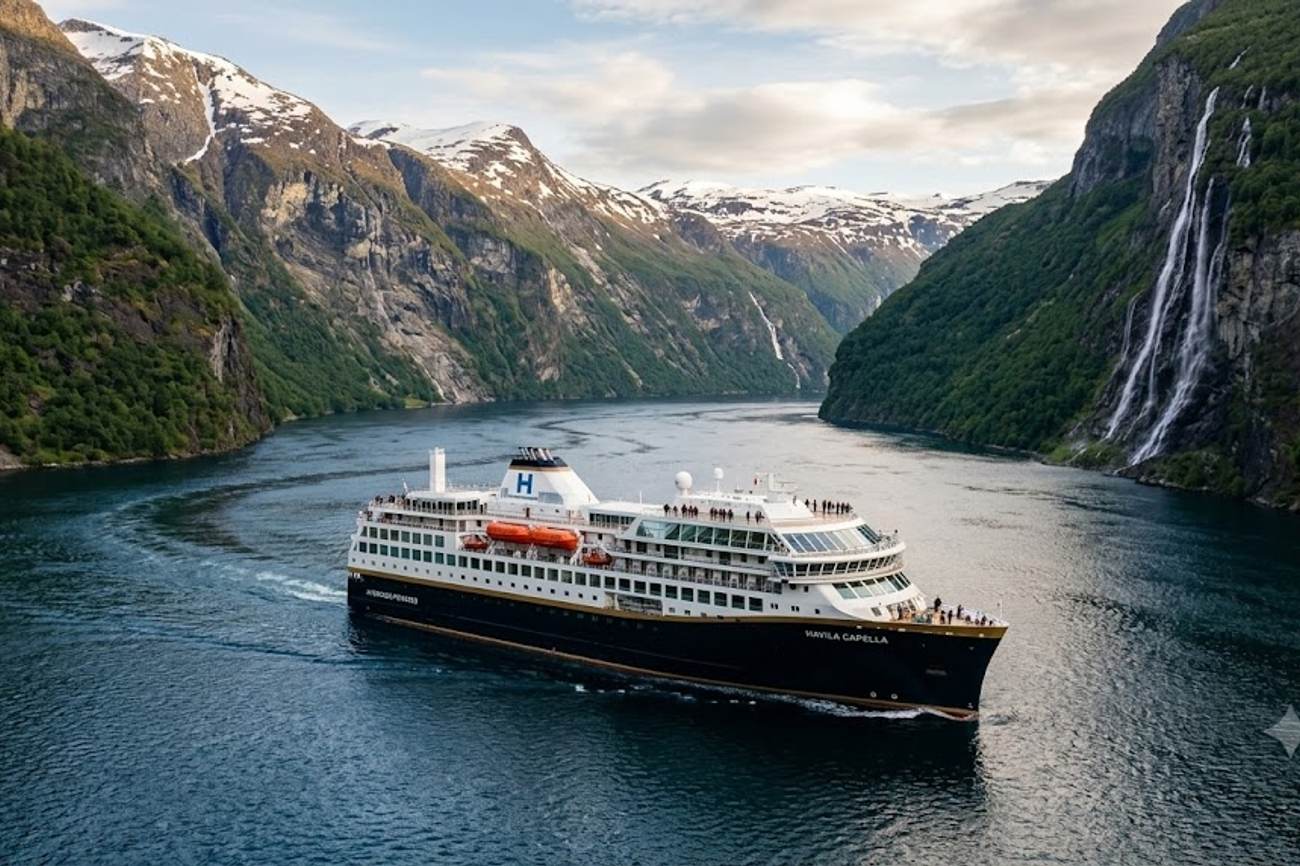
Image generated by AI
998 passengers will be the initial test group for a paradigm shift in maritime propulsion as the Viking Libra prepares for its 2026 debut. This vessel represents the first commercially viable transition from experimental hydrogen prototypes to large-scale passenger operations. By integrating liquefied hydrogen and fuel-cell technology into a 54,300-tonne hull, the industry is attempting to decouple luxury cruising from the carbon-heavy legacy of heavy fuel oils, specifically targeting the stringent environmental mandates of the Nordic region.
The Ancona Industrial Pivot
The technical realization of this transition is centered at the Fincantieri shipyard in Ancona, Italy. This facility is no longer merely assembling luxury hotels for the sea; it has become a laboratory for hydrogen integration. The Viking Libra is not a boutique demonstration craft but a full-scale commercial entity measuring approximately 239 metres in length.
The engineering challenge lies in the scale of the energy requirements. To power a vessel of this magnitude, Fincantieri has implemented a fuel-cell capability of up to 6 megawatts. This system allows the ship to generate electricity and propulsion through a chemical reaction between hydrogen and oxygen, emitting only water vapor. This technological leap is designed to satisfy the increasing regulatory pressure from the International Maritime Organization (IMO), which continues to tighten global emissions standards for non-stationary shipping.
Operational Specifications and Fleet Expansion
The deployment of hydrogen technology is not an isolated event but the start of a structured fleet rollout. Viking has already committed to a second vessel, the Viking Astrea, which is slated for delivery in 2027. This sequential launch suggests that the operator is moving toward a standardized hydrogen-powered architecture rather than a one-off experiment.
The following data outlines the physical and technical parameters of the lead vessel:
| Specification | Viking Libra Detail |
|---|---|
| Shipyard | Fincantieri Ancona, Italy |
| Delivery Target | Late 2026 |
| Gross Tonnage | Approximately 54,300 tonnes |
| Length | Approximately 239 metres |
| Guest Capacity | Up to 998 guests |
| Stateroom Count | 499 |
| Energy Source | Liquefied hydrogen and fuel cells |
| Power Output | Up to 6 megawatts |
The transition from traditional propulsion to this new architecture represents a fundamental change in how cruise ships function. While previous "green" initiatives focused on scrubbing emissions or improving engine efficiency, the Viking Libra targets the energy source itself.
Expert Analysis: The Geopolitics of Port Access
For the modern traveler, the shift to hydrogen is less about the chemistry of the fuel and more about the geography of the itinerary. The strategic alignment between the Italian shipyards and the Norwegian coastline is a calculated response to "environmental protectionism."
Norway has positioned itself as the global epicenter for clean maritime solutions. Because the Norwegian fjords are ecologically sensitive, the Norwegian government has historically signaled a move toward zero-emission requirements for all ships entering these waters. For cruise operators, the risk is simple: if a vessel cannot operate with zero emissions, it will eventually be banned from the most lucrative and scenic ports in the North.
The direct consequence for travelers booking these routes is a bifurcation of the cruise market. We are entering an era where "access" is tied to "emission levels." Passengers on hydrogen-powered ships like the Viking Libra will likely have access to restricted fjords and pristine coastal zones that will be closed to traditional diesel-powered ships. This creates a new tier of "exclusive" cruising based on sustainability credentials rather than just ticket price.
Furthermore, the pricing pressure created by the high cost of liquefied hydrogen and the infrastructure required to support it will likely be passed down to the consumer. Travelers should expect a premium on "Zero-Emission" itineraries. The success of this model depends entirely on the International Air Transport Association (IATA) and similar logistics bodies coordinating the wider energy supply chain, as a ship is only as green as the hydrogen it carries. If the hydrogen is produced via "grey" methods (natural gas), the environmental gain is marginalized.
Key Takeaways
- Strategic Access: Hydrogen propulsion is being deployed specifically to maintain access to environmentally protected regions, most notably the Norwegian fjords.
- Fleet Scaling: The transition is a multi-ship strategy, with Viking Libra (2026) and Viking Astrea (2027) signaling a shift toward commercial hydrogen fleets.
- Technical Scale: The 6-megawatt fuel-cell system proves that hydrogen can power large-scale vessels (54,300 tonnes), not just small ferries.
- Market Bifurcation: Future cruise itineraries will likely be divided between "standard" routes and "zero-emission" routes with exclusive port access.
- Infrastructure Dependency: The viability of these ships relies on the rapid development of hydrogen refueling hubs in ports like Oslo and other key Nordic gateways.
FAQ: Hydrogen Cruising 2026
Will hydrogen-powered cruises be more expensive for passengers? Likely yes. The initial capital expenditure for fuel-cell technology and the current higher cost of green hydrogen compared to marine gas oil will likely result in premium pricing for these specific itineraries.
Does a hydrogen ship mean the cruise is completely carbon-neutral? It depends on the hydrogen source. While the ship emits only water at the point of use, the total carbon footprint depends on whether the hydrogen was produced using renewable energy (green) or fossil fuels (grey).
Which destinations will these ships visit first? The primary focus is Norway and its sensitive fjord regions, where local regulations are pushing for zero-emission maritime traffic to protect natural landscapes.
Is hydrogen technology safe for passengers on a large ship? Yes. Shipbuilders like Fincantieri adhere to rigorous international safety standards for the storage and handling of liquefied gases, utilizing specialized containment systems to ensure passenger safety.
The era of the diesel-powered behemoth is facing its first genuine technological challenger in the fjords of the North.
Tags: Viking Libra, Fincantieri Ancona, Norway Sustainable Tourism, Hydrogen Propulsion 2026, Viking Astrea, Zero-Emission Cruising
Related Travel Guides
Disclaimer
This article is for informational and educational purposes only. It does not constitute legal, financial, or professional advice. While we strive to provide accurate and up-to-date information, travel policies, regulations, and conditions change rapidly. Always verify information with official sources before making travel decisions. Nomad Lawyer makes no representations about the accuracy, reliability, completeness, or suitability of the information provided. Readers should consult qualified professionals for advice specific to their circumstances. The views expressed in this article are those of the author and do not necessarily reflect the views of Nomad Lawyer.
Kunal K Choudhary
Co-Founder & Contributor
A passionate traveller and tech enthusiast. Kunal contributes to the vision and growth of Nomad Lawyer, bringing fresh perspectives and driving the community forward.
Learn more about our team →