
ICAO, ACI, IATA Accessibility Symposium 2026: Driving Global Aviation Inclusion
ICAO, ACI, and IATA will convene in Montréal on October 14–15, 2026, to standardize global air travel accessibility for 1.3 billion people with disabilities.

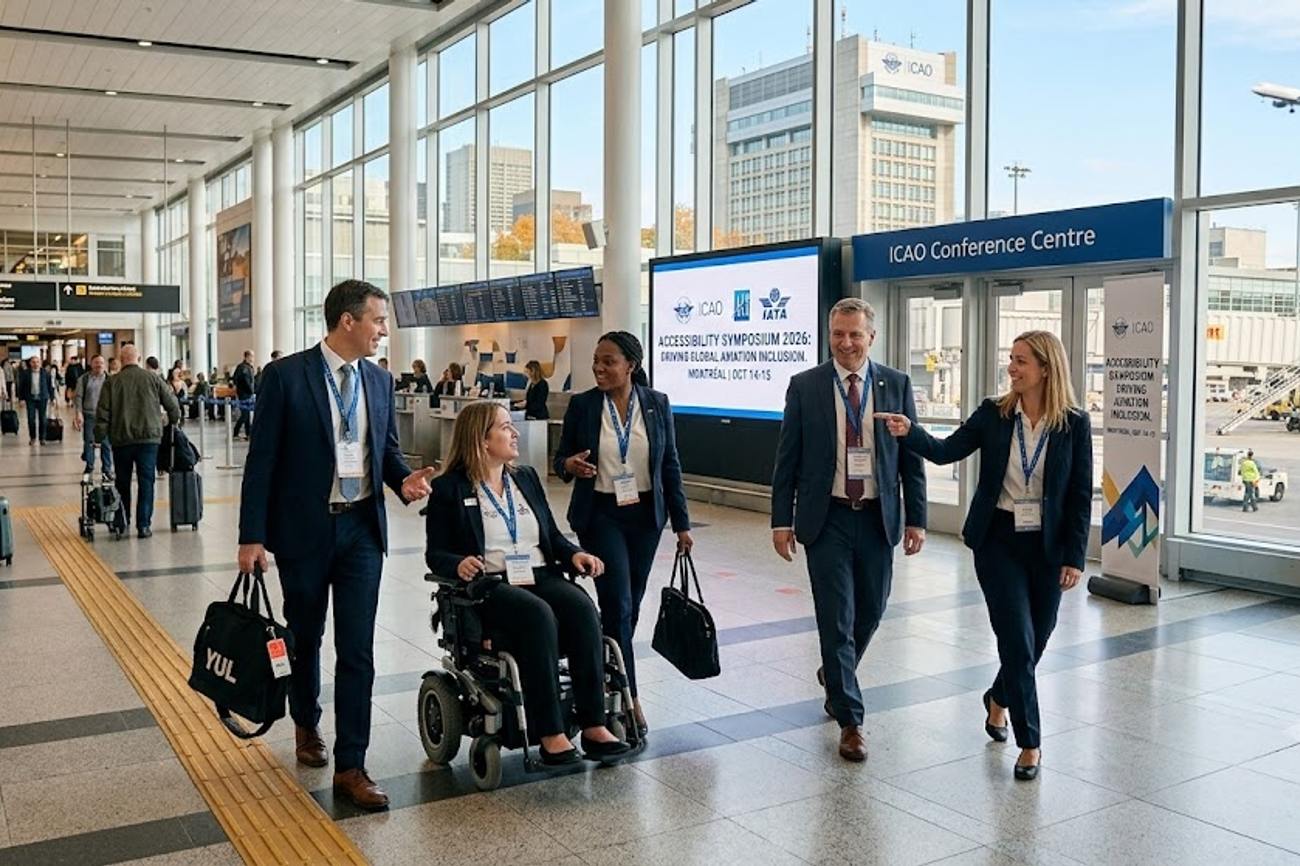
Image generated by AI
ICAO, ACI, and IATA to Convene Second Global Accessibility Symposium in Montréal
The International Civil Aviation Organization (ICAO), Airports Council International (ACI), and the International Air Transport Association (IATA) have announced the Second Joint Symposium on Accessibility in International Civil Aviation. Scheduled for 14–15 October 2026 at ICAO Headquarters in Montréal, the event aims to synchronize accessibility standards across the entire passenger journey.
This summit follows the initial joint gathering held in December 2024. The 2026 session, themed “Advancing Global Commitment to Inclusive and Universally Accessible Air Transport for All,” moves beyond theoretical frameworks to focus on the practical implementation of harmonized solutions across international borders.
The symposium will address the "end-to-end" travel chain, recognizing that a failure in any single touchpoint—from digital booking and security screening to mobility equipment handling and onward travel—compromises the entire journey.
Key Facts Breakdown
- Dates: 14–15 October 2026.
- Location: ICAO Headquarters, Montréal, Canada.
- Lead Organizations: ICAO, ACI, and IATA.
- Core Objective: Implementing harmonized, cross-border accessibility solutions.
- Regulatory Framework: Discussions will align with ICAO Annex 9 (Facilitation).
- Demographic Driver: WHO data cited by ACI indicates over 1.3 billion people (approximately 16% of the global population) live with a disability.
- Scope: Covers booking, check-in, security, border control, terminal navigation, inflight services, and mobility aid handling.
Accessibility Metrics & Drivers
| Driver | Data / Detail | Impact on Aviation |
|---|---|---|
| Affected Population | 1.3 Billion+ People | Represents 16% of global population |
| Primary Regulation | ICAO Annex 9 | Standardizes "Facilitation" of travel |
| Key Timeline | Oct 14–15, 2026 | Shift from commitment to implementation |
| Critical Gap | Regulatory Variance | Inconsistency between departure, hub, and destination |
Why This Matters: Industry Analysis
From a logistical perspective, the aviation industry has historically treated accessibility as a series of isolated operational tasks—such as providing a wheelchair—rather than a cohesive service design. Our analysis indicates that the real friction for passengers with disabilities occurs at the "hand-off" points between different stakeholders (e.g., from the airline to the airport ground handler, or from a national border agency to the carrier).
By linking this symposium to ICAO Annex 9, the industry is signaling a move toward regulatory harmonization. For operators, this means a shift away from fragmented local policies toward a global baseline. If successful, this reduces the liability and operational risk associated with the mishandling of mobility equipment and ensures a predictable experience for the 16% of the population currently underserved by inconsistent standards.
Forward Outlook
The October 2026 symposium will likely result in a formalized "Accessibility 2026" program. Expect a surge in procurement for accessibility-focused technologies, specifically in AI-driven navigation for terminals and standardized digital declarations for assistance needs. The exhibition component of the event will serve as a primary indicator of which assistive technologies are moving from prototype to industry-standard adoption.
Internal Link Suggestions:
- Guide to ICAO Annex 9 and Passenger Facilitation
- Trends in Airport Infrastructure for Aging Populations
- The Evolution of Ground Handling Standards for Mobility Equipment
Related Travel Guides
Disclaimer
This article is for informational and educational purposes only. It does not constitute legal, financial, or professional advice. While we strive to provide accurate and up-to-date information, travel policies, regulations, and conditions change rapidly. Always verify information with official sources before making travel decisions. Nomad Lawyer makes no representations about the accuracy, reliability, completeness, or suitability of the information provided. Readers should consult qualified professionals for advice specific to their circumstances. The views expressed in this article are those of the author and do not necessarily reflect the views of Nomad Lawyer.
Kunal K Choudhary
Co-Founder & Contributor
A passionate traveller and tech enthusiast. Kunal contributes to the vision and growth of Nomad Lawyer, bringing fresh perspectives and driving the community forward.
Learn more about our team →