
How AI-Powered Airport Security Systems Are Making Global Travel Safer and Faster in 2026
Global air travel is hitting record numbers in 2026. Discover how AI-powered airport security systems speed up screening, protect restricted areas, and enhance safety.

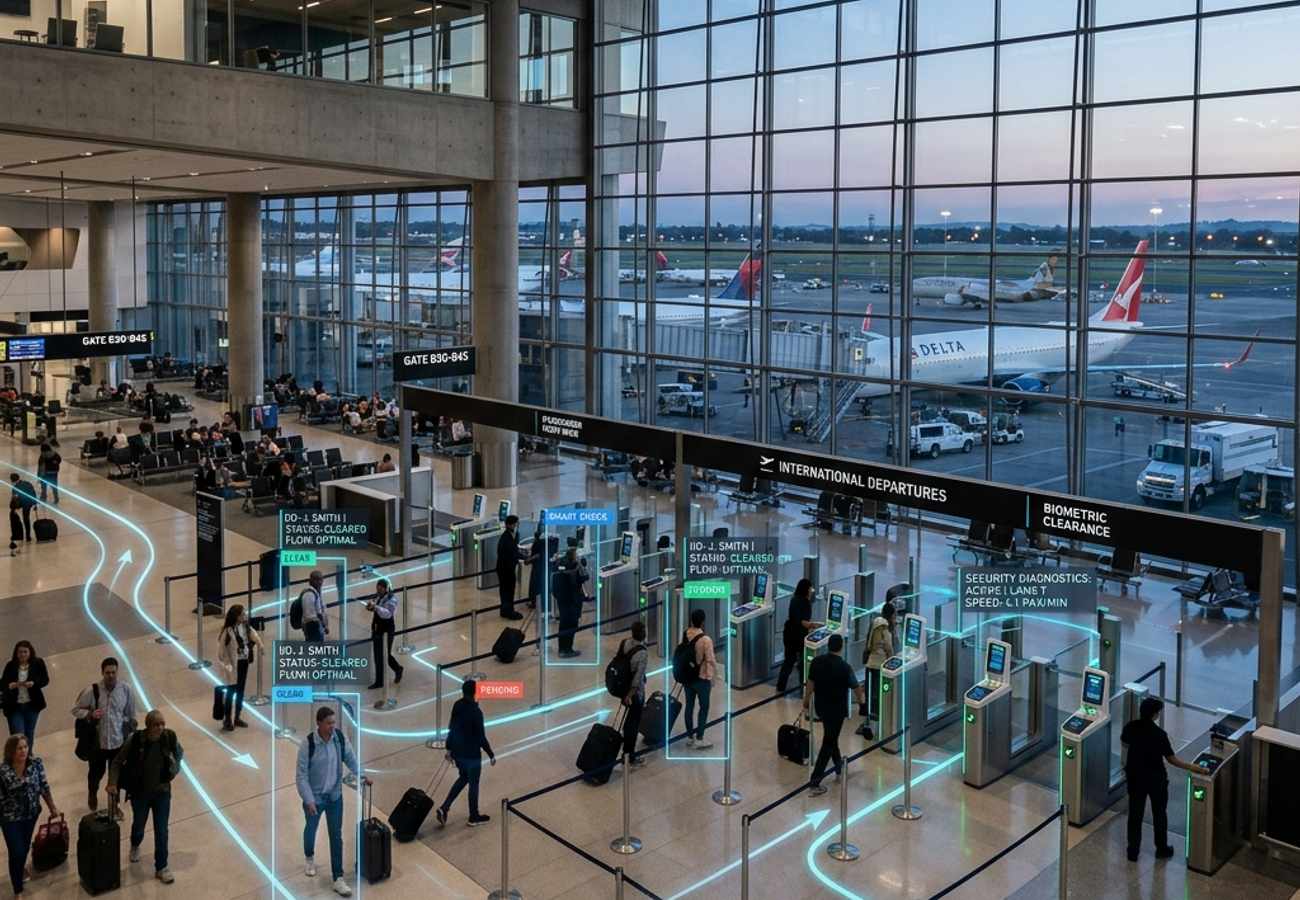
Image generated by AI
Air travel is reaching record levels. According to the International Air Transport Association (IATA), global passenger traffic has recovered beyond pre-pandemic levels, with airlines carrying more than 5 billion passengers annually. Every day, thousands of commercial flights move millions of travelers through airports, making aviation one of the busiest transportation networks in the world.
As passenger numbers continue to grow, airports face increasing pressure to strengthen security without creating longer queues or delays. Traditional surveillance systems that rely heavily on manual monitoring struggle to keep up with massive terminals, restricted airside zones, baggage handling areas, and thousands of cameras operating around the clock. Even a single unattended bag or unauthorized entry into a secure area can disrupt operations and affect thousands of passengers.
This is why AI-powered airport security system technologies are becoming a priority for airports worldwide. By combining intelligent video analytics, automated threat detection, and real-time monitoring, these systems help security teams respond faster while improving the passenger experience.
In this article, you'll learn how AI is transforming airport security in 2026, the biggest benefits it offers airports and travelers, and why intelligent surveillance is becoming essential for the future of global aviation.
1. AI Detects Security Threats Before They Escalate
Modern airports generate an enormous amount of video every minute. Security personnel simply cannot watch hundreds or thousands of live camera feeds simultaneously with the same level of attention throughout the day.
AI changes this by continuously analysing live video feeds and immediately identifying unusual activities.
Instead of waiting for someone to notice suspicious behaviour, AI can automatically detect:
- Unauthorized access to restricted areas
- Unattended baggage
- Perimeter breaches
- Loitering in sensitive locations
- Suspicious movement near terminals or runways
For example, many international airports now use AI to automatically alert security teams when luggage is left unattended beyond a defined time threshold, allowing officers to investigate much faster than manual monitoring alone.
Platforms such as Coram demonstrate how a modern airport security system can enhance existing IP camera infrastructure with AI-powered monitoring. According to Coram's airport solution, the platform detects unauthorized access, unattended baggage, suspicious behaviour, and perimeter breaches in real time while providing AI-powered search, airport maps, automated alerts, centralized cloud monitoring, and integration with airport access control systems without requiring airports to replace their existing camera infrastructure.
2. Passenger Screening Becomes Faster Without Reducing Security
One of the biggest challenges airports face is balancing security with passenger convenience.
Lengthy security lines frustrate travelers while placing additional pressure on airport staff.
AI helps improve this balance by analysing passenger movement, identifying congestion points, and providing operational insights that allow airports to optimize staffing and checkpoint operations.
Instead of reacting after queues become excessive, airports can:
- Predict bottlenecks
- Redirect passengers
- Allocate additional screening staff
- Improve checkpoint throughput
Large international airports processing tens of millions of passengers each year increasingly rely on AI analytics to improve operational efficiency while maintaining strict security standards.
The result is shorter waiting times without compromising safety.
3. AI Helps Protect Restricted Airport Areas
Not every airport security risk comes from passengers.
Restricted locations such as:
- Aircraft parking stands
- Maintenance hangars
- Air traffic facilities
- Fuel storage areas
- Baggage handling zones
- Staff-only corridors
require continuous monitoring.
Traditional badge systems only record who enters an area.
AI goes further by detecting unusual access patterns, identifying repeated failed access attempts, recognising suspicious movement, and notifying security teams immediately.
This additional layer of intelligence helps prevent insider threats, unauthorized entry, and operational disruptions before they become larger incidents.
4. Faster Incident Investigations Save Valuable Time
Airport investigations often involve reviewing hours of surveillance footage.
Finding one individual among thousands of passengers can take significant time when investigators manually search recordings.
AI-powered search dramatically reduces this workload.
Instead of manually reviewing video, investigators can search using natural descriptions or specific objects and rapidly locate relevant footage.
This allows airport security teams to:
- Respond faster
- Preserve evidence
- Share incident footage securely
- Support law enforcement investigations
- Reduce manual review time
When every minute matters, faster investigations can significantly improve airport response capabilities.
5. Better Passenger Flow Improves the Travel Experience
Airport security is no longer focused only on preventing threats.
Today's airports also use AI to improve operational efficiency.
Video analytics can measure:
- Queue lengths
- Passenger movement
- Crowd density
- Boarding gate congestion
- Baggage claim traffic
These insights help airport operators make informed decisions throughout the day.
For example, if passenger traffic suddenly increases at one security checkpoint, additional staff can be deployed before long queues begin forming.
This creates a smoother experience for travelers while helping airports operate more efficiently.
6. Multi-Terminal Security Becomes Easier to Manage
Many international airports operate across multiple terminals, parking facilities, cargo areas, and maintenance locations.
Managing security separately for every site creates operational complexity.
Cloud-based AI platforms allow security teams to monitor multiple locations through a centralized dashboard.
Instead of switching between different systems, operators gain:
- Unified monitoring
- Centralized incident management
- Shared alerts
- Live camera visibility
- Easier collaboration across security teams
This centralized approach improves coordination while reducing response times across large airport environments.
7. AI Supports the Future of Smarter Aviation Security
Airports continue to face evolving challenges, from rising passenger volumes to increasingly sophisticated security threats.
AI provides the scalability needed to manage these demands without proportionally increasing staffing costs.
Future airport security systems are expected to become even more intelligent by combining:
- AI-powered surveillance
- Access control
- Predictive analytics
- Cloud-based monitoring
- Automated incident reporting
- Advanced video search
Rather than replacing human security professionals, AI acts as a force multiplier, allowing teams to focus on higher-priority decisions while technology continuously monitors routine activities.
As airports continue investing in digital transformation, intelligent surveillance will become a core part of safer and more efficient global travel.
Key Takeaways
- AI enables airports to detect threats in real time instead of relying solely on manual monitoring.
- Intelligent video analytics improve passenger safety while reducing operational delays.
- Modern airport security systems protect terminals, runways, baggage areas, and restricted zones more effectively.
- AI-powered search dramatically speeds up investigations and incident response.
- Cloud-based platforms simplify security management across multiple terminals and airport facilities.
- Passenger flow analytics help reduce congestion and improve the overall travel experience.
Frequently Asked Questions
What is an airport security system?
An airport security system combines surveillance cameras, access control, AI analytics, and monitoring tools to protect passengers, staff, aircraft, terminals, baggage areas, and restricted zones from security threats.
How does AI improve airport security?
AI continuously analyses live camera feeds to detect suspicious behaviour, unattended baggage, unauthorized access, perimeter breaches, and unusual activity, allowing security teams to respond much faster.
Can AI reduce airport waiting times?
Yes. AI helps airports monitor passenger flow, identify congestion, optimize staffing, and improve checkpoint efficiency, reducing delays while maintaining security standards.
Does AI replace airport security personnel?
No. AI supports security teams by automating routine monitoring and threat detection. Human officers still make operational decisions and respond to incidents.
Why are cloud-based airport security systems becoming popular?
Cloud-based systems allow airports to monitor multiple terminals and facilities from a single platform, making security operations more efficient and easier to manage.
Conclusion
Modern airports must protect millions of passengers while ensuring travel remains fast, efficient, and reliable. Traditional surveillance alone is no longer enough to handle today's complex aviation environment. AI-powered airport security systems provide real-time intelligence, faster investigations, smarter access control, and improved operational visibility, helping airports strengthen safety without slowing down the passenger journey.
As global air travel continues to grow, the question is no longer whether airports should adopt AI-powered security, but how quickly they can implement it to stay ahead of tomorrow's challenges.
Related Travel Guides
Create Better Video Mockups for Campaign Planning with Seedance 2.5
Poland Smart Airport Technology: CT Baggage Scanners Implementation
Smart Airport Biometric Borders & Face Recognition, According to Reddit
Disclaimer
This article is for informational and educational purposes only. It does not constitute legal, financial, or professional advice. While we strive to provide accurate and up-to-date information, travel policies, regulations, and conditions change rapidly. Always verify information with official sources before making travel decisions. Nomad Lawyer makes no representations about the accuracy, reliability, completeness, or suitability of the information provided. Readers should consult qualified professionals for advice specific to their circumstances. The views expressed in this article are those of the author and do not necessarily reflect the views of Nomad Lawyer.
Preeti Gunjan
Contributor & Community Manager
A passionate traveller and community builder. Preeti helps grow the Nomad Lawyer community, fostering engagement and bringing the reader experience to life.
Learn more about our team →