
Boeing's C-17 Globemaster III: Why America's Workhorse Military Transport Continues Production Through 2026
Breaking airline news and aviation industry updates for 2026.

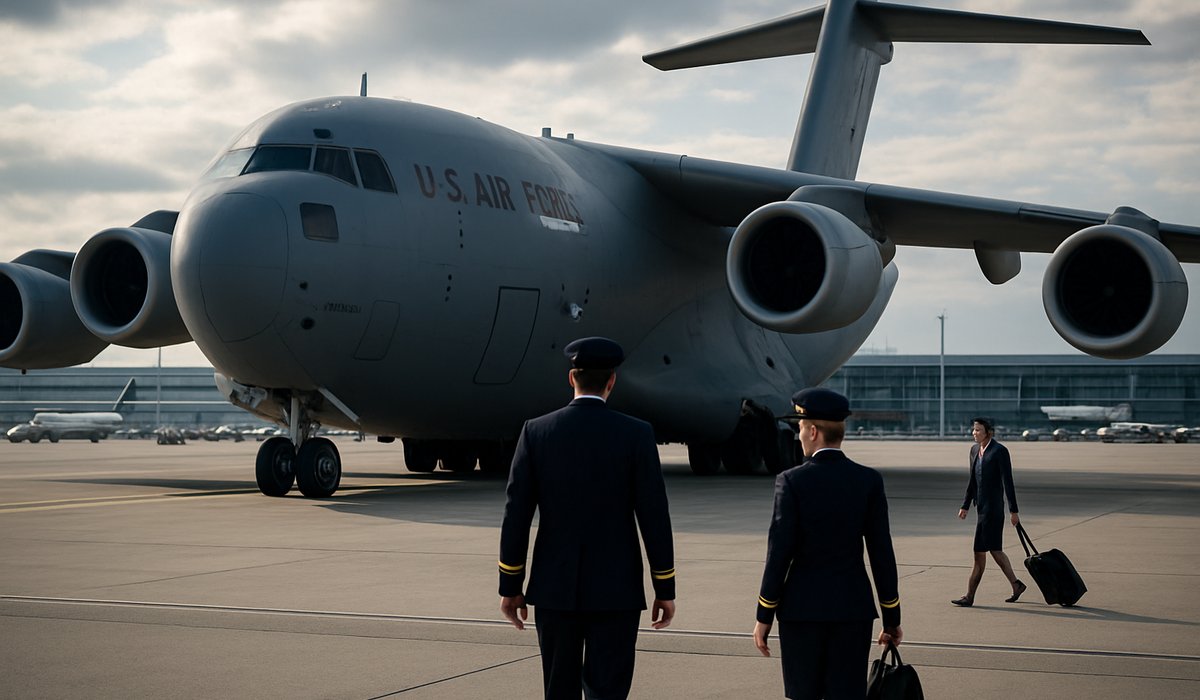
Image generated by AI
Boeing's C-17 Globemaster III: Why America's Workhorse Military Transport Continues Production Through 2026
Decades after its debut, the Air Force's heaviest cargo aircraft remains in active production—a rare testament to enduring defense capabilities and evolving global security needs
The Aircraft That Refuses to Retire
The Boeing C-17 Globemaster III, the United States Air Force's flagship heavy-lift transport platform, continues rolling off production lines well into 2026—more than three decades after its initial operational deployment. Since the first production model achieved full operational capability in 1995, following its maiden delivery in 1993, this strategic asset has become irreplaceable across global military operations, logistics networks, and humanitarian missions worldwide.
A Three-Decade Legacy of Continuous Service
The longevity of the Globemaster III's production run underscores a fundamental reality in modern military aviation: certain platforms are too valuable to discontinue. Unlike commercial aircraft that cycle through market competition and technological obsolescence every 15-20 years, military transport aircraft operate on different timelines. The C-17 has proven its worth across multiple generations of conflicts, from the Balkans through the Middle East to ongoing Pacific deterrence operations.
Why Production Persists Amid Modern Alternatives
The continuation of C-17 manufacturing into 2026 reflects several converging factors. First, the aircraft's unmatched cargo capacity and operational flexibility—capable of delivering 170,000 pounds of payload to austere airfields with minimal infrastructure—remains unrivaled in the global inventory. Second, defense strategists recognize that maintaining production facilities preserves critical industrial capacity and skilled workforce expertise. Third, international demand from allied nations seeking strategic airlift capabilities continues supporting manufacturing operations.
Strategic Implications for Military Readiness
Boeing's sustained production commitment addresses a critical gap in Air Force logistics doctrine. As geopolitical tensions intensify across multiple theaters—from Eastern Europe to the Taiwan Strait—demand for strategic airlift capacity has never been higher. The Air Force's existing fleet of approximately 225 Globemasters operates at elevated utilization rates, creating persistent requirements for platform modernization and capacity expansion.
The aircraft's continuing presence in production lines also signals confidence in its fundamental design, avionics systems, and operational relevance for at least another decade. Recent upgrades to engines, cargo systems, and digital avionics have extended the platform's effective service life and maintained compatibility with evolving military requirements.
Industry Perspective
The decision to sustain C-17 production represents an unusual commitment in aerospace manufacturing, where most programs conclude within 20-30 years. However, the absence of a proven successor platform—and the prohibitive cost of developing next-generation strategic airlift—makes continued production a pragmatic choice for Pentagon planners.
FAQ: Understanding C-17 Production and Military Aviation
Why is the C-17 still being manufactured after 30+ years? The aircraft's unmatched cargo capacity, proven reliability, and lack of viable alternatives make continued production cost-effective for meeting strategic airlift requirements.
How many C-17s does the US military currently operate? The United States Air Force maintains approximately 225 Globemaster III aircraft in active service across global commands.
What makes the C-17 superior to other military transport aircraft? The C-17 can carry 170,000 pounds of cargo and land on unprepared airfields, capabilities unmatched by competitors like the Airbus A400M or Lockheed Martin's C-130 variants.
Which countries operate the C-17 besides the United States? Allied nations including Canada, the United Kingdom, Australia, India, Japan, and the United Arab Emirates operate Globemaster fleets.
When will C-17 production officially end? While production continues through 2026, Boeing and the Pentagon have not announced a definitive termination date, suggesting potential extensions based on strategic requirements.
Related Travel Guides
Flight Delay Compensation Guide 2026
Understanding Airline Route Changes
Airport Security Process Updated (2026)
External Resources
Disclaimer
This article is for informational and educational purposes only. It does not constitute legal, financial, or professional advice. While we strive to provide accurate and up-to-date information, travel policies, regulations, and conditions change rapidly. Always verify information with official sources before making travel decisions. Nomad Lawyer makes no representations about the accuracy, reliability, completeness, or suitability of the information provided. Readers should consult qualified professionals for advice specific to their circumstances. The views expressed in this article are those of the author and do not necessarily reflect the views of Nomad Lawyer.
Raushan Kumar
Founder & Lead Developer
Full-stack developer with 11+ years of experience and a passionate traveller. Raushan built Nomad Lawyer from the ground up with a vision to create the best travel and law experience on the web.
Learn more about our team →