
Airbus A350-1000 Extended-Range Variant Emerges as Ultra-Long-Haul Game-Changer in Widebody Competition
Breaking airline news and aviation industry updates for 2026.

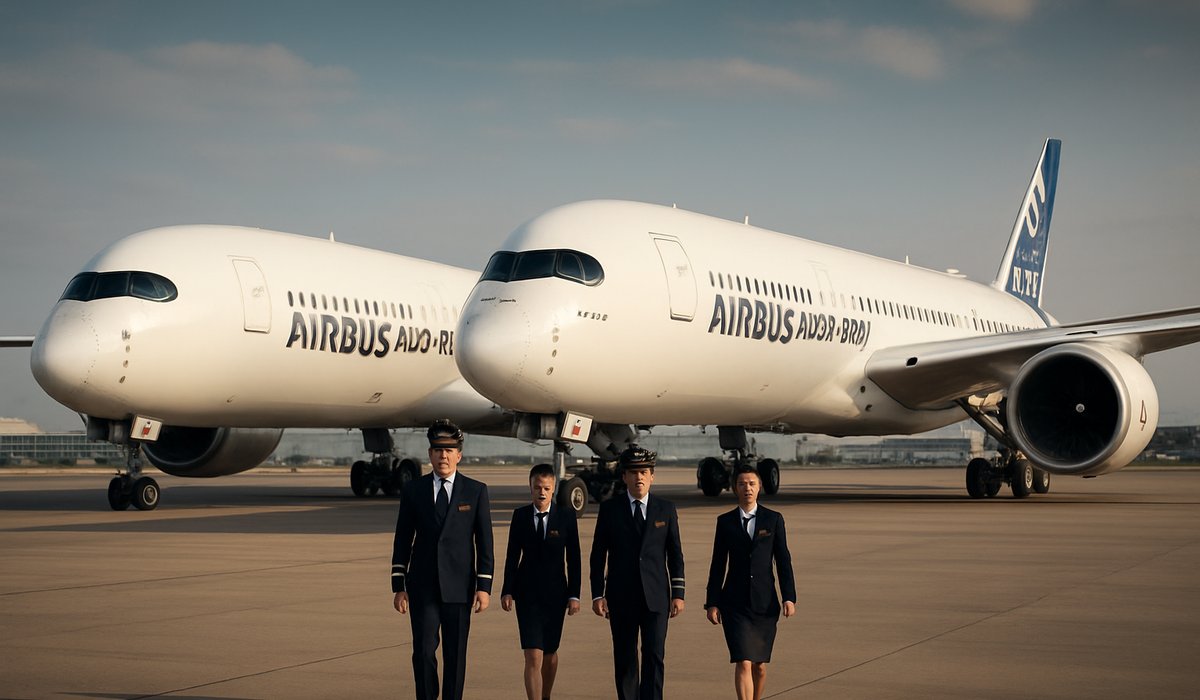
Image generated by AI
Airbus A350-1000 Extended-Range Variant Emerges as Ultra-Long-Haul Game-Changer in Widebody Competition
The stretched variant outpaces Boeing's 787 with significant fuselage expansion and enhanced operational capabilities
Market Positioning and Competitive Landscape
The Airbus A350 has solidified its position as the world's second-leading widebody aircraft in modern aviation, trailing only Boeing's 787 Dreamliner in sales performance. Following the retirement of Airbus' superjumbo A380 program, the A350 series now anchors the manufacturer's premium long-range portfolio, serving as the company's flagship offering for carriers seeking advanced ultra-long-distance connectivity.
A350-1000 Specifications and Range Advantages
The extended A350-1000 variant represents a significant engineering advancement over its predecessor, the A350-900, featuring a notably elongated fuselage that translates directly into operational advantages for international carriers. This stretched configuration delivers measurable advantages in both passenger capacity and range capabilities, positioning the aircraft as a formidable competitor in an increasingly demanding market segment.
One of the A350's most compelling differentiators remains its range superiority relative to competing Boeing platforms. While all three variants of the 787 Dreamliner possess adequate range to service the overwhelming majority of global commercial routes, the A350-1000's extended dimensions and optimized aerodynamics provide operators with additional operational flexibility on ultra-long-haul missions—particularly those exceeding 17 hours of flight time.
Strategic Implications for Airlines
For carriers evaluating fleet expansion strategies, the A350-1000 offers tangible benefits beyond basic specifications. The fuselage elongation permits increased revenue-generating seating configurations without sacrificing the aircraft's celebrated cabin comfort standards or fuel efficiency metrics. Airlines operating transcontinental networks—particularly those connecting Asia-Pacific, Middle Eastern, and European markets—have embraced the platform for its ability to reduce per-seat operating costs on low-density routes.
Industry Context
The competition between Airbus and Boeing in the widebody segment reflects broader aviation industry trends shaped by recovery patterns from pandemic-related disruptions, sustained demand for premium long-range connectivity, and the ongoing transition toward more fuel-efficient aircraft. Jet fuel price volatility and carbon reduction mandates continue influencing carrier procurement decisions, favoring next-generation platforms with demonstrated operational efficiency.
The A350 family's emergence as a core fleet asset underscores the market's persistent appetite for mid-capacity widebody solutions positioned between regional aircraft and ultra-high-capacity platforms.
Frequently Asked Questions
How much longer is the A350-1000 compared to the A350-900? The A350-1000 features a stretched fuselage extending approximately 7 meters (23 feet) beyond the A350-900 baseline, adding meaningful capacity and operational range.
What is the range advantage of the A350-1000 over the Boeing 787? The A350-1000 offers superior maximum range capabilities, enabling operations on ultra-long-haul routes where the 787, while capable, operates closer to maximum fuel capacity limitations.
Why did Airbus discontinue the A380 in favor of the A350? The A380 superjumbo faced declining demand due to high operating costs and limited route profitability, while the A350's efficiency and flexibility proved more economically viable for modern airline operations.
Which airlines operate the A350-1000? Major carriers including Emirates, Singapore Airlines, Qatar Airways, and Air France have committed to significant A350-1000 orders for premium long-haul services.
How does the A350 compare to the Boeing 787 in terms of passenger comfort? Both aircraft feature modern cabin pressurization and humidity systems, though the A350's larger cabin width and extended fuselage accommodate enhanced seating configurations and amenity spaces.
Related Travel Guides
-
United Airlines CEO Proposes Historic Merger with American Airlines to Trump Administration
-
Taiwan Airlines Increase Fuel Surcharges Amid Global Oil Price Surge
External Resources
Disclaimer
This article is for informational and educational purposes only. It does not constitute legal, financial, or professional advice. While we strive to provide accurate and up-to-date information, travel policies, regulations, and conditions change rapidly. Always verify information with official sources before making travel decisions. Nomad Lawyer makes no representations about the accuracy, reliability, completeness, or suitability of the information provided. Readers should consult qualified professionals for advice specific to their circumstances. The views expressed in this article are those of the author and do not necessarily reflect the views of Nomad Lawyer.
Preeti Gunjan
Contributor & Community Manager
A passionate traveller and community builder. Preeti helps grow the Nomad Lawyer community, fostering engagement and bringing the reader experience to life.
Learn more about our team →