
The SR-71 Blackbird's Specialized Black Paint: Engineering Marvel That Made Hypersonic Flight Possible
Breaking airline news and aviation industry updates for 2026.

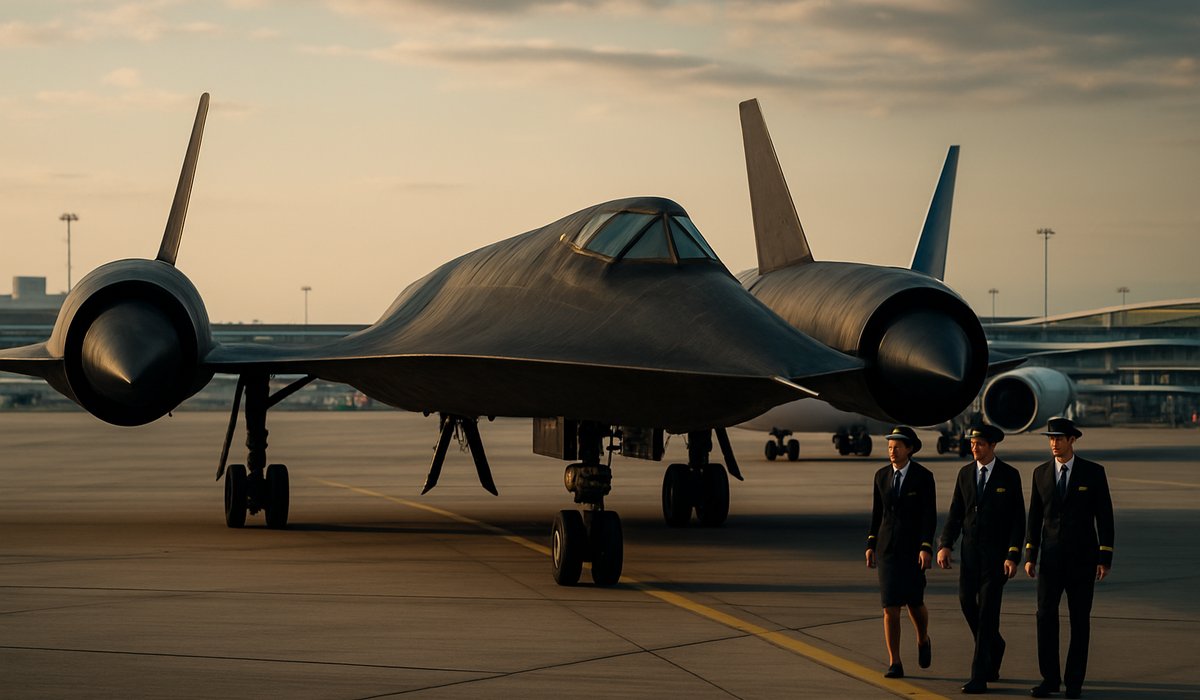
Image generated by AI
The SR-71 Blackbird's Specialized Black Paint: Engineering Marvel That Made Hypersonic Flight Possible
How Cold War-era aerospace innovation solved one of aviation's greatest thermal challenges
Engineering at the Edge of Physics
The SR-71 Blackbird stands as one of aviation's most extraordinary achievements—not merely for its legendary speed, but for its ability to sustain operations in conditions that fundamentally challenged the limits of materials science and aeronautical design. Operating throughout the Cold War as a strategic reconnaissance platform, this aircraft routinely achieved velocities exceeding Mach 3, translating to speeds surpassing 2,000 miles per hour while maintaining altitudes above 80,000 feet. Yet at such extreme velocities, conventional aerodynamic considerations became secondary concerns. The real adversary was heat itself.
The Thermal Crisis of Hypersonic Flight
When an aircraft approaches and exceeds Mach 3, friction with the atmosphere generates temperatures capable of catastrophically weakening metallic structures and compromising standard aircraft components. The outer fuselage of the SR-71 regularly reached temperatures exceeding 900 degrees Fahrenheit—conditions that would render conventional aluminum airframes structurally unsound within minutes.
Engineers recognized that solving this thermal challenge required innovation beyond propulsion or aerodynamics. The solution emerged through a counterintuitive discovery: specialized black paint formulated with specific thermal properties became fundamental to the aircraft's operational feasibility.
Specialized Coatings as Critical Infrastructure
The distinctive black coating applied to the SR-71 was engineered to accomplish two simultaneous objectives. First, it functioned as a radiative cooling system, allowing the aircraft's surface to dissipate extreme heat into the upper atmosphere more efficiently than conventional finishes. Second, the paint's composition provided oxidation protection against the chemical degradation caused by sustained exposure to hypersonic conditions.
This wasn't aesthetic choice—it was structural necessity. The paint's infrared emissivity characteristics allowed accumulated thermal energy to radiate away faster than it could accumulate, maintaining aircraft integrity during extended cruise at extreme speeds and altitudes.
Legacy of Thermal Innovation
The SR-71 program demonstrated that solving aviation's most demanding challenges frequently requires addressing fundamental physics rather than pursuing incremental improvements. The aircraft's black paint became emblematic of this principle: a materials innovation that transformed what seemed physically impossible into operational reality.
Decades later, this approach continues influencing aerospace design, from commercial hypersonic research programs to spacecraft reentry systems. The Blackbird's thermal management legacy reminds engineers that sometimes the most elegant solutions to complex problems emerge from examining constraints as opportunities rather than obstacles.
FAQ
What made the SR-71 Blackbird's black paint essential for Mach 3 flight? The specialized black coating facilitated thermal radiation, allowing the aircraft to dissipate extreme frictional heat generated at hypersonic speeds, preventing structural failure from temperatures exceeding 900°F.
Why did conventional paint fail at hypersonic speeds? Standard aircraft coatings couldn't manage the extreme thermal conditions encountered at Mach 3+, as friction with the atmosphere generated heat that conventional materials couldn't withstand or dissipate effectively.
How hot did the SR-71 Blackbird's exterior become? Outer fuselage temperatures regularly exceeded 900 degrees Fahrenheit during sustained Mach 3 cruise operations—conditions that would compromise traditional aluminum airframe integrity.
What altitude did the SR-71 operate at? The aircraft routinely maintained altitudes above 80,000 feet while sustaining speeds exceeding 2,000 miles per hour (Mach 3+).
Does the SR-71's thermal technology influence modern aviation? Yes—the principles developed for the Blackbird's heat management continue informing contemporary aerospace design, including hypersonic research programs and spacecraft reentry systems.
Related Travel Guides
External Resources
Disclaimer
This article is for informational and educational purposes only. It does not constitute legal, financial, or professional advice. While we strive to provide accurate and up-to-date information, travel policies, regulations, and conditions change rapidly. Always verify information with official sources before making travel decisions. Nomad Lawyer makes no representations about the accuracy, reliability, completeness, or suitability of the information provided. Readers should consult qualified professionals for advice specific to their circumstances. The views expressed in this article are those of the author and do not necessarily reflect the views of Nomad Lawyer.
Preeti Gunjan
Contributor & Community Manager
A passionate traveller and community builder. Preeti helps grow the Nomad Lawyer community, fostering engagement and bringing the reader experience to life.
Learn more about our team →