
Head of the Charles Regatta 2026: Insider Guide to Boston and Cambridge's Autumn Rowing Spectacle
Over 12,000 international rowers and 325,000 spectators converge on the Charles River from 16 to 18 October 2026 as Boston and Cambridge celebrate the 60th Head of the Charles Regatta.

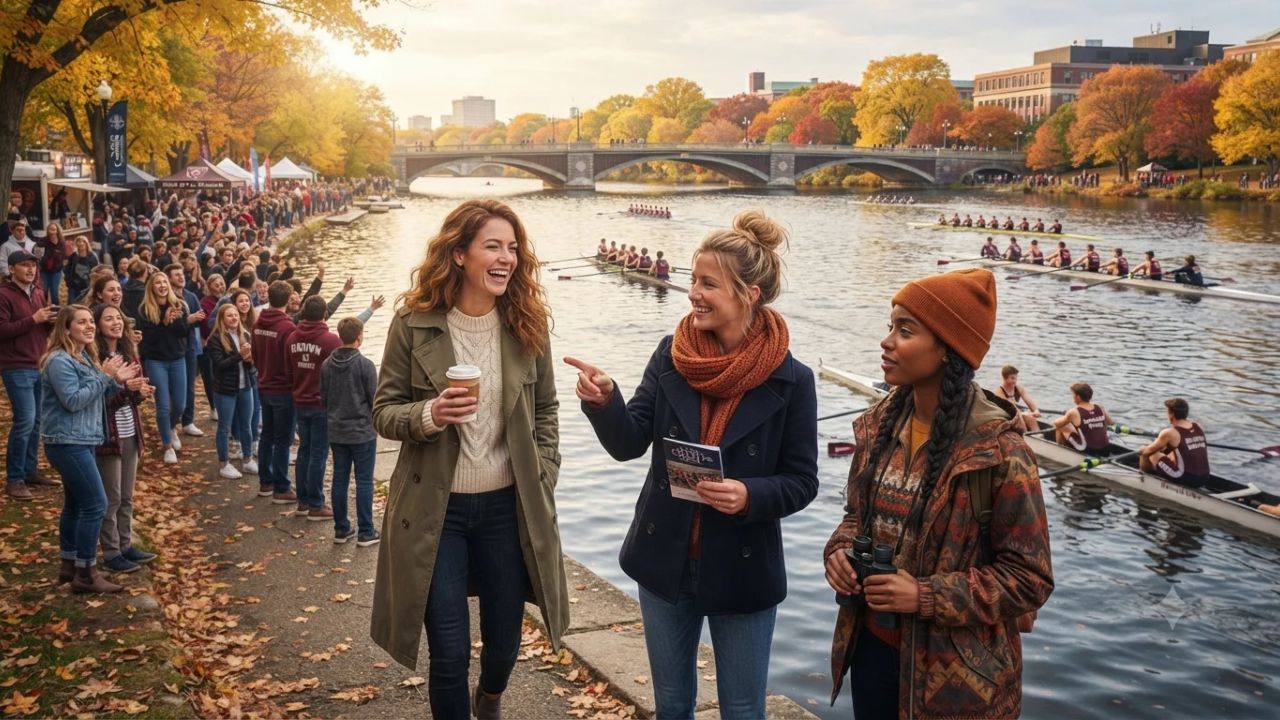
Image generated by AI
Every October, a three-mile stretch of winding river turns into the world’s largest three-day rowing coliseum, drawing more than 12,000 elite athletes and 325,000 spectators to the banks of Boston and Cambridge. Running from 16 to 18 October 2026, the 60th edition of the Head of the Charles Regatta transforms the Charles River basin from a quiet collegiate training channel into an open-air autumn carnival framed by brilliant New England foliage, centuries-old universities, and historic stone arches.
Six Decades of River Racing Tradition
What began on 16 October 1965 with fewer than 100 scullers organized by members of the Cambridge Boat Club and rowing coach Ernest Arlett has evolved into the defining water spectacle of North America. Arlett introduced the traditional British "head of the river" format to Massachusetts, where crews do not race side by side in lanes but instead launch in staggered 15-second intervals, racing relentlessly against the clock.
This format creates continuous suspense for spectators lining the riverbanks. Rather than waiting for a single start gun and a fleeting sprint, visitors witness an unbroken procession of single sculls, doubles, quads, and thunderous eight-person shells carving through the water for hours on end. Competitors range from high school clubs and university powerhouses to Olympic medalists and masters rowers in their seventies, all competing across three intense days.
Delivering an event of this scale requires immense coordination. Supported by state public-safety funding and over 2,400 dedicated volunteers, race organizers manage riverway safety, athlete marshalling, timing docks, and spectator walkways to ensure the waterfront remains welcoming and accessible across the entire weekend.
Navigating the Bridges and Bends of the Charles
The three-mile course begins at the Boston University DeWolfe Boathouse in Boston and winds upstream through Cambridge, terminating just past the historic Eliot Bridge. This is not a forgiving straightaway; the Charles River curves unpredictably, presenting coxswains and single scullers with complex navigation angles, shifting wind currents, and narrow bridge openings.
The critical tactical test happens at the Weeks Footbridge turn. Here, coxswains must steer a razor-thin parabolic arc around a 90-degree river bend without colliding with trailing shells or clipping the stone piers. A fraction of a second lost on the rudder can push a crew into penalty buoys or cost them the race.
Downstream at the Weld Boathouse and Eliot Bridge, crowds gather shoulder-to-shoulder on bridge sidewalks to watch crews navigate tight passing zones. The cheering echoing off the brick walls of Harvard University’s river houses creates an amphitheater atmosphere found nowhere else in competitive water sports.
Prime Spectator Locations Along the Charles River
| Viewing Location | Best For | Atmosphere & Amenities | Transit Access |
|---|---|---|---|
| Boston University Bridge & Start Basin | Race starts & initial boat pacing | Energetic, wide open river views | BU Central on MBTA Green Line |
| Weeks Footbridge | High-drama turns & tactical coxing | Crowded, historic collegiate backdrop | 10-minute walk from Harvard Red Line |
| Weld Exhibition Area | Food trucks, sponsor gear, social hub | Festival village, family-friendly | Midpoint walking paths along Memorial Drive |
| Eliot Bridge & Finish Line | Final sprint drama & hospitality lounges | Eliot Bridge Enclosure, Rowing Expo | 15-minute walk from Harvard Square |
| Magazine Beach Park | Relaxed picnics & open lawns | Quieter stretch with excellent sightlines | Central Station on MBTA Red Line |
Visitor Insider Tips
Experiencing the regatta like a seasoned local means prioritizing foot travel and understanding neighborhood topography on both sides of the river.
- Transit Hack: Do not attempt to drive or park near the river. Major sections of Memorial Drive close to vehicle traffic during the weekend. Take the Massachusetts Bay Transportation Authority Red Line subway to Harvard or Central station for Cambridge-side access, or ride the Green Line B branch to BU Central for the Boston starting docks.
- Bridge Etiquette: While pedestrian footbridges offer the most thrilling overhead views, local race marshals keep foot traffic continuously flowing. Step onto the bridge arches to catch passing races, but avoid setting up stationary chairs or oversized strollers on narrow walkways.
- Neighborhood Dining: Escape the crowded riverside concession tents by walking ten minutes inland to Harvard Square for clam chowder in historic taverns, or head into Inman Square and Central Square for authentic regional seafood, cider donuts, and craft bakeries.
- Weather Preparation: New England October mornings can start near freezing along the open water before warming into crisp sunshine by midday. Dress in layered wools and windbreakers, and wear sturdy walking shoes suited for crushed-stone park paths.
Cultural and Environmental Context
The Charles River stands as one of America's most celebrated urban ecological restorations. Half a century ago, industrial runoff and municipal pollution severely degraded the waterway. Decades of strict environmental stewardship, community cleanups, and watershed management by the Charles River Watershed Association have transformed the river back into a thriving habitat for native river herring, cormorants, and bald eagles.
The Regatta acts as a living demonstration of how active urban recreation and environmental conservation can reinforce one another. Race organizers operate extensive zero-waste stations, encourage reusable water containers, and enforce strict water-quality protocols across the racing basin.
For Boston and Cambridge, the weekend bridges academic heritage, competitive athletics, and public parkland access. It highlights the Charles River not as a barrier between two cities, but as a shared civic commons where international sports and neighborhood life meet every autumn.
FAQ: Visiting Head of the Charles 2026
When is the best time of day to watch the races?
Mid-morning to early afternoon (10:00 AM to 3:30 PM) features the highest concentration of championship collegiate and elite international division races.
Is admission free for spectators along the riverbanks?
Yes. Viewing the racing along public parks, bridges, and Memorial Drive is completely free. Only specialized hospitality lounges like the Eliot Bridge Enclosure require advance paid tickets.
How do visitors get to the Charles River from Logan Airport?
Take the MBTA Silver Line bus from any airport terminal to South Station, transfer directly to the Red Line subway, and ride outbound to Harvard or Central station.
Can visitors rent bicycles during race weekend?
Yes. Bluebikes stations operate throughout Boston and Cambridge, though certain riverside docking stations fill up quickly during peak race hours.
Standing on the stone arches of the Charles as racing shells slice through autumn mist reveals the true, enduring heartbeat of New England.
Related Travel Guides
Exploring Topeka Kansas Civil Rights Heritage Daredevil History 2026
Cape Cod and Martha's Vineyard Autumn Coastal Logistics Guide 2027
Disclaimer
This article is for informational and educational purposes only. It does not constitute legal, financial, or professional advice. While we strive to provide accurate and up-to-date information, travel policies, regulations, and conditions change rapidly. Always verify information with official sources before making travel decisions. Nomad Lawyer makes no representations about the accuracy, reliability, completeness, or suitability of the information provided. Readers should consult qualified professionals for advice specific to their circumstances. The views expressed in this article are those of the author and do not necessarily reflect the views of Nomad Lawyer.
Preeti Gunjan
Contributor & Community Manager
A passionate traveller and community builder. Preeti helps grow the Nomad Lawyer community, fostering engagement and bringing the reader experience to life.
Learn more about our team →