
Hartsfield-Jackson Atlanta Dominates Global Aviation in 2025 With 106 Million Passengers as Asia Pacific Surges
Hartsfield-Jackson Atlanta processes 106M passengers in 2025, maintaining world's busiest airport status as global aviation reaches 9.8B travelers amid capacity constraints.

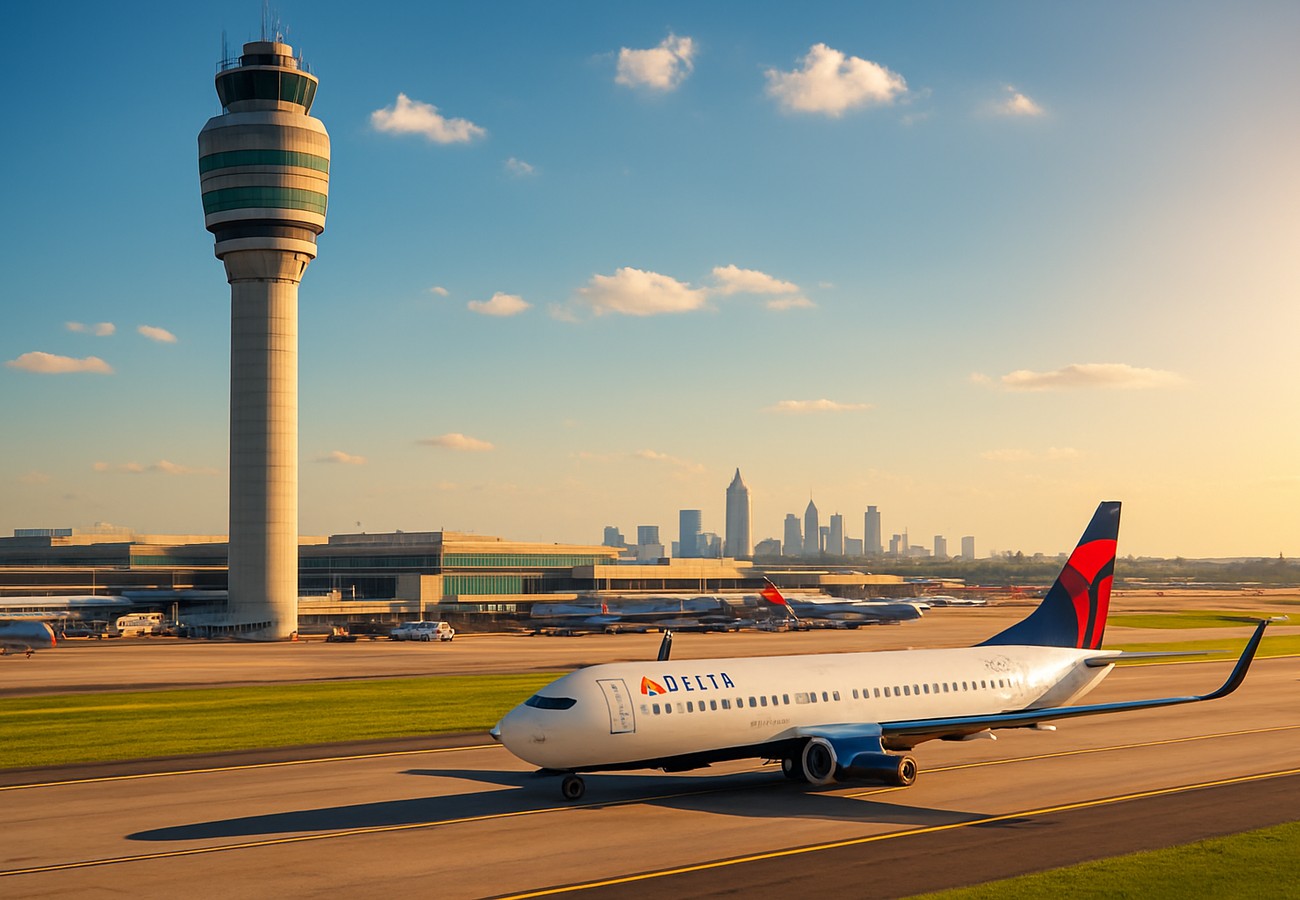
Image generated by AI
Global Aviation Reaches New Heights in 2025
Hartsfield-Jackson Atlanta International Airport has reinforced its position as the world's busiest airport in 2025, processing more than 106 million passengers and leading the global aviation sector into a new era of record-breaking traffic. The latest global airport data reveals a strong surge in air travel demand across major hubs, with significant growth spanning both domestic and international networks. This milestone reflects not only the airport's sustained operational strength but also the broader recovery and expansion of global aviation, where rising passenger volumes continue to test infrastructure capacity and reshape competition among leading international gateways.
The World's Busiest Airports: 2025 Rankings
Hartsfield-Jackson Atlanta Maintains Undisputed Leadership
At the top of the global leaderboard, Hartsfield-Jackson Atlanta International Airport once again remained the world's busiest airport, processing more than 106 million passengers. Its continued leadership is strongly supported by its role as a major domestic hub in the United States, where high-frequency flights and extensive internal connectivity drive large passenger volumes throughout the year.
Dubai and Tokyo Round Out the Top Three
Holding second position, Dubai International Airport maintained its global significance with more than 95 million passengers. As one of the most important international transit hubs, it continues to connect traffic between Europe, Asia, Africa, and the Americas, benefiting from its strategic location and strong long-haul airline networks. Its performance reflects sustained global demand for intercontinental travel and transit-based aviation models.
In third place, Tokyo Haneda Airport recorded strong passenger traffic driven by both domestic mobility and a steady revival in international travel. Known for its efficiency and proximity to central Tokyo, the airport remains a key gateway in Asia's aviation landscape and continues to gain from Japan's tourism and business travel recovery.
Aircraft Movement Patterns and US Hub Dominance
Aircraft movement trends further reinforced the dominance of major US hubs. O'Hare International Airport led the world in total flight operations, reflecting extremely high scheduling density and its role as a critical connecting airport. It was followed by Atlanta and Dallas/Fort Worth International Airport, both of which continue to anchor large domestic networks and support massive volumes of short and medium-haul flights.
Global Passenger Traffic Reaches Historic Levels
On a global scale, total passenger traffic reached approximately 9.8 billion in 2025, marking continued expansion beyond previous records. Despite this growth being widespread, a significant share of global travel remains concentrated in the world's busiest airports, with the top ten alone accounting for nearly one-tenth of all passenger movement worldwide. This concentration underscores the central role of major hubs in sustaining global air connectivity.
Asia Pacific's Rapid Aviation Recovery
A defining trend of 2025 has been the rapid resurgence of the Asia Pacific aviation market. Shanghai Pudong International Airport emerged as one of the strongest climbers in global rankings, driven by a sharp rebound in international travel demand. Increased airline capacity, relaxed travel restrictions, and restored global routes have all contributed to its rapid ascent.
Similarly, Guangzhou Baiyun International Airport recorded a significant recovery, re-entering the upper tier of global airport rankings after earlier declines. This resurgence reflects the broader revival of China's aviation sector, which has become a key driver of global passenger growth and international route expansion.
Domestic Strength Anchors US Aviation Leadership
In the United States, several airports continued to feature among the world's busiest, supported by consistently strong domestic demand. Domestic travel remains the backbone of US aviation, accounting for the majority of passenger traffic at major hubs and enabling them to maintain high global rankings despite fluctuations in international travel.
International Travel Rebounds Strongly
International passenger volumes reached around 4 billion in 2025, highlighting continued strength in cross-border mobility. Among global leaders in this segment, Dubai International Airport held the top position, followed by Heathrow Airport and Incheon International Airport. These airports serve as essential global gateways, facilitating long-distance travel and connecting major economic regions.
Aircraft Operations Exceed Pre-Pandemic Levels
Global aircraft movements exceeded 101 million, slightly above pre-pandemic levels, confirming that flight activity has fully recovered in operational terms. However, this growth has exposed structural limitations across the aviation network. Many major airports, particularly in North America and Europe, are operating close to maximum capacity, limiting expansion opportunities and creating congestion pressures.
Critical Infrastructure Constraints Challenge Growth
Infrastructure constraints have become one of the most pressing challenges for the sector. Key limitations include:
- Limited runway availability at major hubs
- Terminal congestion affecting passenger processing
- Restricted airspace capacity constraining flight scheduling
- Delays in aircraft deliveries slowing airline fleet expansion
These factors are increasingly affecting efficiency at busy hubs and adding further strain on scheduling and long-term growth planning.
Geopolitical Disruptions Reshape Aviation Flows
Geopolitical disruptions have also reshaped global aviation flows in 2025. Airspace closures and conflict-related rerouting have led to longer flight paths, higher fuel consumption, and increased operational costs. These changes have also shifted traffic patterns, with certain airports gaining importance as alternative connecting hubs.
Demand Drivers Support Continued Growth
Despite these challenges, global aviation demand remains strong, supported by:
- Steady economic growth across major markets
- Easing inflationary pressures
- Stable fuel prices
- Strong tourism recovery, particularly in international destinations
Tourism continues to play a major role in driving passenger growth, particularly in regions where international connectivity has fully recovered.
China's Reopening Accelerates Regional Recovery
The reopening of China has further accelerated recovery across the Asia Pacific region, restoring major travel corridors and boosting both inbound and outbound passenger flows. This has strengthened regional aviation networks and reinforced Asia's growing influence in global air traffic patterns.
What This Means for Travelers
The 2025 airport rankings reflect an industry experiencing rapid expansion while facing significant operational pressures. For travelers, this translates to several important considerations:
- Increased flight options at major hubs due to expanded capacity and restored routes
- Potential for longer wait times at congested airports during peak travel periods
- More competitive pricing as airlines expand capacity on popular routes
- Improved connectivity between Asia and other global regions following China's reopening
- Possible delays at capacity-constrained airports, particularly in North America and Europe
The Future of Global Aviation
Overall, the 2025 airport rankings reflect an industry that is expanding rapidly but entering a phase defined by capacity constraints and structural pressure. While demand continues to rise across major hubs, the ability of airports and airlines to scale infrastructure and operations will determine how effectively global aviation can support the next stage of growth. For more information on global aviation trends, visit the International Air Transport Association (IATA) or check real-time flight data through FlightAware.
Related Travel Guides
Disclaimer
This article is for informational and educational purposes only. It does not constitute legal, financial, or professional advice. While we strive to provide accurate and up-to-date information, travel policies, regulations, and conditions change rapidly. Always verify information with official sources before making travel decisions. Nomad Lawyer makes no representations about the accuracy, reliability, completeness, or suitability of the information provided. Readers should consult qualified professionals for advice specific to their circumstances. The views expressed in this article are those of the author and do not necessarily reflect the views of Nomad Lawyer.
Kunal K Choudhary
Co-Founder & Contributor
A passionate traveller and tech enthusiast. Kunal contributes to the vision and growth of Nomad Lawyer, bringing fresh perspectives and driving the community forward.
Learn more about our team →