
Harry Reid Airport Spring Break Delays Trigger Airline Stock Volatility
Over 250 flight delays at Harry Reid International Airport during April 2026 spring break peak are rattling major U.S. airline stocks as carriers battle seasonal demand surges and operational constraints.

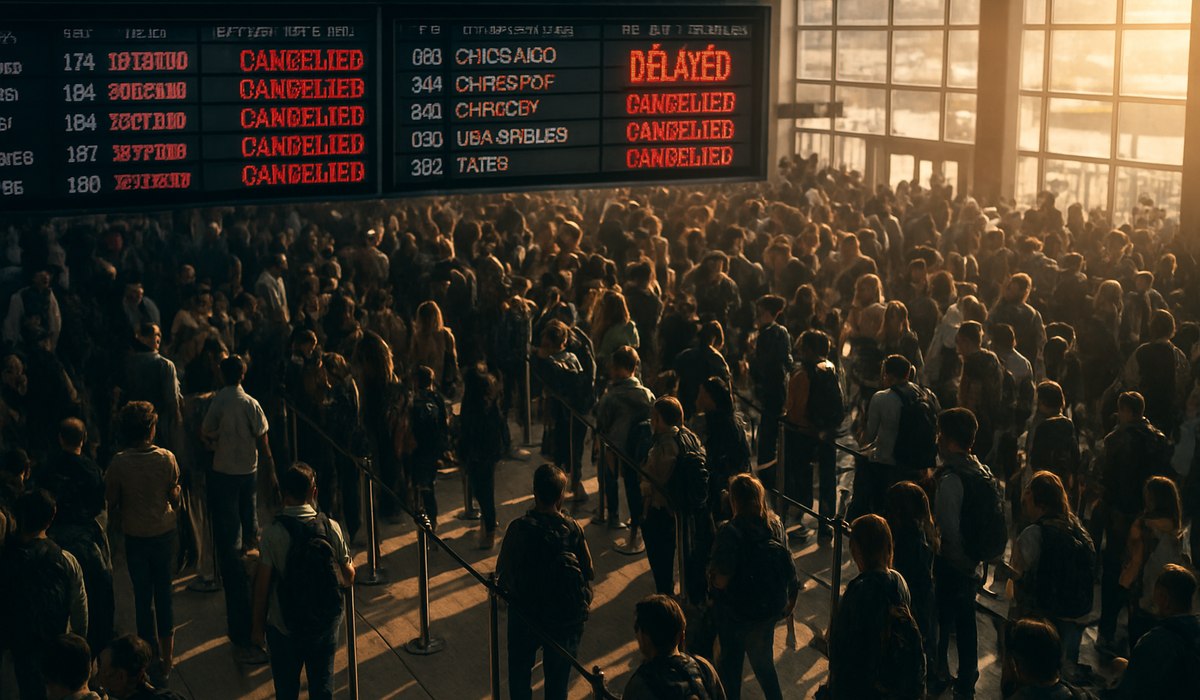
Image generated by AI
Spring Break Chaos: 250+ Delays Disrupt Las Vegas Hub During Peak Travel
Harry Reid International Airport in Las Vegas experienced one of its most operationally challenging days of 2026 on April 11, with more than 250 flight delays affecting thousands of passengers during the heart of spring break season. The disruption rippled across domestic and international routes connecting the major leisure hub to West Coast, Mountain West, and Midwest destinations. Airlines including United, Southwest, American, and Delta absorbed cascading knock-on effects as aircraft and crews fell out of position, creating a domino effect that extended delays well beyond Nevada's borders. The incident underscores the vulnerability of U.S. aviation networks when peak seasonal demand collides with operational strain at major transit points.
Operational Strain Amplifies Airline Stock Volatility
The April delays at Harry Reid airport triggered immediate investor reactions across airline sector equities. Major carriers reported delayed turnarounds as inbound aircraft stacked behind scheduling constraints, forcing airlines to either hold departures or rebook passengers onto subsequent flights. Analysts attributed the volatility to broader concerns about operational resilience—pilot shortages, maintenance backlogs, and aircraft delivery delays continue pressuring the industry during periods of elevated passenger volume.
Investment firms monitoring airline performance noted that spring break represents a critical revenue window for leisure carriers. When operational disruptions occur during these peak periods, they simultaneously reduce per-flight profitability while raising expenses for rebooking and compensation. The market's reaction reflected uncertainty about whether carriers can sustain current pricing power while managing infrastructure bottlenecks. One Wall Street overview characterized current conditions as a period of sustained "turbulence" shaped by fuel costs, labor constraints, and persistent air traffic control congestion at major hubs.
Industry commentators emphasized that such volatility may persist through spring and summer 2026 unless carriers implement additional capacity buffers or airports invest in infrastructure improvements. The visibility of major disruption events like those at Harry Reid airport tends to amplify stock swings more than gradual efficiency declines.
Network Effects Ripple Across U.S. Carrier Operations
The April 11 delays at Las Vegas rippled across connecting routes to Denver, Chicago, Atlanta, Los Angeles, Toronto, and New York, demonstrating how modern airline networks amplify localized disruptions into system-wide strain. Passengers booked on Las Vegas connections found themselves stranded when inbound aircraft arrived late, missing available departure slots at downstream hubs.
Airlines operating tight turnarounds on popular city pairs face particular vulnerability. When a key hub like Harry Reid airport experiences heavy disruption, carriers with narrow cushions between scheduled arrival and departure times have minimal flexibility to absorb delays. Consumer travel sites documented passengers spending 3–5 hours on the ground awaiting updated departure estimates, with some ultimately rebooking onto flights a full day later.
The pattern reflects a structural challenge in contemporary U.S. aviation: airlines have optimized networks for efficiency rather than resilience. While this approach maximizes revenue per aircraft and addresses crew scheduling constraints, it leaves little slack to absorb shocks. Carriers employing "upgauging" strategies—flying larger aircraft less frequently—sometimes reduce the number of alternative routing options available when disruptions occur, potentially leaving passengers with fewer rebooking choices.
Monitoring tools like FlightAware captured real-time propagation of delays across the network, showing how initial Las Vegas disruptions translated into secondary delays across major hubs within hours.
Airport Infrastructure Faces Additional Airspace Constraints
Beyond the April 11 disruption, Harry Reid airport faces ongoing pressure from airspace management challenges. Federal Aviation Administration notices issued in early April flagged temporary flight restrictions over Las Vegas linked to VIP movements scheduled for late-month dates. While these restrictions fall outside the peak disruption window, they underscore the complexity of managing one of the nation's busiest leisure gateways.
The airport's position in a highly managed terminal control area means that even modest delays can compound quickly as aircraft await departure clearances. Recent airport communications have emphasized passenger preparation strategies, advising early arrivals and close monitoring of airline notifications—implicit acknowledgment that heavy seasonal demand can rapidly magnify schedule disruptions.
Las Vegas airport officials and the FAA continue coordinating on capacity planning, with aviation industry observers noting that infrastructure investments may lag behind passenger demand growth through mid-2026. This mismatch creates conditions where operational incidents are more likely to cascade into network-wide effects. The U.S. Department of Transportation has maintained oversight of delays at major hubs, and FAA guidance provides real-time data on local airspace conditions.
Real-Time Delay Tracking and Passenger Impact
On April 11, passengers relying on flight-tracking services observed delays building through afternoon and evening hours as aircraft positioning deteriorated. Departure time estimates shifted in 15- to 30-minute increments throughout the day, with hundreds of travelers stranded in terminals awaiting clarity.
A data snapshot from April 11 at Harry Reid airport revealed:
| Metric | Data Point |
|---|---|
| Total Delays Recorded | 250+ |
| Peak Congestion Window | 2 PM – 8 PM local time |
| Average Delay Duration | 45–90 minutes |
| Downstream Affected Hubs | Denver, Chicago, Los Angeles, New York, Toronto |
| Passenger Volume (Daily) | ~45,000–50,000 estimated |
| Cancellations (Secondary) | Estimated 15–20 flights |
| Rebooking Requests Processed | 3,000+ passengers |
| Weather Component | Minimal; volume-driven disruption |
What This Means for Travelers: Your Action Checklist
If you're planning spring or summer 2026 travel through Harry Reid airport or connecting cities, these steps can help you navigate potential operational challenges:
-
Monitor airline notifications actively — Sign up for SMS and email alerts from your carrier; check FlightAware 24 hours before departure for real-time delay patterns.
-
Book early morning or red-eye flights — Avoid peak midday windows (2–8 PM) when aircraft positioning is most strained; early flights experience lower propagation of prior-day disruptions.
-
Arrive 2–3 hours early for domestic flights, 3+ hours for international — Peak-period congestion means slower processing at check-in and security; extra buffer time reduces rebooking stress if delays occur.
-
Know your passenger rights — U.S. Department of Transportation regulations entitle you to compensation for certain delays and cancellations; keep receipts for meals, hotel, and communication costs if disrupted.
-
Consider flexible or refundable tickets during spring break windows — Premium flexibility costs are justified when traveling during historically high-disruption periods; standard economy tickets offer fewer rebooking alternatives.
-
Review airline-specific policies — Southwest, United, American, and Delta maintain different rebooking protocols; familiarize yourself with your carrier's rules before travel.
-
Connect through less congested hubs if possible — Las Vegas and Denver experience seasonal strain; consider routing through less busy airports (e.g., Phoenix, Salt Lake City) if your schedule permits.
FAQ: Harry Reid Airport Delays and Airline Operations
Q: What caused the 250+ delays at Harry Reid airport on April 11, 2026? A: The disruption was volume-driven during spring break peak travel. Aircraft and crews fell out of position due to tight scheduling and airspace congestion, creating cascading delays throughout the day. Weather was a minimal factor; operational strain from high passenger demand was the primary cause.
Q: Will delays continue at Harry Reid airport through spring and summer 2026? A: Operational challenges typically persist during peak leisure travel windows (spring break
Disclaimer
This article is for informational and educational purposes only. It does not constitute legal, financial, or professional advice. While we strive to provide accurate and up-to-date information, travel policies, regulations, and conditions change rapidly. Always verify information with official sources before making travel decisions. Nomad Lawyer makes no representations about the accuracy, reliability, completeness, or suitability of the information provided. Readers should consult qualified professionals for advice specific to their circumstances. The views expressed in this article are those of the author and do not necessarily reflect the views of Nomad Lawyer.
Raushan Kumar
Founder & Lead Developer
Full-stack developer with 11+ years of experience and a passionate traveller. Raushan built Nomad Lawyer from the ground up with a vision to create the best travel and law experience on the web.
Learn more about our team →