
Paraguay Keeps Pace With Argentina and Others as Mbyá Guaraní Tourism Builds a Regional Jesuit Corridor
Paraguay Keeps Pace With Argentina and Others as Mbyá Guaraní Tourism Builds a Regional Jesuit Corridor

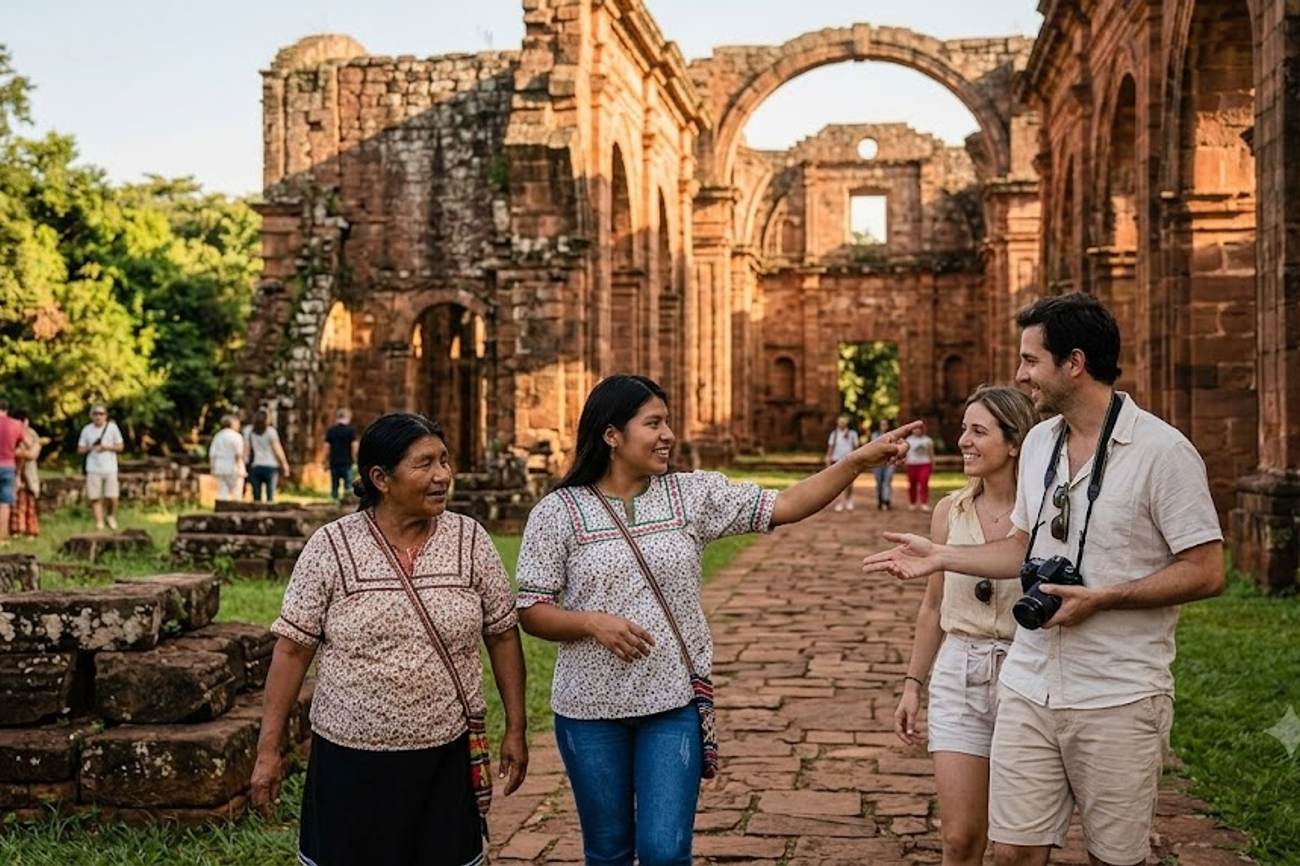
Image generated by AI
Most travelers to the Jesuit ruins of Paraguay see only the stone skeletons of the past, but a new mobility pilot is finally linking these monuments to the living breath of the Mbyá Guaraní people. While the ruins of Trinidad and Jesús are world-famous, the real shift in 2026 is the effort to move visitors beyond the archaeological sites and into the active community of Guavirami, where the ancestral culture of the region is still practiced daily.
The Shift Toward Integrated Heritage Mobility
For years, visiting the Jesuit missions in Paraguay was a fragmented experience. You would hire a driver to see the ruins, then perhaps stumble upon a local craft market, but the connection between the monumental history and the contemporary Indigenous population remained severed. In 2026, Paraguay began testing a small-group mobility model designed to solve this "last-mile" problem.
During a pilot program run from 3 to 5 April 2026, the government tested a specific cultural circuit. Instead of leaving travelers to navigate the rural roads independently, the program operated out of Turista Róga in Encarnación. From this urban hub, minivans transported groups of 4 to 10 passengers through a curated loop that included the districts of Jesús and Trinidad, as well as the Mbyá Guaraní community of Guavirami.
The logistics were precise: day departures left at 09:00 and evening returns were scheduled for 17:30. While visitors still paid the standard admission fees for the attractions, the transport itself was provided free of charge. This was not a permanent shuttle service—it was a controlled experiment to see if bundling transport, community access, and heritage sites into a single itinerary would increase the quality of the visitor experience.
What Makes the Paraguayan Route Different
The uniqueness of this region lies in the intersection of the UNESCO World Heritage sites and the living presence of the Mbyá Guaraní. Most "mission tours" in South America focus on the architectural tragedy of the ruins. Paraguay is attempting to pivot toward a "living culture" model.
The community of Guavirami is the heart of this shift. Unlike a museum, Guavirami is an active community where visitors can engage in guided nature experiences, encounter traditional craft-making, and, if arranged in advance, participate in musical experiences. The community is open daily from 07:00 to 17:00.
To support this, the government has invested Gs.324 million into the Tape Tuja corridor. This isn't just about paving roads; it is about infrastructure that empowers the locals. The investment has funded the construction of sanitary modules and dedicated workshop spaces where the Mbyá Guaraní can produce and sell their handicrafts directly to visitors. By integrating a community tourism center into the old Jesuit road between Jesús de Tavarangue and Santísima Trinidad del Paraná, the state is ensuring that tourism revenue stays within the community rather than leaking to outside tour operators.
Visitor Insider Tips
Navigating the southern region of Paraguay requires a different approach than visiting Asunción. To get the most out of the Jesuit circuit, keep these local nuances in mind:
Timing Your Visit If you are aiming for the "Night Experience" at Santísima Trinidad del Paraná, arrive in the late afternoon. The transition from the golden hour to the illuminated night tour is the most atmospheric way to experience the site. To avoid the heaviest crowds, avoid the Easter window (late March/early April), as this is when the local cultural circuits are most saturated.
Base Yourself in Encarnación Do not try to stay in the rural outskirts. Encarnación serves as the primary gateway and provides the necessary urban infrastructure—hotels, pharmacies, and the Turista Róga assembly point—that makes the rural excursions viable.
Etiquette in Guavirami When visiting the Mbyá Guaraní community, remember that you are entering a living village, not a performance space. Prior arrangement is essential for musical experiences. When purchasing crafts, buy directly from the artisans in the new Tape Tuja workshops to ensure the Gs.324 million investment in infrastructure actually benefits the creators.
The development of the Jesuit corridor leverages the cultural heritage of the Mbyá Guaraní to attract sustainable travel across borders. Visitors can explore these historic missions and indigenous communities through resources provided by the Senatur, Paraguay's national tourism board.
Transport Realities While the April pilot offered free minivans, do not assume a scheduled shuttle exists year-round. Unless confirmed via SENATUR, you should budget for a private driver or a rented 4x4 to move between Encarnación, Jesús, and Trinidad.
Cultural and Environmental Context
The "Camino de los Jesuitas" is an ambitious five-country project spanning Paraguay, Argentina, Brazil, Bolivia, and Uruguay. It encompasses 19 UNESCO World Heritage sites. However, the challenge has always been the "operating layer." While the monuments exist, a unified way to visit them does not. There is currently no single five-country admission pass or integrated reservation system.
Paraguay is attempting to lead the Technical Secretariat for this corridor, which was formally installed in December 2025. The goal is to move away from "monumental tourism"—where people simply take photos of ruins—and toward a model of regional integration.
In Argentina, the approach is different, focusing on ticketing efficiency with a single ticket valid for 15 days across sites like San Ignacio Miní and Loreto. In Brazil, the focus is on the 400-year anniversary of the missions, specifically São Miguel Arcanjo. Bolivia offers a different flavor entirely with the Chiquitos missions, which remain active centers of faith.
The Paraguayan model is the most socially progressive of the group because it explicitly links the "last mile" of transport to Indigenous economic empowerment. By building craft centers and sanitary modules in Guavirami, the project acknowledges that for tourism to be sustainable, the local community must be a partner in the logistics, not just a backdrop for the scenery.
FAQ: Visiting Paraguay 2026
What is the best time to visit the Jesuit Missions? The dry season (May to September) is ideal for exploring the ruins and the Guavirami community, as the unpaved roads of the Tape Tuja corridor are easier to navigate and the heat is more manageable.
Do I need a visa to visit Paraguay? Visa requirements vary by nationality. Citizens of the US, EU, and Mercosur countries generally do not need a visa for short tourism stays, but always check the official embassy guidelines before departure.
How do I get to the missions from Asunción? The most efficient way is to fly or take a long-distance bus to Encarnación. From Encarnación, you can arrange local transport to Jesús de Tavarangue and Santísima Trinidad del Paraná.
Is it safe for solo travelers? Yes, provided you use official tourism channels. Basing yourself in Encarnación and using registered guides for the Guavirami community is highly recommended for solo visitors.
The ruins tell us where the Jesuits went, but the people of Guavirami tell us who remained.
Related Travel Guides
Disclaimer
This article is for informational and educational purposes only. It does not constitute legal, financial, or professional advice. While we strive to provide accurate and up-to-date information, travel policies, regulations, and conditions change rapidly. Always verify information with official sources before making travel decisions. Nomad Lawyer makes no representations about the accuracy, reliability, completeness, or suitability of the information provided. Readers should consult qualified professionals for advice specific to their circumstances. The views expressed in this article are those of the author and do not necessarily reflect the views of Nomad Lawyer.
Kunal K Choudhary
Co-Founder & Contributor
A passionate traveller and tech enthusiast. Kunal contributes to the vision and growth of Nomad Lawyer, bringing fresh perspectives and driving the community forward.
Learn more about our team →