
Greece Restores Historic Mycenae Xenia Building to Create Cultural Hub Near UNESCO Site in 2026
The Greek government is repurposing the modernist Mycenae Xenia building into a performance space and visitor center to enhance the UNESCO World Heritage experience.

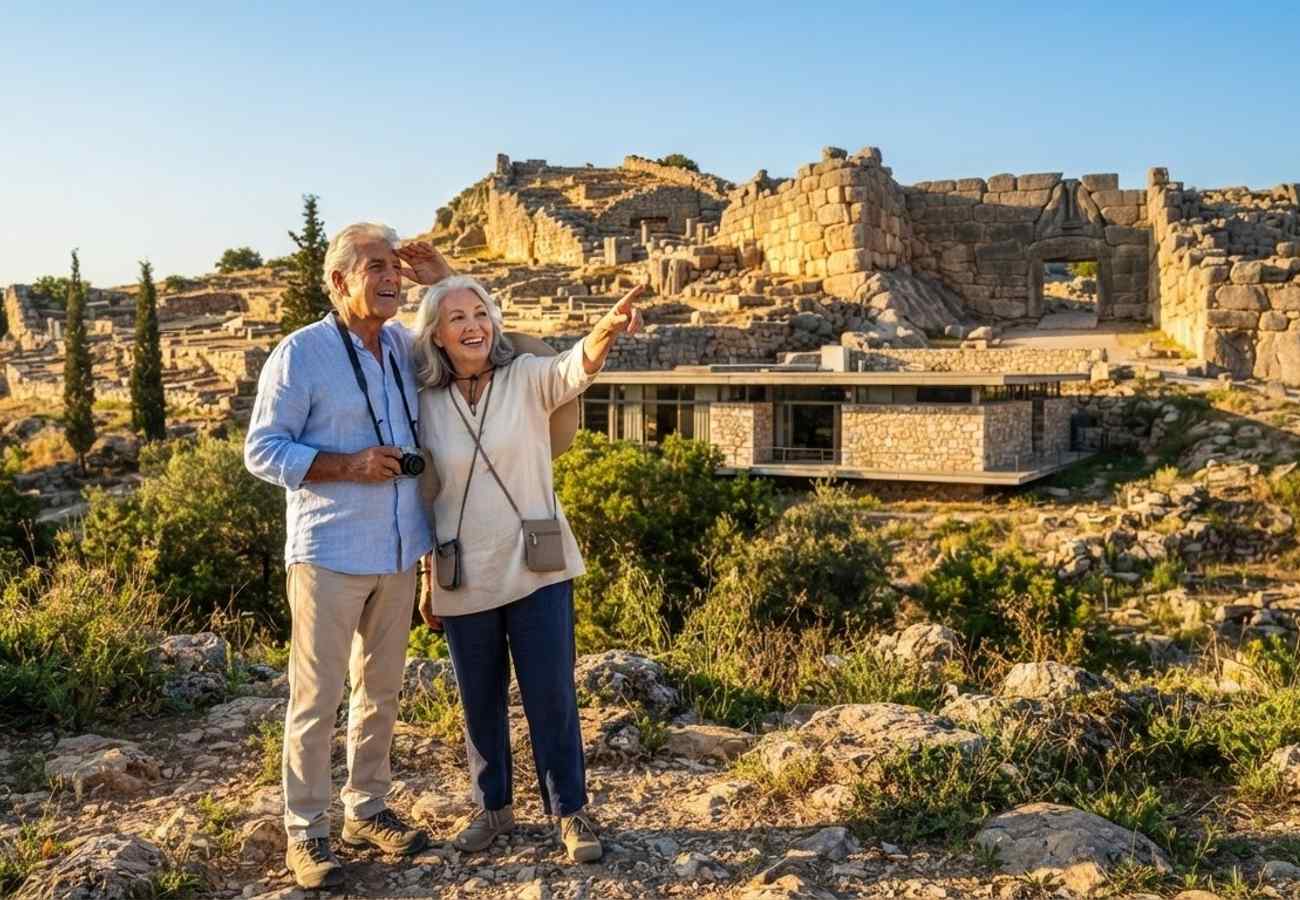
Image generated by AI
The Greek government is transforming the long-abandoned Mycenae Xenia building into a sophisticated cultural venue and visitor hub. This initiative integrates ancient drama performances with modern tourism infrastructure to elevate the experience at one of the world's most significant Bronze Age sites.
The Ministry of Culture has launched a comprehensive restoration project for the Mycenae Xenia, a modernist structure that has remained neglected since the early 1990s. Located approximately 700 meters from the Treasury of Atreus and the Acropolis of Mycenae, the building will serve as a bridge between the physical ruins of the UNESCO World Heritage site and the living traditions of Greek theatre.
The facility is slated to host productions from the Greek National Opera, the National Theatre of Greece, and the National Theatre of Northern Greece. These performances will specifically focus on the House of Atreides, linking the legendary tragedies of Agamemnon and Clytemnestra directly to the landscape where the events are set.
Strategic Restoration and Facility Upgrades
The project addresses decades of deterioration caused by humidity, natural wear, and vandalism. Rather than a simple cosmetic renovation, the Ministry is implementing a full structural and functional overhaul.
Key technical improvements include:
- Structural Reinforcement: Strengthening load-bearing elements to ensure long-term stability.
- Energy Efficiency: Installation of modern electromechanical systems to reduce the carbon footprint.
- Accessibility: Full upgrades to ensure the facility is accessible to visitors with disabilities.
- Commercial Integration: The addition of an ODAP (Hellenic Organization of Cultural Resources Development) retail and refreshment shop to provide essential traveler services.
The building's original 1951 design by architect Kimon Laskaris is being preserved. Its polygonal masonry and restrained lines were intentionally designed to blend into the landscape without obstructing views of the archaeological site.
Site Specifications and Logistics
The restoration focuses on a balanced footprint to avoid overwhelming the sensitive archaeological environment.
| Feature | Specification |
|---|---|
| Total Plot Area | 5,123 square meters |
| Building Footprint | 565 square meters |
| Levels | Two stories with a shaped roof area |
| Proximity to Site | ~700 meters from Treasury of Atreus |
| Architect | Kimon Laskaris (1951) |
Integration with the Mycenae Visitor Journey
The restored Xenia building will function as a gateway, complementing the existing core attractions. Visitors typically access the site via the Odysseus portal, which includes the museum, the Lion Gate, and the Treasury of Atreus—the most impressive preserved Mycenaean tholos tomb.
By providing a dedicated space for refreshment and high-art performances, the state is shifting the visitor model from passive sightseeing to an active cultural engagement. This is part of a broader strategy initiated in 2020 to protect monuments from climate change and improve fire safety and visitor routing across the Argolis region.
Why This Matters: Industry Analysis
Industry observers note that this project represents a shift toward "Integrated Heritage Management." By reviving a 20th-century modernist building (the Xenia program) to support a Bronze Age site, Greece is practicing a dual layer of preservation.
The strategic inclusion of the National Opera and National Theatre suggests a move to capture "high-value" cultural tourists. Travelers are no longer satisfied with ruins alone; they seek contextual interpretation. Linking the House of Atreides myths to a physical venue creates a "narrative loop" that encourages longer dwell times and increases spending within the local economy.
Furthermore, utilizing ODAP for retail ensures that commercial activity is centralized in a repurposed building rather than encroaching on the protected archaeological zones. This minimizes the physical pressure on the fragile monuments while maximizing revenue for site maintenance.
Industry Outlook
The restoration of the Mycenae Xenia is likely a blueprint for other neglected Xenia buildings across Greece. We expect to see more modernist mid-century sites repurposed as "Cultural Gateways" to ancient ruins.
In the short term, the Argolis region will see a surge in synergistic tourism, where visitors coordinate trips between Mycenae, Tiryns, and Epidaurus based on a performance schedule. This transforms the region from a collection of isolated stops into a cohesive cultural circuit.
A sophisticated blend of Bronze Age power and 20th-century modernism.
Related Travel Guides
Disclaimer
This article is for informational and educational purposes only. It does not constitute legal, financial, or professional advice. While we strive to provide accurate and up-to-date information, travel policies, regulations, and conditions change rapidly. Always verify information with official sources before making travel decisions. Nomad Lawyer makes no representations about the accuracy, reliability, completeness, or suitability of the information provided. Readers should consult qualified professionals for advice specific to their circumstances. The views expressed in this article are those of the author and do not necessarily reflect the views of Nomad Lawyer.
Preeti Gunjan
Contributor & Community Manager
A passionate traveller and community builder. Preeti helps grow the Nomad Lawyer community, fostering engagement and bringing the reader experience to life.
Learn more about our team →