
Greece Opens Diachronic Archaeological Museum of Agathonisi to Expand Dodecanese Cultural Tourism in 2026
The Greek Ministry of Culture has inaugurated the Diachronic Archaeological Museum of Agathonisi, a €2.8 million project designed to protect Aegean heritage and drive sustainable tourism in the Dodecanese.

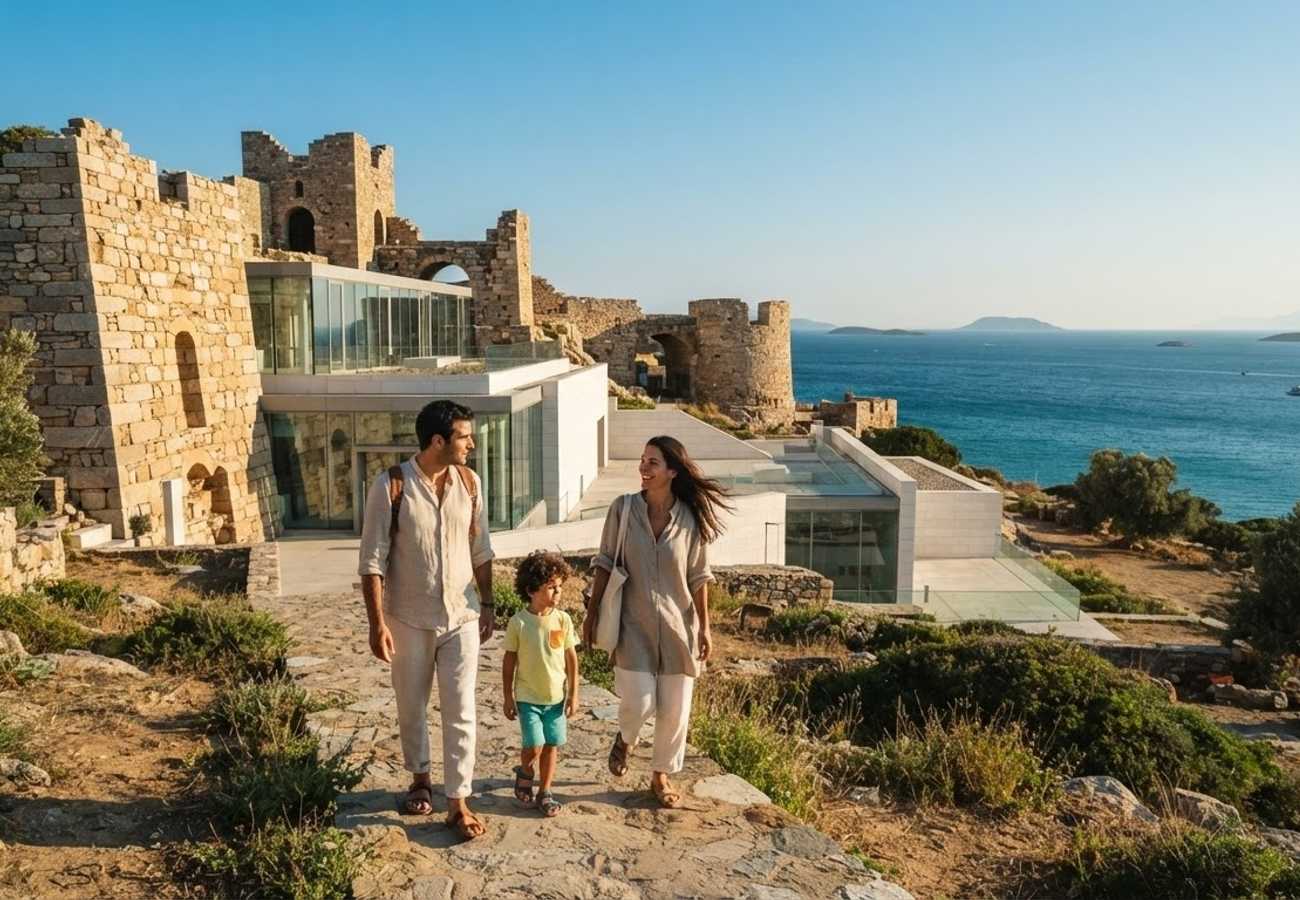
Image generated by AI
[Athens, July 7, 2026] — The Greek government has officially inaugurated the Diachronic Archaeological Museum of Agathonisi, marking a significant expansion of cultural infrastructure in the Dodecanese island chain. This new facility aims to preserve the island's extensive historical record while positioning Agathonisi as a primary destination for high-value cultural tourism in the eastern Aegean.
The project represents the 33rd museum opening or comprehensive renovation completed by the Ministry of Culture since 2019. The inauguration ceremony was led by the President of the Republic, Konstantinos Tasoulas, with Minister of Culture Lina Mendoni in attendance. This opening transforms Agathonisi from a quiet maritime outpost into a structured cultural gateway, providing a new anchor for archaeological exploration in the region.
Kastraki Site Integration Enhances Visitor Experience
Unlike traditional museums that isolate artifacts from their origin, the Diachronic Archaeological Museum of Agathonisi is built directly within the Kastraki archaeological site. This architectural decision creates an immediate physical and intellectual link between the exhibits and the landscape.
Industry reports indicate that the site is centered around an ancient fortress established in the fourth century BC. This defensive structure remained operational until the second century BC, serving as a critical component of the Miletus defensive network during the Hellenistic era. By placing the museum inside the site, the Greek Ministry of Culture allows visitors to view artifacts while standing on the very ground where they were discovered.
This immersive approach is particularly vital for Agathonisi. While the island is small in geographic scale, its strategic importance was historically immense. Located as the northernmost island of the Dodecanese, Agathonisi functioned as a pivot point between the Aegean Sea, the Dodecanese cluster, and Asia Minor.
Multilevel Exhibition of Aegean History
The museum's design spans two distinct levels, offering a chronological journey through the island's habitation. The ground floor is dedicated to the fortress of Kastraki, showcasing finds from various operational phases and providing evidence of human settlement dating back to the third millennium BC.
The upper level transitions into thematic storytelling, focusing on several key pillars of island life:
- Military and Defense: Tools and strategies of ancient warfare.
- Socio-Economics: Trade routes, production activities, and daily domestic life.
- Spirituality: Evidence of ancient worship and religious practices.
- Historical Transition: Artifacts from the Byzantine period leading into modern Agathonisi history.
To meet the demands of modern travelers, the facility integrates extensive audiovisual materials. This shift toward digital storytelling reflects a broader trend in museum tourism, where visitors seek context and narrative over static displays. By blending physical artifacts with multimedia explanations, the museum illustrates how ancient communities functioned, traded, and defended their territory.
Strategic €2.8 Million Investment in Small-Island Resilience
The development of the museum was made possible through a diversified funding model totaling over €2.8 million. Financial support was provided via the INTERREG Greece-Cyprus programme, the National Development Programme of the Ministry of Culture, and the Recovery and Resilience Fund.
Implementing large-scale infrastructure on remote islands presents unique logistical hurdles, including limited transport options, staffing shortages, and increased construction costs due to seasonal weather patterns. However, the investment in Agathonisi demonstrates a commitment to small-island resilience.
The museum is expected to serve as a long-term economic asset by:
- Attracting academic researchers and archaeological tourists.
- Creating new "island-hopping" itineraries that include cultural stops.
- Providing educational resources for local school visits.
- Diversifying the tourist footprint away from the most congested Greek destinations.
Diversifying the Dodecanese Tourism Map
The Dodecanese region is globally recognized for its medieval architecture and natural beauty, but tourism has historically been concentrated in hubs like Rhodes, Kos, and Patmos. The introduction of a formal museum on Agathonisi provides a "cultural anchor" that encourages visitors to explore the smaller, quieter islands.
According to regional tourism data, islands such as Lipsi and Arki are already noted for their traditional architecture and birdwatching. Agathonisi, often described as a "hidden paradise" due to its minimal human intervention and authentic hospitality, now adds a rigorous archaeological dimension to its appeal. This allows the island to attract a more sophisticated demographic of cultural travelers without sacrificing its tranquil character.
Transforming Ancient Defense into Modern Education
The evolution of Kastraki from a military stronghold to an educational center highlights a shift in heritage management. In antiquity, the site was designed to keep people out; today, it is designed to bring people in.
The presence of the museum solves a common problem in archaeology: the difficulty of interpreting ruins without a guide. By providing the necessary background information within the museum before visitors walk the ruins, the site becomes legible. Furthermore, the facility ensures that fragile artifacts are protected in a climate-controlled environment while remaining accessible to the public.
National Strategy for Distributed Cultural Heritage
The opening of the Agathonisi facility is not an isolated event but part of a broader Greek state strategy to maintain a presence in the critical Aegean islands. The Ministry of Culture is actively working to ensure that high-quality cultural infrastructure is not concentrated solely in urban centers or world-famous sites.
By investing in remote locations, Greece is promoting a more balanced model of tourism. This strategy aims to prevent the "overtourism" seen in major hubs by distributing the flow of visitors to lesser-known islands that possess genuine historical depth. Agathonisi is now positioned as a primary example of this decentralized cultural approach.
Why This Matters: The Shift Toward Meaningful Travel
The launch of the Diachronic Archaeological Museum of Agathonisi signals a pivot in how the Aegean is marketed to the world. For decades, the region has been synonymous with leisure, beaches, and whitewashed villages. The addition of this museum injects a layer of intellectual depth into the travel experience.
From a journalistic perspective, this move provides travel operators with a new, powerful narrative. Agathonisi is no longer just a place for a peaceful escape; it is a destination where the strategic history of the eastern Aegean is preserved. For the local community, the museum provides a sense of continuity and civic pride, linking their modern lives to a lineage of trade and defense that spans millennia.
For the global traveler, the appeal lies in the combination of authenticity and accessibility. The museum offers a compact yet comprehensive encounter with archaeology in a setting that remains far removed from the pressures of mass tourism, effectively bridging the gap between luxury leisure and academic exploration.
The museum is now open to the public, offering a new window into the strategic heart of the Dodecanese.
Related Travel Guides
Disclaimer
This article is for informational and educational purposes only. It does not constitute legal, financial, or professional advice. While we strive to provide accurate and up-to-date information, travel policies, regulations, and conditions change rapidly. Always verify information with official sources before making travel decisions. Nomad Lawyer makes no representations about the accuracy, reliability, completeness, or suitability of the information provided. Readers should consult qualified professionals for advice specific to their circumstances. The views expressed in this article are those of the author and do not necessarily reflect the views of Nomad Lawyer.
Kunal K Choudhary
Co-Founder & Contributor
A passionate traveller and tech enthusiast. Kunal contributes to the vision and growth of Nomad Lawyer, bringing fresh perspectives and driving the community forward.
Learn more about our team →