
Greece Launches Tourism Trust Recovery Plan Following Halkidiki Wildfire Disruption
Following peak-season wildfires in Halkidiki that forced the evacuation of 300 tourists from Siviri and Fourka, Greece is deploying destination recovery strategies to restore traveler trust.
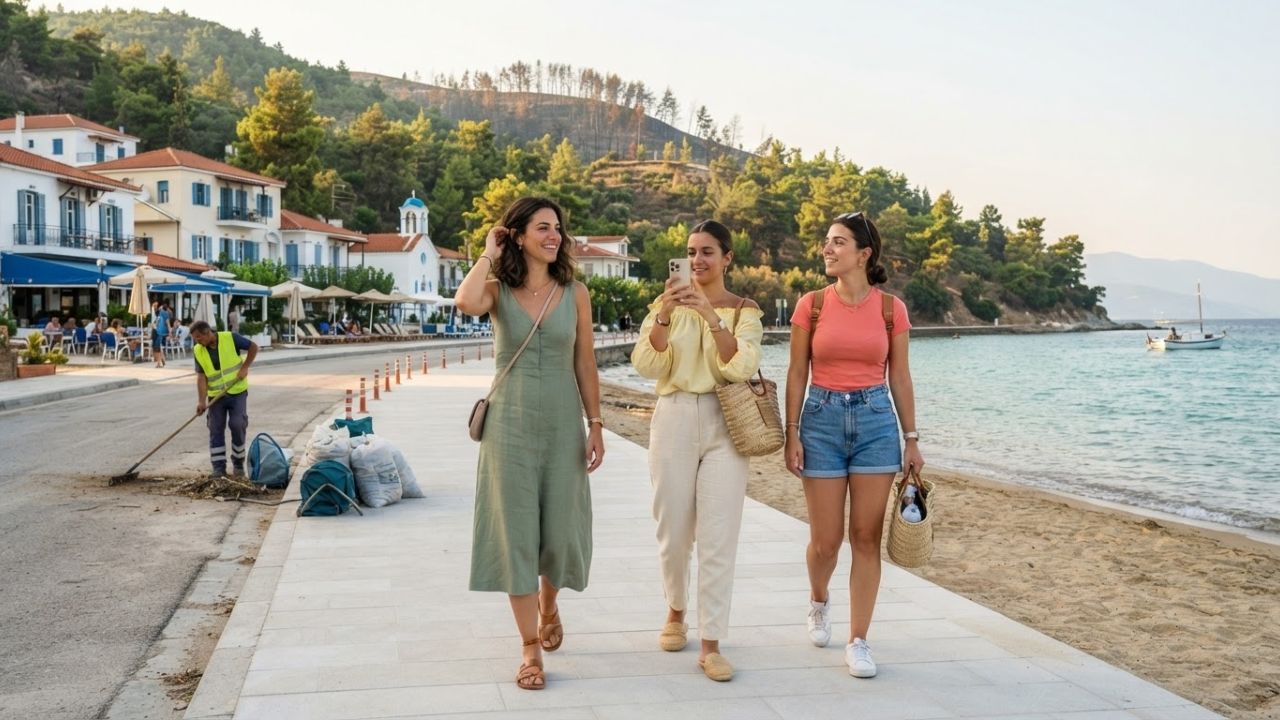
Image generated by AI
Following peak-season wildfires in northern Greece that forced the boat evacuation of over 300 tourists from the coastal town of Siviri, the Greek Ministry of Tourism is executing a targeted trust recovery campaign. By upgrading emergency communication systems and funding forest management projects in the Halkidiki peninsula, regional authorities aim to reassure travelers ahead of the next holiday season.
The Climate Challenge in the Pine Forests of Halkidiki
The wildfire emergency in Halkidiki has created a new chapter for Greece’s tourism sector, presenting a challenge that goes far beyond immediate firefighting. The country is now facing the task of rebuilding confidence among international visitors who choose Greece for its beaches, islands, natural landscapes, and Mediterranean lifestyle. Halkidiki, located in northern Greece near Thessaloniki, is one of the country’s most recognized coastal destinations. It attracts domestic and international travelers with its long sandy beaches, clear waters, luxury resorts, family-friendly hotels, and forest-covered scenery.
However, the wildfire that reached tourist areas during the peak of the summer season demonstrated how quickly natural events can affect a destination’s reputation. The incident forced tourists and residents to leave areas around Siviri and Fourka as flames spread through pine forests near holiday communities. More than 300 people were evacuated by boat from Siviri, while over 140 firefighters utilized specialized aircraft and helicopters to control the blaze. Municipal emergency managers cooperated with the coast guard and local private boat captains to execute the evacuations safely. The rapid response prevented injuries, but the sight of evacuation vessels on the shoreline underscored the need for formalized climate-risk protocols at resort areas. For Greece, the recovery effort is not only about repairing physical damage but also about ensuring travelers continue to view the region as a safe, reliable, and attractive holiday destination.
Halkidiki’s Role in Greece’s Tourism Economy
Halkidiki has long been an important part of Greece’s tourism offering. Unlike some of Greece’s internationally famous islands, the region combines mainland accessibility with a coastal holiday experience. Its location near Thessaloniki makes it especially valuable for short breaks, family holidays, and international package tours. Visitors from European markets often choose Halkidiki because of its beaches, nature, traditional villages, and resort infrastructure.
Halkidiki’s three distinctive peninsulas, often referred to as the 'trident' of Poseidon, offer highly varied microclimates and tourist densities. Kassandra is known for its resort infrastructure, Sithonia for its natural camping grounds, and Mount Athos for its historic monastic communities. This geographical layout means that when an emergency affects one peninsula, the other two often remain entirely unaffected and open for business. The region’s tourism appeal is closely linked with its natural environment. Pine forests, coastal roads, and green spaces form a major part of the visitor experience. However, these same natural features can increase vulnerability during extreme heat and dry conditions. The wildfire highlighted the difficult balance between preserving the natural beauty that attracts tourists and protecting communities from climate-related risks. For tourism officials and businesses, maintaining confidence after such events is essential because travel decisions are strongly influenced by perceptions of safety. A destination can recover physically after a disaster, but restoring its international image often requires clear communication, visible safety measures, and long-term planning.
Wildfire Crisis Hits Greece During the Most Important Travel Period
The timing of the Halkidiki wildfire increased its tourism impact. August is one of Greece’s busiest travel months, when beaches, hotels, restaurants, and local businesses experience some of their highest visitor numbers. During this period, many travelers plan their holidays months in advance. Sudden images of smoke, flames, and evacuations can influence future booking decisions, even when only specific areas are affected.
The wildfire reached resorts at a time when thousands of visitors were enjoying summer holidays across Greece. The incident created several immediate challenges for the tourism sector, including guest relocation, cancellations, and operational disruption for hotels. Tour operators had to change itineraries and manage traveler concerns, while local businesses experienced reduced visitor activity during emergency periods. Although the wildfire was concentrated in specific areas, tourism officials must manage the wider perception of Greece as a holiday destination.
Restoring Traveler Confidence Becomes Greece’s Next Tourism Priority
After a major tourism disruption, confidence recovery becomes one of the most important steps. Travelers increasingly consider safety, emergency preparedness, and destination resilience when choosing holidays. This is especially important for Mediterranean countries where summer temperatures and wildfire risks have become major challenges. For Greece, rebuilding confidence requires accurate information and effective communication. Visitors need to know which areas are operating normally, whether airports and transport links are functioning, how hotels are supporting guests, and what safety measures are being introduced.
The recovery process also depends on cooperation between government agencies, local authorities, tourism businesses, and emergency services. Greek officials have highlighted growing economic risks from heatwaves and wildfires, focusing on protecting tourism-dependent regions through infrastructure and adaptation measures. Greece has built one of Europe’s strongest tourism industries, contributing significantly to the economy through visitor spending, employment, and regional development. However, the sector is increasingly dealing with challenges linked to climate conditions, requiring popular summer regions to balance tourism growth with environmental protection and emergency planning.
Visitor Guide: Local Dining, Favorable Windows, and Etiquette in Halkidiki
Navigating Halkidiki's peninsulas requires understanding local seasonal windows, environmental regulations, and regional specialties. By planning carefully, travelers can enjoy a safe, sustainable, and highly rewarding vacation.
The best off-peak window to visit Halkidiki is during the shoulder seasons of May to June and September to October. During these months, the weather remains warm and comfortable (ranging between 20°C and 28°C), crowd density is lower, and the risk of wildfires is significantly reduced compared to the dry summer months of July and August.
While visiting, explore the traditional cliffside village of Afytos on the Kassandra peninsula, which offers historic cobblestone streets and stone-built architecture. For outdoor recreation and secluded coves, visit the Sithonia peninsula, where pine forests meet clear coastal waters. When dining at local tavernas, try Halkidiki’s green olives, famous for their buttery texture. Pair your meal with local pine honey (pefkomelo) served over Greek yogurt, and enjoy fresh grilled octopus or traditional fish soup (kakavia).
Travelers must observe strict environmental rules to protect the region's fragile ecosystems. Wild camping is strictly prohibited in Greece, and visitors must use licensed campsites. Open fires and barbecues are banned in forested areas during the fire season to prevent emergency incidents. When hiking, stick to marked paths to prevent soil erosion and support the local economy by purchasing honey, olives, and olive oil directly from village producers.
Long-Term Outlook: Building a Resilient, Climate-Ready Destination
The future of tourism in Greece will depend on building a resilient, climate-ready destination that can adapt to changing weather patterns. While the wildfire represents a temporary setback for Halkidiki, long-term recovery efforts are focused on strengthening regional infrastructure and emergency response capabilities.
Ultimately, protecting Greece's unique attractions—from its ancient ruins to its coastal forests—requires close cooperation between public authorities, private businesses, and travelers. By prioritizing sustainable tourism practices, improving early warning systems, and promoting regional travel dispersal, Greece can protect its valuable tourism assets, demonstrating that environmental conservation and high-quality travel experiences can be successfully advanced together.
Related Travel Guides
Disclaimer
This article is for informational and educational purposes only. It does not constitute legal, financial, or professional advice. While we strive to provide accurate and up-to-date information, travel policies, regulations, and conditions change rapidly. Always verify information with official sources before making travel decisions. Nomad Lawyer makes no representations about the accuracy, reliability, completeness, or suitability of the information provided. Readers should consult qualified professionals for advice specific to their circumstances. The views expressed in this article are those of the author and do not necessarily reflect the views of Nomad Lawyer.