
Greece Cruise Tourism Enters Critical New Phase as Green Transformation and Port Expansion Shape Future Growth
Greece Cruise Tourism Enters Critical New Phase as Green Transformation and Port Expansion Shape Future Growth

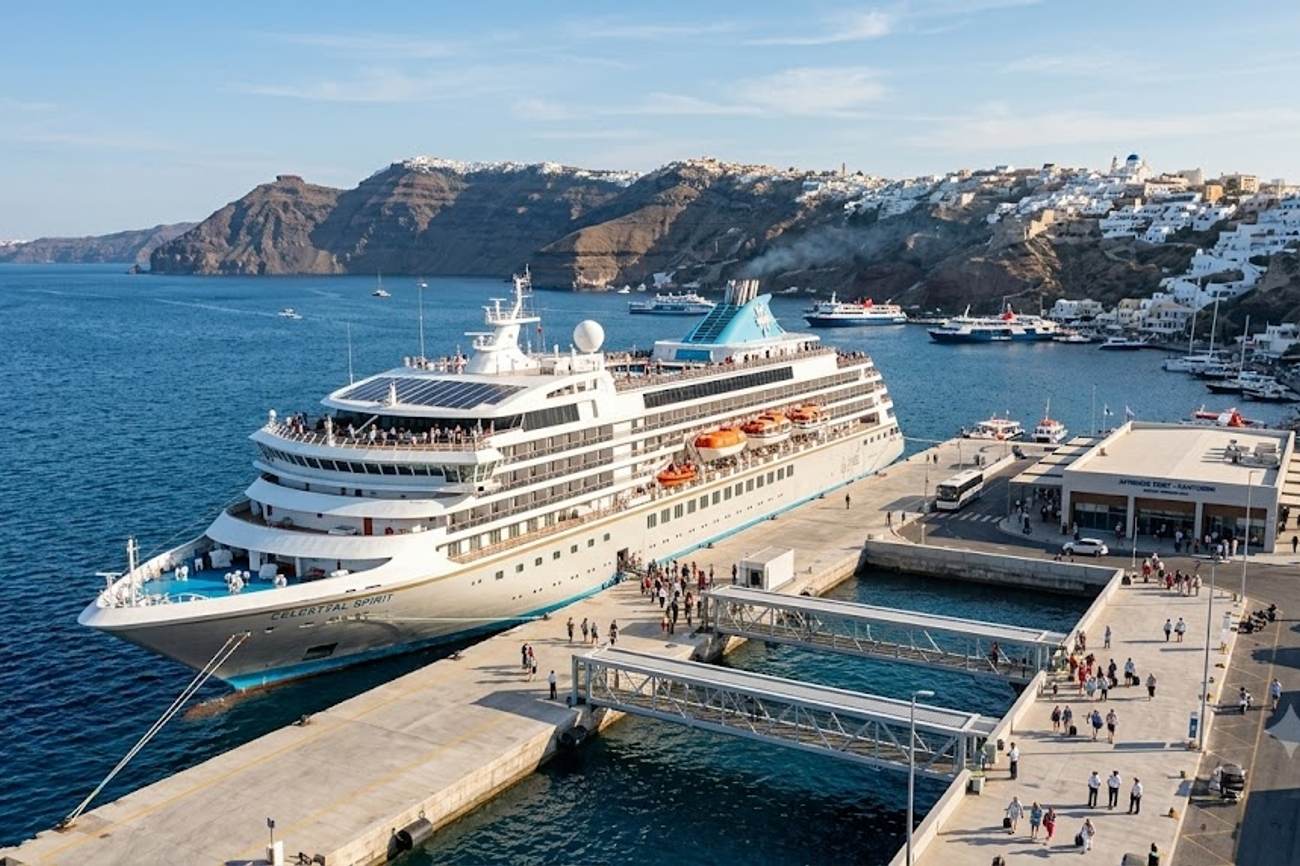
Image generated by AI
8 million annual passenger visits and 6,000 ship calls currently define the scale of Greece's cruise sector, yet the nation is now pivoting away from this volume-centric model. The Greek government and maritime authorities are initiating a structural overhaul of their cruise tourism strategy, shifting the primary metric of success from raw passenger counts to a framework defined by environmental sustainability, regulatory stability, and geographic diversification. This transition comes as the Mediterranean market faces mounting pressure to reconcile mass tourism with the ecological fragility of island ecosystems.
The Shift from Volume to Value in the Mediterranean
For years, the Greek cruise market operated on a growth-at-all-costs trajectory, resulting in extreme congestion at a handful of primary hubs. This "mass market" phenomenon has created a precarious imbalance where a small number of ports bear the brunt of millions of visitors, while other regions remain untapped. To rectify this, the current strategic pivot focuses on transforming the cruise ecosystem into a distributed network.
The Greek authorities are now targeting the development of secondary hubs, specifically identifying Thessaloniki and Kavala as high-potential destinations. By investing in the infrastructure of these northern and regional ports, Greece aims to dilute the passenger density in traditional hotspots, thereby spreading the economic dividends of cruise tourism to previously underserved regional economies. This redistribution is not merely a logistical preference but a necessity to prevent the degradation of the very sites that attract tourists.
Infrastructure Requirements and Environmental Benchmarks
The transition to "green" cruising is currently hampered by a disconnect between ship technology and port capabilities. While the global fleet is evolving rapidly, the physical infrastructure at the pier is often lagging. The most critical point of failure is the implementation of shore power (cold ironing), which allows vessels to shut down their diesel engines and plug into the local electrical grid while docked.
The disparity between ship readiness and port readiness is stark. As detailed in the data below, the industry has scaled its onboard capabilities, but the terrestrial support system remains a bottleneck.
| Metric | 2018 Status | Current Status | Trend/Projection |
|---|---|---|---|
| Ships with Shore Power Capability | 55 vessels | 193 vessels | Increasing |
| Fleet Percentage (Shore Power) | Low | ~65% of fleet | Moving toward 100% |
| Capacity Percentage (Shore Power) | Low | >70% of capacity | Expanding |
| Fuel Profile | Heavy Fuel Oil dominance | Multi-fuel engine adoption | Shift to low-emission fuels |
To meet the stringent environmental mandates set by the European Maritime Safety Agency (EMSA), Greece must accelerate the deployment of these energy systems. Without widespread shore power availability, the "green" ships of the future will continue to pollute Greek port cities during their layovers, neutralizing the benefits of their efficient transit engines.
Expert Analysis: The Economic Risk of Regulatory Volatility
For the professional traveler and the cruise operator, the most critical takeaway from this shift is the tension between short-term regulatory changes and long-term itinerary planning. Cruise lines typically map their routes and price their packages years in advance. When a destination introduces sudden hikes in port charges, new taxes, or abrupt environmental restrictions without a transition period, it creates a financial misalignment.
Greece is aggressively upgrading its maritime infrastructure to accommodate larger vessels and implement sustainable shore-power technologies. These strategic expansions are coordinated through the Hellenic Republic Ministry of Maritime Affairs and Insular Policy to ensure port efficiency and environmental compliance.
For travelers booking these routes, the direct consequence is a potential increase in "port fees" or "sustainability levies" added to the ticket price after the initial booking. From a business perspective, if Greece fails to provide a predictable regulatory environment, cruise operators may divert their newest, most sustainable ships to competing Mediterranean ports in Italy or Spain.
The pricing pressure created by the transition to green energy is significant. The move away from heavy fuel oil toward multi-fuel engines and shore power requires massive capital expenditure. These costs are inevitably passed down the chain. However, the long-term benefit is a reduction in the "overtourism" friction that has plagued Greek islands. By diversifying destinations to places like Kavala, Greece is essentially attempting to "load balance" its tourism traffic, which should eventually stabilize pricing and improve the passenger experience by reducing crowd density.
Furthermore, the focus on water and waste management is a strategic necessity for the Aegean islands. Many of these destinations suffer from chronic water scarcity. The industry's move toward onboard water production—where hundreds of ships can now meet their own requirements without tapping into local municipal supplies—is a vital step in preventing the collapse of local utilities during the peak summer surge.
Key Takeaways
- Diversification Strategy: Greece is actively moving cruise traffic away from saturated hubs and toward secondary ports like Thessaloniki and Kavala to balance economic gain and environmental impact.
- The Shore Power Gap: While 65% of the global cruise fleet is now shore-power capable, Greek port infrastructure must catch up to allow ships to eliminate emissions while docked.
- Resource Independence: Modern vessels are increasingly utilizing onboard water production and advanced wastewater treatment to reduce the strain on limited island resources.
- Operational Stability: The industry is calling for long-term regulatory predictability to avoid pricing shocks for passengers and financial losses for operators.
- Fleet Evolution: There is a measurable decline in heavy fuel oil usage, replaced by multi-fuel engines and a reduction in average carbon dioxide emissions per ship.
FAQ: Greece Cruise Sustainability 2025
Will cruise prices in Greece increase due to green regulations? Yes, it is likely. The cost of upgrading to multi-fuel engines and the implementation of new port sustainability fees are typically passed to the consumer through higher ticket prices or added port taxes.
The surge in cruise arrivals is driving a shift toward diversified itineraries to alleviate congestion in traditional hubs like Santorini and Mykonos. Travelers can find updated regional guidance and sustainable destination insights via the Visit Greece official tourism portal.
Which new Greek ports are becoming cruise hubs? The Greek government is specifically targeting the expansion of cruise infrastructure in Thessaloniki and Kavala to reduce the pressure on traditional hubs like Santorini and Mykonos.
How does "shore power" benefit the traveler? Shore power allows ships to turn off their engines in port. For the traveler, this means significantly less noise and air pollution (soot and fumes) while the ship is docked in Greek cities.
Are cruise ships still draining local water supplies in Greece? Less than in the past. A growing number of ships now use onboard desalination and production systems, meaning they no longer rely on the limited freshwater supplies of small Greek islands.
The Mediterranean is no longer a playground for unlimited growth; it is now a laboratory for sustainable maritime logistics.
Related Travel Guides
- Spain Aligns With Greece As Seabourn Quest Celebrates 15 Years Of Luxury Mediterranean And Caribbean Voyages
- Philippines Unleashes Creative Tourism Powerhouse as Policy Alignment Accelerates Global Exports and High-Value Travel
- South Korea Travel Boom As Seoul’s Green City Project Creates A Stunning Sustainable Tourism Future
Disclaimer
This article is for informational and educational purposes only. It does not constitute legal, financial, or professional advice. While we strive to provide accurate and up-to-date information, travel policies, regulations, and conditions change rapidly. Always verify information with official sources before making travel decisions. Nomad Lawyer makes no representations about the accuracy, reliability, completeness, or suitability of the information provided. Readers should consult qualified professionals for advice specific to their circumstances. The views expressed in this article are those of the author and do not necessarily reflect the views of Nomad Lawyer.
Preeti Gunjan
Contributor & Community Manager
A passionate traveller and community builder. Preeti helps grow the Nomad Lawyer community, fostering engagement and bringing the reader experience to life.
Learn more about our team →