
South Korea Travel Boom As Seoul’s Green City Project Creates A Stunning Sustainable Tourism Future
South Korea Travel Boom As Seoul’s Green City Project Creates A Stunning Sustainable Tourism Future

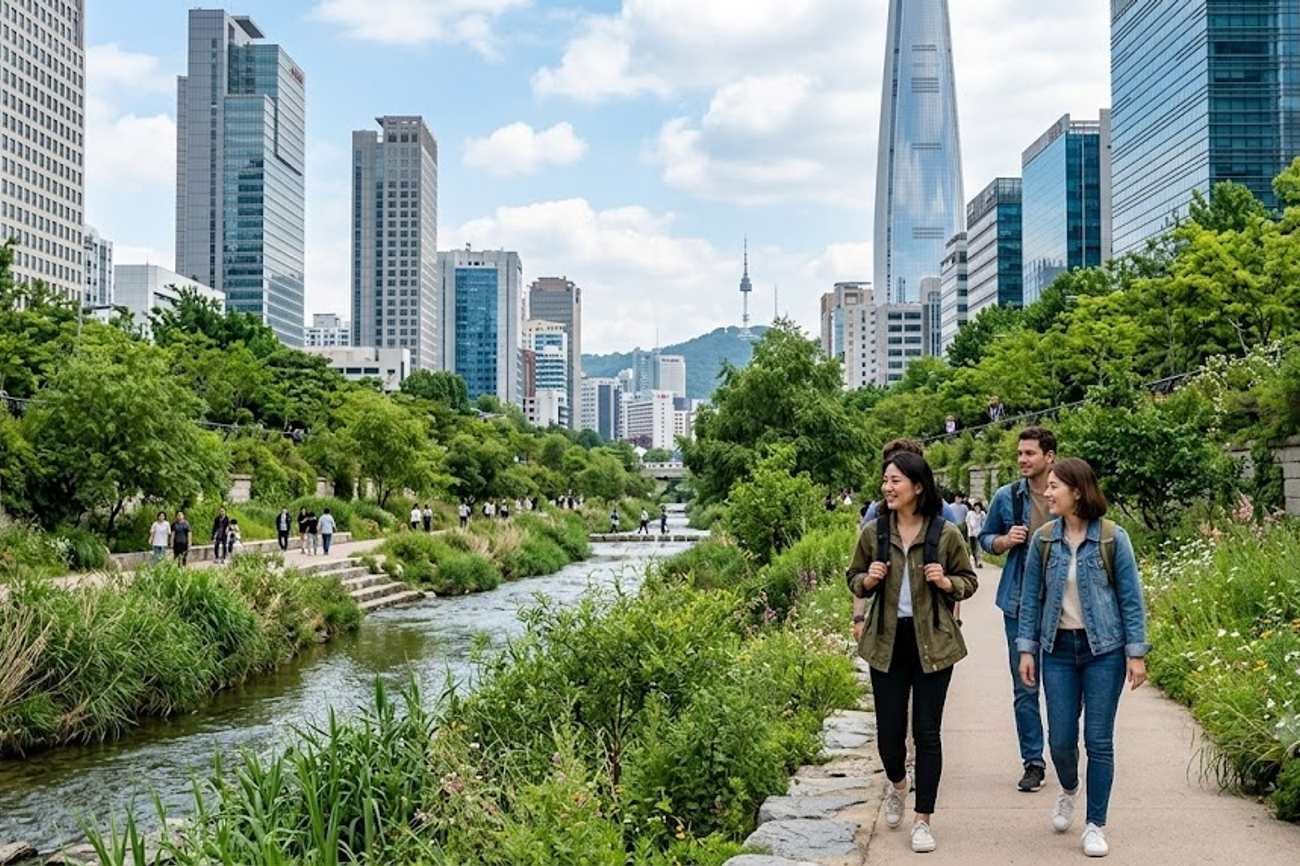
Image generated by AI
Seoul's urban temperature differential has shifted by as much as 5.9°C in specific corridors following the removal of concrete infrastructure, signaling a pivot from "grey" to "green" urbanism that is now driving South Korean tourism growth. This shift is not merely aesthetic; it represents a systemic move toward sustainable city planning that prioritizes ecological restoration over vehicular throughput, a trend that is increasingly influencing how international travelers select urban destinations.
The Restoration in Numbers: Ecological and Climatic Shifts
The transformation of the Cheonggyecheon stream from a buried waterway beneath a concrete freeway into an 11-kilometre urban corridor provides a precise dataset on the efficacy of nature-based urban regeneration. The most striking metrics are found in the biodiversity recovery, which serves as a leading indicator for the area's attractiveness to the growing "eco-tourist" demographic.
Before the restoration, the area was an ecological vacuum. Following the project, plant species expanded from 62 to 308, and fish species grew from four to 25. The avian population saw a six-fold increase, rising from six species to 36. This biological surge is mirrored in the micro-fauna data, with aquatic invertebrate species jumping from five to 53 and insect species expanding from 15 to 192.
From a climatic perspective, the data confirms the mitigation of the "Urban Heat Island" effect. Areas adjacent to the Cheonggyecheon are now between 3.3°C and 5.9°C cooler than parallel roads dominated by asphalt. This cooling is supplemented by a 2.2 to 7.8 percent increase in wind speeds, which enhances pedestrian comfort. Furthermore, the removal of the elevated highway led to a 35 percent reduction in small particle pollution levels, directly improving the air quality for the thousands of daily visitors.
Comparative Urbanism: Infrastructure vs. Ecology
When compared to traditional 20th-century urban development—which prioritized the expansion of road networks to signal economic modernity—Seoul's approach represents a reversal of global trends. For decades, the standard for "modern" cities was the construction of elevated highways and concrete arteries. Seoul's decision to dismantle this infrastructure in favor of a waterway aligns with the broader goals outlined by the World Tourism Organization (UNWTO), which emphasizes the need for sustainable urban tourism to reduce environmental footprints.
The economic transition is equally measurable. The shift from a transport-focused corridor to a pedestrian-centric destination triggered a measurable increase in public transit utilization. Bus ridership climbed by 15.1 percent, while subway usage rose by 3.3 percent. This indicates a shift in traveler behavior: visitors are moving away from private vehicle reliance toward integrated public transport networks.
| Metric | Pre-Restoration (Concrete Era) | Post-Restoration (Green Era) | Variance/Growth |
|---|---|---|---|
| Plant Species | 62 | 308 | +396.7% |
| Fish Species | 4 | 25 | +525% |
| Bird Species | 6 | 36 | +500% |
| Air Pollution (Small Particles) | Baseline | -35% | Significant Decrease |
| Local Temp (vs. Parallel Road) | Baseline | -3.3°C to -5.9°C | Significant Cooling |
| Bus Ridership | Baseline | +15.1% | Moderate Increase |
| Subway Ridership | Baseline | +3.3% | Slight Increase |
Practical Traveler Advisory and Strategic Insights
The data suggests that Seoul is no longer just a destination for K-culture and shopping, but a primary case study in sustainable urbanism. For the individual traveler, this shifts the "optimal" way to experience the city.
If you are planning a visit to Seoul, particularly during the summer months (June through August), prioritizing accommodations and itineraries centered around the Cheonggyecheon corridor is a strategic move. Given the 3.3°C to 5.9°C temperature drop in this zone, it serves as a natural refuge from the city's heat.
Additionally, the 15.1 percent increase in bus ridership and 3.3 percent increase in subway use indicate that the city's infrastructure is optimized for non-car travel. Travelers should avoid renting vehicles in the city center and instead leverage the T-money card system to navigate the corridors connecting the stream to other major landmarks. The increase in nearby commercial activity means that the "micro-economy" of the stream—small cafes, boutiques, and eateries—is now a primary attraction rather than a secondary amenity.
Seoul is transforming its urban landscape through expansive green initiatives, integrating sustainable parks and pedestrian-friendly corridors to enhance the visitor experience. Travelers can explore these eco-friendly developments and plan their itineraries via the Visit Korea official tourism portal.
Forward Projection: The "Blue-Green" Tourism Trajectory
Based on current trajectories and data provided by IATA regarding the rise of sustainable travel preferences, Seoul's success with Cheonggyecheon is likely to be replicated in other Asian metropolises. We are seeing a move toward "Blue-Green Infrastructure," where water (blue) and vegetation (green) are integrated into the urban fabric to drive tourism.
The correlation between the restoration and the increase in land prices and business density suggests that the "Green Premium" is now a dominant factor in urban real estate. As more cities move to replace highways with parks, we can expect a shift in tourism spending from centralized shopping malls toward decentralized, open-air corridors.
Furthermore, the 35 percent reduction in particulate matter sets a benchmark for "Healthy Tourism." We project that future traveler decision-making will be increasingly driven by "Air Quality Indices" (AQI) of specific districts, making areas like the restored Cheonggyecheon highly competitive compared to traditional, smog-heavy city centers.
FAQ: Seoul Urban Tourism 2024
Will hotel prices rise near the Cheonggyecheon area? Yes. Data shows land prices near the stream have grown significantly compared to other Seoul districts. This increase in property value typically translates to higher Average Daily Rates (ADR) for nearby hotels and Airbnbs.
Is it better to visit the stream in summer or winter? Summer. The data proves the area is up to 5.9°C cooler than nearby roads, making it the most comfortable place in the city center during heatwaves.
Which transport method is best for accessing the corridor? Public transit. With bus ridership up 15.1% and subway use up 3.3%, the area is designed for pedestrians and transit users rather than private cars.
Does the restoration affect the local shopping experience? Yes. The shift from a highway to a pedestrian path has increased the number of nearby businesses, moving the shopping experience from large malls to street-level retail and dining.
The transition from concrete corridors to living waterways proves that the most profitable urban investment is often the one that removes the pavement.
Related Travel Guides
- Why the New 2026 Dining Laws of Abu Dhabi Will Transform Your Next Vacation
- Taj Dubai Stands Alongside NH Collection The Palm and More to Unlock Dubai Hospitality Boom With 85% Winter Occupancy Forecast
- Japan Stands Alongside Taiwan as Asia Cruise Tourism Enters a New Era of Bigger Ports and Higher Visitor Spending
Disclaimer
This article is for informational and educational purposes only. It does not constitute legal, financial, or professional advice. While we strive to provide accurate and up-to-date information, travel policies, regulations, and conditions change rapidly. Always verify information with official sources before making travel decisions. Nomad Lawyer makes no representations about the accuracy, reliability, completeness, or suitability of the information provided. Readers should consult qualified professionals for advice specific to their circumstances. The views expressed in this article are those of the author and do not necessarily reflect the views of Nomad Lawyer.
Raushan Kumar
Founder & Lead Developer
Full-stack developer with 11+ years of experience and a passionate traveller. Raushan built Nomad Lawyer from the ground up with a vision to create the best travel and law experience on the web.
Learn more about our team →