
Global Energy Crisis 2026: Strait of Hormuz Blockade Triggers 50% Jet Fuel Surge as KLM, Air Canada, and Qantas Slash Summer Schedules Amid Mass Middle East Shipping Disruptions
The commercial aviation sector faces a catastrophic summer in 2026 as the US-Iran conflict and Strait of Hormuz closure force a 50% explosion in fuel costs, prompting airlines worldwide to slash schedules and avoid disrupted Gulf hubs.

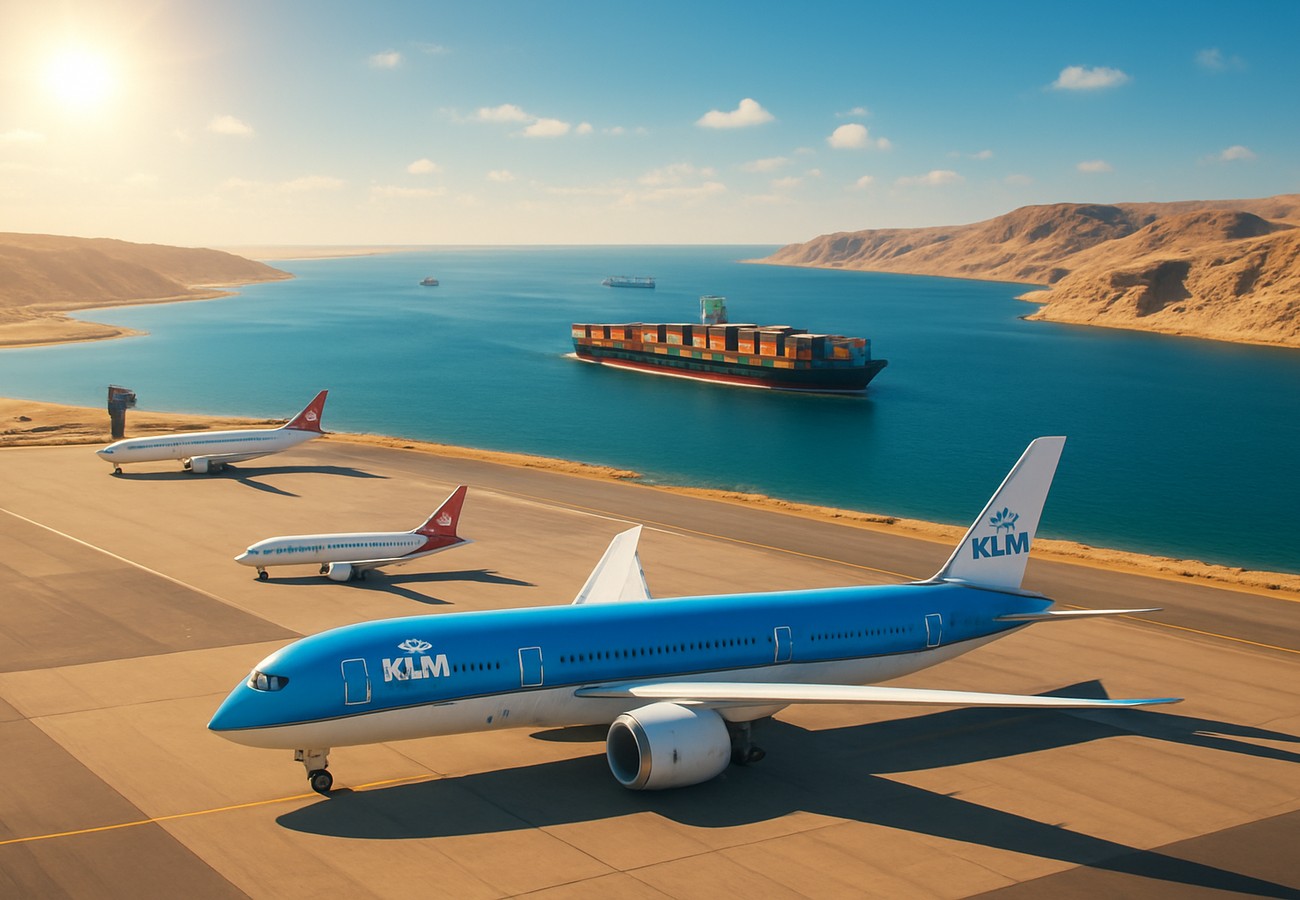
Image generated by AI
Global Energy Crisis 2026: Strait of Hormuz Blockade Triggers 50% Jet Fuel Surge as KLM, Air Canada, and Qantas Slash Summer Schedules Amid Mass Middle East Shipping Disruptions
Airlines Scramble to Protect Margins Over Volume as "Gulf Gateway" Congestion Forces Drastic Capacity Reductions in Europe and North America
LONDON, UK — The global commercial aviation industry is hurtling toward one of its most challenging summer seasons on record, caught in the devastating economic crossfire of a profound global energy crisis. As the geopolitical standoff in the Middle East fundamentally alters the maritime and energy supply chains, major international carriers are being forced to execute emergency retrenchment protocols. A catastrophic 50% surge in jet fuel prices since the start of the year—directly linked to the severe shipping disruption in the Strait of Hormuz—means fuel now accounts for a staggering 25% to 35% of total airline operating costs. In an orchestrated effort to preserve fragile profit margins, airlines across Asia, Europe, and North America are fundamentally reshaping the 2026 summer travel landscape, slashing schedules, rerouting over major Gulf transit hubs, and prioritizing hyper-lucrative long-haul markets.
EXPANDED OVERVIEW: The 50% Burn Rate
The escalating crisis has obliterated the traditional economic modeling of summer passenger demand. The issue is no longer about finding passengers willing to fly, but rather finding a way to fly them without incurring massive financial losses.
With approximately a fifth of the world's daily oil consumption effectively trapped by Gulf blockades, the 50% jet fuel price spike has eradicated the profitability of high-volume, low-margin regional flying. Consequently, the industry is witnessing a massive pivot: carriers are moving aggressively away from market share acquisition and solely focusing on yield protection. This means travelers looking at the 2026 peak season will experience a constrained air map marked by strategic route culls, skyrocketing fares, and diminished connectivity in secondary markets.
GEOPOLITICAL CONTEXT: The US-Iran Conflict and Hormuz Paralysis
To understand the sudden contraction of the airline network, one must look directly at the deepening US-Iran conflict. The strategic brinkmanship in the Arabian Gulf has functionally severed maritime traffic through the Strait of Hormuz, a waterway essential not just for global crude, but specifically for the highly refined petroleum products that European and Asian airlines depend upon.
This localized tension has unleashed a global shockwave. European carriers, highly reliant on imported Middle Eastern jet fuel, are now competing in a hyper-inflated, scarcity-driven market against a backdrop of potential rolling fuel rationing. The strategic vulnerabilities exposed by this geopolitical standoff have proven that commercial aviation remains inextricably bound to the physical security of Gulf shipping lanes.
GLOBAL ENERGY IMPACT: Spiraling Oil Prices and Cargo Divergences
The oil prices currently paralyzing the aviation sector are not an anomaly, but the direct result of an active global supply chain risk. The resulting economic shock is twofold:
First, carriers simply cannot absorb a cost matrix where fuel accounts for over a third of overhead. Second, as massive maritime freighters enact radical vessel rerouting to bypass the Persian Gulf entirely, critical, time-sensitive global cargo is being pushed into the bellies of commercial widebody aircraft. This effectively subsidizes long-haul flights for the airlines, further incentivizing them to cut short-haul domestic flights where they cannot pad their margins with emergency, high-rate cargo.
SHIPPING & TRADE IMPACT: A Maritime Crisis Bleeding into Aviation
The unprecedented shipping disruption involves exponential rises in marine insurance costs and staggering trade delays measured in weeks. With container ships avoiding traditional maritime choke points, the "Air Bridge" has become the last reliable vein of global commerce.
Ironically, this has caused a secondary delay crisis. The influx of emergency air freight mixed with complex passenger redeployments has caused massive logistical backlogs. Aviation authorities are struggling. In a highly visible move to combat this systemic congestion, the Federal Aviation Administration (FAA) has imposed a hard cap on the number of daily flights at Chicago O’Hare International Airport from May 17 to October 24. This regulatory lid is a direct admission that the physical and airspace infrastructure can no longer absorb the combined pressure of passenger demand and redirected cargo flows.
REGIONAL IMPACT (GULF STATES): The Great Hub Diversion
The crisis poses an existential question for the modern "super-connector" model centered in Saudi Arabia, the UAE, Qatar, Kuwait, Oman, and Bahrain. The fear of airspace closures and geopolitical spillover has disrupted the traditional flow of passenger traffic through massive Gulf airports.
This regional hesitation has forced a massive redistribution of demand. Leading Asian carriers—Cathay Pacific, Singapore Airlines (SIA), Korean Air, and Qantas—are seeing an aggressive surge in direct passenger demand bypassing the Middle East entirely. Singapore Airlines has reported that seat occupancy on its direct European routes has skyrocketed to an extraordinary 93.5%. Qantas is similarly doubling down on direct European connectivity while deliberately trimming its domestic and U.S. offerings to free up long-haul capacity.
INDUSTRY / EXPERT ANALYSIS: Retreating from the Regions
"What we are seeing is not a destruction of travel demand, but a surgical restructuring of airline risk," explains a prominent aviation energy analyst in London. "When your fuel bill spikes by 50%, you stop flying empty seats. Airlines are canceling thin regional routes and putting all their eggs into the transatlantic or Asia-Europe corridors where business travelers and desperate shippers will pay whatever surcharge is necessary to cross the planet."
This is vividly seen in North America, where Air Canada has confirmed it will cut four daily flights between Toronto and New York’s JFK Airport from June 1 to October 25. The reduction on such a highly trafficked corporate corridor highlights the sheer brutality of the fuel pricing environment.
WHAT HAPPENS NEXT: A Constricted and Expensive Summer
The outlook for the immediate future rests heavily on the diplomatic channels attempting to de-escalate the Gulf tensions. However, aviation is an industry built on advance scheduling.
Even if the Strait of Hormuz fully opens tomorrow, the summer 2026 schedules are already locked in their defensive posture. In Europe, the situation is particularly acute. KLM has officially announced plans to cancel 160 European flights over the next month, directly citing the rising costs of jet fuel. It is highly likely that other European flag carriers will follow suit, institishing emergency consolidations to prevent operating flights at a loss.
CONCLUSION: The Fragility of Global Flight
Ultimately, Summer 2026 will be remembered as the season the world realized that affordable global connectivity operates at the total mercy of a single geographical chokepoint. The global energy crisis has shattered the illusion of perpetual airline expansion, replacing it with a grim reality of slashed capacities, extreme fare volatility, and localized airport chaos. Until the geopolitical fractures in the Middle East can be stabilized, the commercial skies will remain under intense financial lockdown.
KEY TAKEAWAYS
- The Price Shock: Jet fuel prices have surged by an incredible 50%, now accounting for 25% to 35% of an airline's operating costs due to the Strait of Hormuz crisis.
- European Casualties: Worsening the summer outlook, KLM is canceling 160 European flights over the next month to mitigate extreme fuel expenditure.
- North American Cuts: Air Canada is axing four daily flights between Toronto and JFK from June 1 to October 25.
- Systemic Congestion: The FAA has capped daily operations at Chicago O’Hare from May 17 to October 24 to alleviate crippling operational backlogs.
- The Asian Pivot: Traffic avoiding the Gulf has driven load factors on Asian carriers like Singapore Airlines up to 93.5% on European routes, fundamentally altering the global transit map.
Disclaimer
This article is for informational and educational purposes only. It does not constitute legal, financial, or professional advice. While we strive to provide accurate and up-to-date information, travel policies, regulations, and conditions change rapidly. Always verify information with official sources before making travel decisions. Nomad Lawyer makes no representations about the accuracy, reliability, completeness, or suitability of the information provided. Readers should consult qualified professionals for advice specific to their circumstances. The views expressed in this article are those of the author and do not necessarily reflect the views of Nomad Lawyer.
Raushan Kumar
Founder & Lead Developer
Full-stack developer with 11+ years of experience and a passionate traveller. Raushan built Nomad Lawyer from the ground up with a vision to create the best travel and law experience on the web.
Learn more about our team →