
Breaking Airline News: Emirates, Qatar, and Global Carriers Deploy Massive Safety Shields to Combat Severe Travel Chaos Amid Middle East Conflict
Breaking airline news: Amidst a terrifying era of massive airspace restrictions and regional conflict, Emirates, Qatar Airways, and major European carriers execute highly aggressive safety protocols to shield passengers from severe travel chaos.

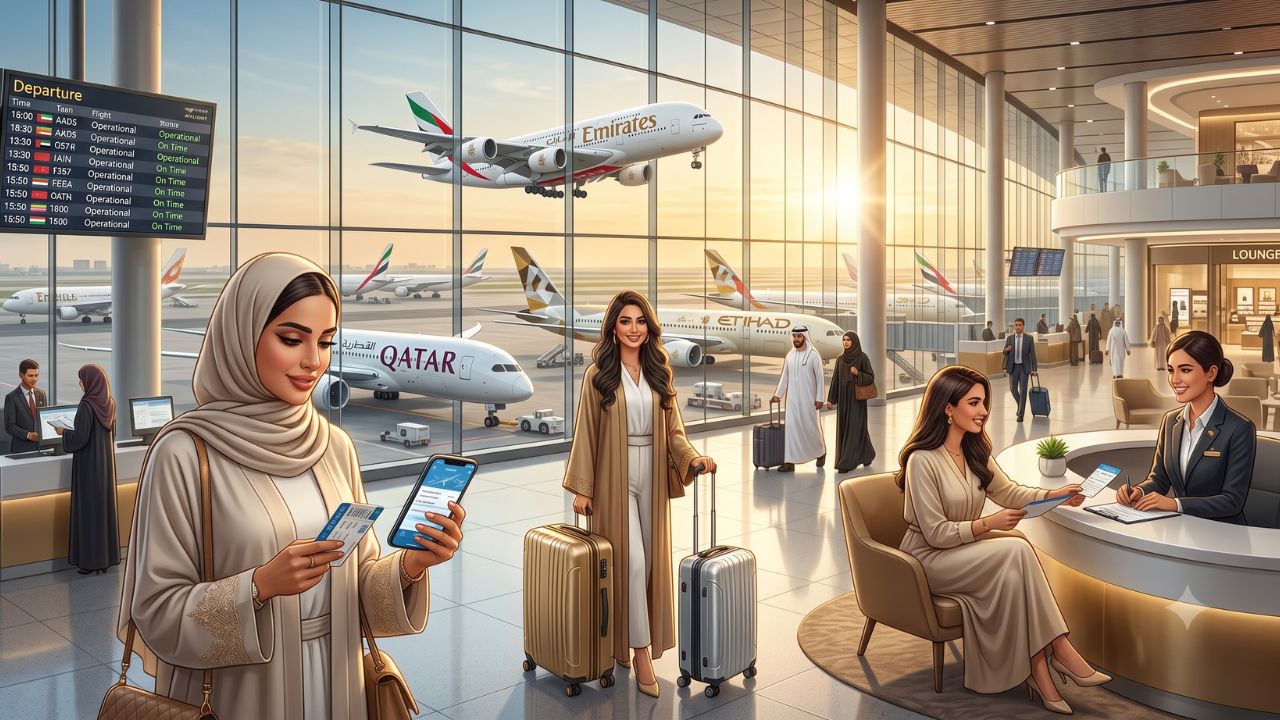
Image representing the intense strategic battle as global aviation authorities and mega-carriers desperately attempt to contain severe flight delays and massive travel chaos sparked by terrifying geopolitical conflict.
Breaking Airline News: Emirates, Qatar, and Global Carriers Deploy Massive Safety Shields to Combat Severe Travel Chaos Amid Middle East Conflict
As paralyzing airspace closures, highly restrictive aviation warnings, and massive waves of passenger anxiety violently sweep through the global transit network, the world’s most powerful airlines have executed a high-stakes, unified strategic maneuver. In a desperate bid to physically and economically rescue international travelers from the terrifying threat of extreme geopolitical travel chaos, Emirates has aggressively joined forces with Qatar Airways, Etihad, flydubai, SWISS, Brussels Airlines, Air France, and other major carriers. Facing severe disruptions stemming from the ongoing Iran conflict, these aviation heavyweights have completely abandoned standard fare-reduction tactics. Instead, they are aggressively deploying massive, safety-first operational shields. By ruthlessly prioritizing flight reliability, massive customer support networks, and highly secure rerouting over simple price cuts, this unprecedented industry alliance is directly fighting to prevent the complete collapse of the critical Middle Eastern transit corridors.
In a harrowing display of modern aviation strategy, the sheer volume of geopolitical friction currently overwhelming standard flight paths is forcing global airline executives to completely rewrite their operational blueprints. Historically, airlines responding to regional instability would aggressively slash ticket prices in a desperate attempt to artificially stimulate crashing passenger demand. However, the current threat environment has entirely shifted the paradigm. Frightened passengers attempting to navigate the volatile Middle Eastern grid are no longer motivated by cheap fares; they are demanding absolute, ironclad guarantees of physical safety and schedule continuity. Recognizing this fundamental shift, Emirates and its global counterparts are actively fighting back against the structural collapse of international transit. By forcefully establishing massive, non-price defense perimeters, these carriers ensure that desperate flyers can violently slash their exposure to sudden cancellations and airspace lockdowns, ultimately shielding families and corporate travelers from the agonizing misery of being stranded in conflict-adjacent transit hubs.
Expanded Overview: The Massive Scale of the Airspace Contagion
The terrifying crisis of overwhelming regional instability currently gripping the Middle East brutally exposes the severe limitations of traditional airline revenue models. When international aviation safety agencies issue severe, restrictive airspace warnings, standard operational models immediately fail. The resulting travel chaos triggers massive, cascading delays as entire fleets are forced into holding patterns or massive detours. Emirates has aggressively maintained that operational reliability must completely override standard commercial pricing battles. The carrier’s survival strategy explicitly recognizes that the terror of mid-journey disruptions completely overrides the appeal of discounted tickets. Consequently, the airline has launched a massive suite of operational incentives directly designed to physically reassure passengers and completely secure the incredibly fragile global transit grid.
Section-Wise Breakdown: The Operational Realignment
The Emirates Operational Defense Perimeter
To survive the terrifying surge in passenger anxiety without triggering an immediate collapse in bookings, Emirates has deployed a brilliant tactical shield. The airline has aggressively expanded its customer care protocols, offering immediate, flexible rebooking options and executing a massive interline protection strategy. If Emirates flights are directly compromised by airspace restrictions, the airline is utilizing unprecedented cross-carrier arrangements to book affected passengers onto alternative airlines. This aggressive maneuver ensures that families facing unexpected itinerary changes—such as ensuring children reach international schools on schedule—are not left financially ruined or physically stranded at intermediate hubs.
Gulf Carriers Execute Safe-Airspace Rerouting
Simultaneously, the broader Gulf aviation alliance is executing highly complex, heavily defensive routing strategies. Qatar Airways, Etihad, and flydubai are aggressively fighting to maintain connectivity by forcefully opening alternate, designated safe-airspace corridors. While this massive rerouting effort allows these carriers to resume selected flights and maintain network capacity, it comes at a terrifying financial cost. The airlines are aggressively absorbing massive, punishing fuel penalties required to bypass restricted zones, proving their absolute commitment to operational continuity over short-term profitability. Furthermore, these Gulf titans have established massive, expanded intelligence-sharing networks with regional governments to underpin these safe flight operations with real-time, highly accurate threat assessments.
European Heavies Deploy Contingency Protocols
The terrifying operational shockwaves have also violently disrupted the European flight networks. SWISS, Brussels Airlines, and Air France have been forced to execute highly cautious, defensive stances regarding their Middle Eastern services. In numerous instances, these European heavyweights have temporarily suspended operations entirely to avoid conflict-affected airspace. To manage the massive resulting travel chaos, these carriers have aggressively mobilized massive customer support teams, overriding standard fare rules to offer full financial refunds and highly flexible rebooking policies without penalty. By shielding passengers from catastrophic financial loss, these airlines are violently defending their long-term customer loyalty against the ongoing crisis.
Aviation Strategy & Operational Defense Matrix
To fully comprehend the massive logistical and strategic fallout of this intercontinental defense deployment, corporate travel managers and affected tourists must review the exact operational metrics currently defining this global alliance. The following matrix provides a granular breakdown of the specific, officially verified strategic data driving this massive disruption mitigation strategy.
| Operational Defense Metric | Confirmed Strategic Data |
|---|---|
| Primary Conflict Zone | Middle East / Iran Airspace Restrictions |
| Gulf Alliance Carriers | Emirates, Qatar Airways, Etihad, flydubai |
| European Alliance Carriers | SWISS, Brussels Airlines, Air France |
| Core Defense Strategy | Safety, Reliability, and Support Prioritized Over Price Cuts |
| Passenger Protection Protocols | Flexible Rebooking, Cross-Carrier Booking, Full Fare Waivers |
| Network Integrity Measures | Tactical Rerouting, Intelligence Sharing, Safe-Corridor Utilization |
Passenger Impact: Surviving the Geopolitical Gridlock
For the millions of global tourists and corporate commuters attempting to navigate the highly volatile Middle Eastern transit corridors, this massive, safety-first deployment represents a highly anticipated lifeline against extreme travel trauma. The brutal reality of enduring sudden airspace closures inflicts intense psychological stress and entirely destroys meticulously planned long-haul itineraries. By aggressively expanding their customer support frameworks and abandoning petty price wars, Emirates and its allies are attempting to actively prevent the terrifying friction that results in severely abandoned vacations and entirely ruined family travel plans.
Survival Guide for International Travelers
Travelers desperately preparing to navigate the massive Gulf transit network must immediately execute the following survival protocols:
- Prioritize Carrier Reliability Over Cost: Passengers must aggressively ignore discounted fares from low-tier carriers that lack the massive operational infrastructure required to execute emergency rerouting or cross-carrier rebooking during sudden airspace closures.
- Demand Immediate Flexible Defenses: Before executing any bookings through the Middle East, travelers must ruthlessly verify that the carrier offers penalty-free flexible rebooking policies and full financial waivers in the event of conflict-related cancellations.
- Utilize Carrier Intelligence Apps: Because the geopolitical situation remains highly volatile, passengers must actively monitor their airline's mobile applications; these digital tools are being heavily leveraged by carriers like Emirates and Air France to push immediate, critical itinerary updates directly to travelers.
Industry Analysis: The Economics of Passenger Trust
From a strategic aviation perspective, the travel turmoil currently forcing these massive deployments highlights a terrifying shift in global airline economics. Aviation economists confirm that the historical reliance on extreme price-cutting is entirely obsolete during periods of severe geopolitical conflict. In an industry traditionally driven by ruthless cost competition, the current threat environment has violently elevated the absolute necessity of reliability, contingency support, and travel certainty. The massive financial burden of increased fuel consumption for rerouting, combined with the extreme volatility of global oil prices, means airlines are operating on razor-thin margins. However, the aggressive investment in customer support and safety protocols proves that major carriers view protecting passenger trust as the ultimate, indispensable strategy for long-term survival.
Conclusion: A Strategic Retreat to Ensure Aviation Survival
As the extremely critical summer travel season approaches, the massive safety strategy launched by Emirates, Qatar Airways, and their European allies represents a massive warning to the global aviation sector. The aggressive maneuvering by these carriers proves that surviving geopolitical instability requires terrifyingly swift and highly optimized operational defense networks, not just cheap tickets. Corporate travel buyers and everyday passengers attempting to navigate this highly unstable era of airport disruptions must embrace these heavily fortified airlines. By acting aggressively to secure flexible bookings and relying on carriers with proven intelligence-sharing capabilities, travelers can successfully survive the intense operational pressure and completely avoid the paralyzing threat of global travel chaos.
Key Takeaways
- Massive Safety Shift: Emirates, Qatar Airways, Etihad, flydubai, SWISS, Brussels Airlines, and Air France are aggressively prioritizing operational safety and massive customer support over standard ticket price reductions.
- Crushing Geopolitical Disruption: The ongoing Iran conflict and severe Middle East airspace restrictions have forced airlines to execute massive, highly complex rerouting to avoid terrifying travel chaos.
- Aggressive Passenger Protection: Carriers are deploying massive customer shields, including flexible rebooking, full financial refunds, and emergency cross-carrier flight arrangements to prevent passengers from being stranded.
- Massive Operational Costs: Airlines are heavily absorbing terrifying fuel penalties to utilize safe-airspace corridors, proving their commitment to keeping the global transit grid operational.
- Traveler Advisory: Passengers navigating the Middle East must aggressively select carriers offering robust, penalty-free flexibility, as cheap fares offer zero protection against sudden geopolitical airspace lockdowns.
Related Travel Guides
Disclaimer
This article is for informational and educational purposes only. It does not constitute legal, financial, or professional advice. While we strive to provide accurate and up-to-date information, travel policies, regulations, and conditions change rapidly. Always verify information with official sources before making travel decisions. Nomad Lawyer makes no representations about the accuracy, reliability, completeness, or suitability of the information provided. Readers should consult qualified professionals for advice specific to their circumstances. The views expressed in this article are those of the author and do not necessarily reflect the views of Nomad Lawyer.
Kunal K Choudhary
Co-Founder & Contributor
A passionate traveller and tech enthusiast. Kunal contributes to the vision and growth of Nomad Lawyer, bringing fresh perspectives and driving the community forward.
Learn more about our team →