
Airbus A319 Fleet Analysis: Germany, France, and Switzerland Maintain 31-Year Operational Run
An analysis of the Airbus A319's three-decade legacy across Europe, detailing fleet deployments by Lufthansa, Air France, and Swiss International Air Lines as they transition to NEO and A220 aircraft.

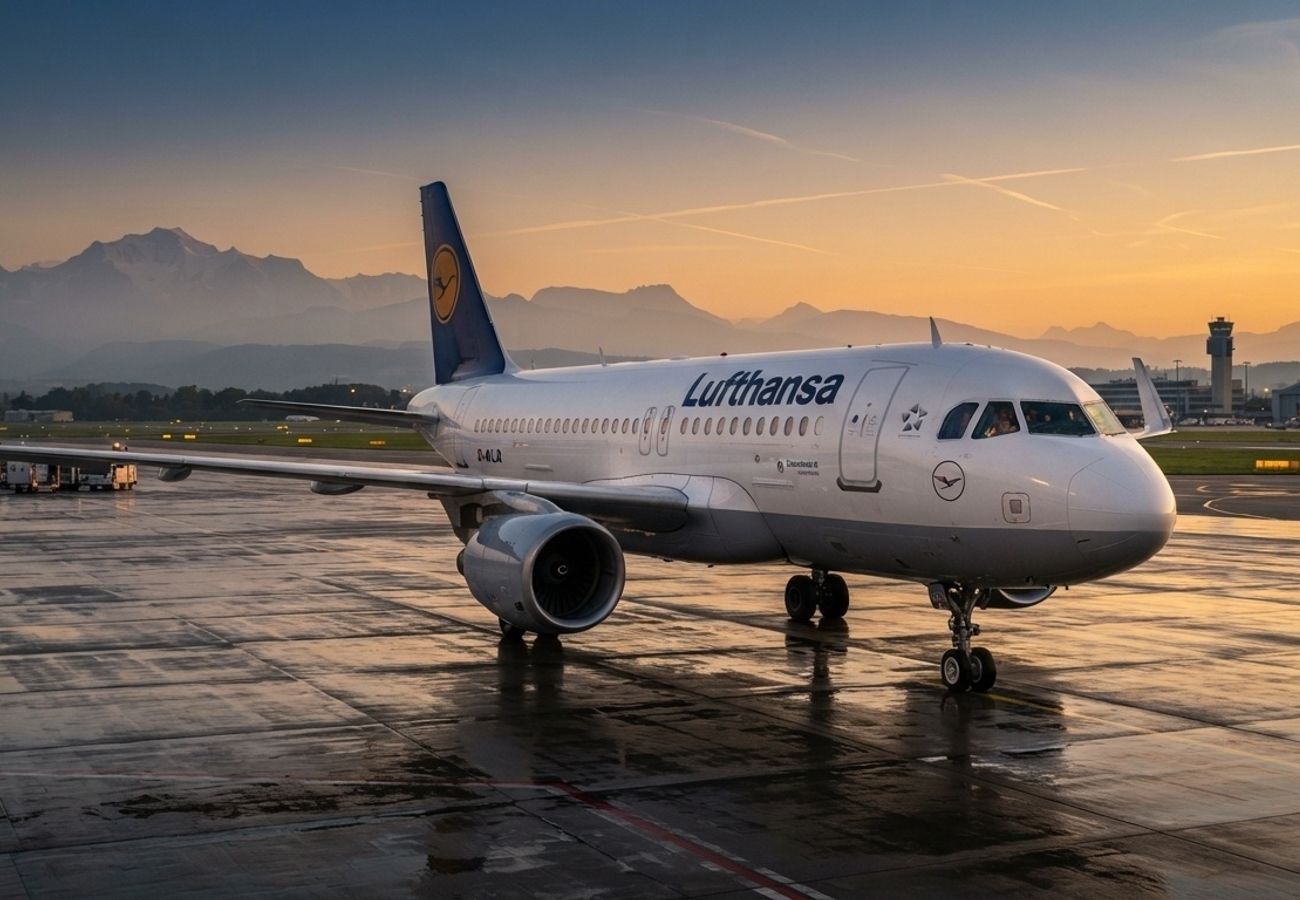
Image generated by AI
The Airbus A319 has remained a cornerstone of European connectivity for 31 years, with Germany, France, and Switzerland anchoring its operational success. While newer fuel-efficient models are arriving, this compact jet continues to bridge the gap between legacy fleets and next-generation aviation.
Three Decades of the European Workhorse
Launched as a shortened variant of the A320 family, the Airbus A319 first flew in 1995 and entered commercial service in 1996. It was designed specifically for "thin" routes where demand did not justify larger narrowbody aircraft but required the reliability of a modern jet.
Our analysis of available fleet data indicates that by 2025, approximately 1,264 A319s—comprising both the original "ceo" (current engine option) and the newer "neo" (new engine option)—remained in service globally across nearly 90 operators.
The aircraft's success in Europe is attributed to three primary factors:
- Cockpit Commonality: Shared systems with the A320 and A321 reduced training costs for pilots.
- Operational Flexibility: Ability to serve constrained hubs with high frequency.
- Industrial Integration: Final assembly and component production shared between France and Germany, embedding the type into the regional aerospace economy.
Regional Fleet Impact and Deployment
Germany: The Lufthansa Group Strategy
Lufthansa Group continues to utilize the A319 as a tactical tool for capacity balancing. Fleet tables from 2023 and 2024 confirm the deployment of dozens of A319s across Lufthansa mainline, Lufthansa City Airlines, and regional partners.
The aircraft is primarily used to link Frankfurt and Munich hubs with secondary business cities across Italy, Spain, Scandinavia, and Eastern Europe. While fleet planning documents show a gradual phase-out in favor of A320neo and A321neo models, the A319 remains vital for managing demand swings without sacrificing network reach. Some units have exceeded 25 years of service, sustained by comprehensive cabin refurbishments.
France: The Transition to A220
Air France has historically relied on the A318 and A319 for high-frequency domestic and regional routes from Paris. However, flight tracking data and fleet overviews indicate a rapid modernization phase.
Air France is currently replacing older A319s with the Airbus A220-300. During this transition, the A319 serves as a critical bridge, maintaining niche business and leisure links while the A220 fleet scales. This strategy allows the carrier to maintain market share and frequency while reducing operational complexity through shared maintenance infrastructure.
Switzerland: High-Yield Connectivity
Swiss International Air Lines leverages the A319 for specific business and leisure markets departing from Zurich and Geneva. The aircraft is matched to Switzerland's unique traffic profile, supporting high-frequency flights for pharmaceutical, financial, and diplomatic travelers.
By utilizing the A319, Swiss can maintain multiple daily frequencies to European capitals, providing a consistent feed into their long-haul network while adjusting capacity for seasonal mountain tourism.
Corporate and Government Adaptation
The platform's lifespan has been extended through the Airbus Corporate Jets (ACJ) division. The ACJ319 and the ACJ319neo, the latter of which began deliveries in 2019, provide intercontinental range and customizable cabins for government and private use. This pivot has kept the A319 in production in specialized forms even as commercial airline orders for the base model declined.
Passenger Rights & Advisory: Navigating Fleet Transitions
For the passenger, the transition from legacy A319s to newer NEO or A220 models typically means improved fuel efficiency, lower noise levels, and updated cabin amenities. However, fleet modernization often coincides with schedule volatility.
Our analysis of aviation policy suggests passengers should note the following:
- Rebooking Rights: If a flight is cancelled due to "technical issues" during a fleet transition or aircraft swap, passengers are generally entitled to rebooking or a full refund.
- EU261/2004 Framework: For flights departing from EU airports or arriving in the EU on an EU carrier, delays over three hours caused by technical faults (which are not considered "extraordinary circumstances") may qualify the passenger for compensation between €250 and €600, depending on the flight distance.
- Service Discrepancies: When an airline swaps an A319 for a different aircraft type (e.g., an A220), seat configurations may change. Passengers with specific seat assignments should verify their seats 24 hours before departure via the airline's app to ensure their preferences are maintained.
The 31-year trajectory of the A319 illustrates a broader trend in aviation: the move toward "right-sizing." The A319 proved that reliability on low-demand routes is more valuable than maximizing seat count. As the industry shifts toward the A220 and the NEO family, the A319's legacy remains its ability to maintain network density without the financial risk of flying half-empty larger jets.
The A319's endurance proves that in aviation, versatility often outlasts raw capacity.
Related Travel Guides
Disclaimer
This article is for informational and educational purposes only. It does not constitute legal, financial, or professional advice. While we strive to provide accurate and up-to-date information, travel policies, regulations, and conditions change rapidly. Always verify information with official sources before making travel decisions. Nomad Lawyer makes no representations about the accuracy, reliability, completeness, or suitability of the information provided. Readers should consult qualified professionals for advice specific to their circumstances. The views expressed in this article are those of the author and do not necessarily reflect the views of Nomad Lawyer.
Kunal K Choudhary
Co-Founder & Contributor
A passionate traveller and tech enthusiast. Kunal contributes to the vision and growth of Nomad Lawyer, bringing fresh perspectives and driving the community forward.
Learn more about our team →