
Travel Alert: United Airlines Deploys Airbus A321XLR for Transatlantic Growth
United Airlines integrates the Airbus A321XLR narrowbody jet to launch long-range direct transatlantic routes from Newark and Dulles.

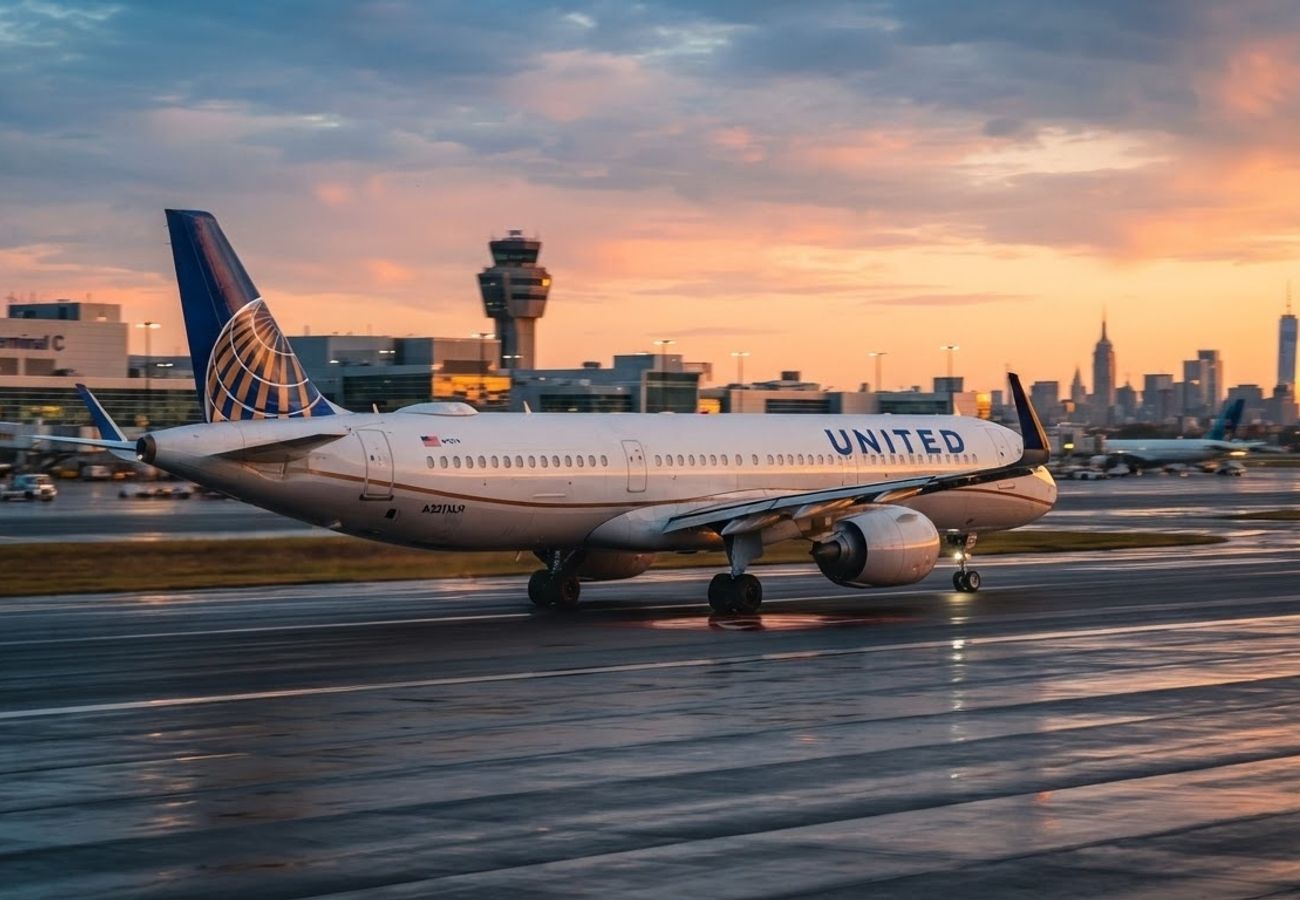
Image generated by AI
United Airlines integrates the Airbus A321XLR narrowbody jet to launch long-range direct transatlantic routes from Newark and Dulles. The US Department of Transportation (DOT) indicates that long-range single-aisle deployments coordinate passenger capacity, supporting direct flight options to secondary destinations across the European network.
The Transition of Transatlantic Trunk Routes to Flexible Narrowbody Links
A notable trend in transatlantic aviation planning is the transition of traditional trunk routes into flexible narrowbody links. Historically, commercial carriers operated intercontinental flights almost exclusively with large twin-aisle widebody jets, expecting travelers to connect through primary capital hubs like London Heathrow or Paris Charles de Gaulle to reach smaller regional markets, which added considerable travel time. In 2026, the development of extended-range single-aisle aircraft and passenger demand for nonstop options encourage airlines to bypass congested hub airports, scheduling direct flights that connect secondary European cities directly with US hubs.
By coordinating narrowbody schedules with regional passenger flows, airlines manage seat capacity efficiently. This direct-routing model coordinates pressure across international airport customs gates, regional tourism offices, and global airline alliance desks.
United Airlines A321XLR Fleet and Sourcing Parameters
Disclosures from the carrier outline the integration schedule and performance benchmarks of its long-range fleet:
- Firm Purchase Commitments: Retained 49 firm commitments as of mid-2026, following the first aircraft delivery in the second quarter of 2026. The original 2019 order was for 50 aircraft.
- Delivery Timetable: Schedules five deliveries in the second half of 2026, 15 deliveries in 2027, and 29 deliveries after 2027 extending through 2034.
- Range Specifications: The Airbus A321XLR features a maximum range of 4,700 nautical miles, providing approximately 15% more range than the A321LR.
- Seating Configuration: Features an upgraded interior including Polaris Business lie-flat seating, Premium Plus cabins, and screens with Bluetooth connectivity at every seat.
- Fleet Replacement Role: Designed to replace the aging Boeing 757 fleet on transatlantic corridors.
- Starlink Connectivity: Over 450 aircraft are equipped with Starlink high-speed internet, with nearly 1,000 expected by the end of 2026.
- First Operators: The first A321XLR was delivered to Iberia in October 2024, followed by Aer Lingus in December 2024, and Wizz Air in May 2025.
United's digital check-in rate reached a record 87.7% during early 2026.
Transatlantic Passenger Sourcing and Campaign Coordinates
The table below breaks down the project sectors, specific fleet commitments, delivery volumes, market scale statistics, financial revenue bases, and coordinating authorities recorded on August 25, 2026:
| Core Project Sector | Specific Fleet Commitment | Delivery Volume | Market Scale Statistic | Financial Revenue Base | Coordinating Authority |
|---|---|---|---|---|---|
| Aviation logistics | 49 firm commitments | 15 jets in 2027 | 75.3M Europe pax (2025) | $17.7 billion (Q2 2026) | Department of Transport |
| Fleet modernization | 50 original 2019 order | 5 jets late 2026 | 259.6M total global pax | $1.6B operating cash flow | Federal Aviation (FAA) |
| Narrowbody routing | 4,700 nautical miles | 29 jets post 2027 | 91 million transatlantic seats | $1B pre-tax earnings | Safety Agency (EASA) |
| Capital commitments | 146 Boeing 787 orders | 111 A321neo orders | Starlink: 450+ aircraft | $19.6B available liquidity | Air Transport Assoc (IATA) |
These coordinates outline the sectors, commitments, volumes, statistics, revenues, and authorities established for the transatlantic flight programs.
Resource Stewardship and Eco-Aware Transatlantic Travel
For the traveler, the benefit of choosing direct narrowbody flights that optimize capacity matching is the reduction in carbon emissions compared to under-loaded widebody jets. Accessing booking portals and check-in services digitally via mobile devices avoids paper boarding pass waste.
Additionally, utilizing aircraft that deliver up to 30% lower fuel burn per seat than previous-generation models coordinates support for global airline efficiency mandates. Sourcing local ingredients for terminal dining programs coordinates support for regional organic growers.
For comparison, you can explore the changing dynamics of UK Airlines Issue Strict Regulations on Power Banks and Vapes to see how cabin safety rules change. For transit updates, comparing travel scheduling matches other networks, such as Widespread Delays and Cancellations Disrupt Middle East Aviation updates. This trend is similar to the tourism growth seen in other destinations, as detailed in our guide on the Hacienda Heights Bus Fire Transport Safety regulations.
Passenger Insider Tips: Flying Transatlantic on the A321XLR
If you are planning to book an upcoming flight on United's A321XLR, keep these practical tips in mind:
- Book Polaris for Sleep Comfort: If you prefer lie-flat beds on overnight flights, confirm the seat map shows the Polaris cabin layout, as standard narrowbodies do not feature flat beds.
- Bring Bluetooth Headphones: Take advantage of the upgraded entertainment systems that support direct Bluetooth pairing with your personal devices.
- Allow Time for Boarding: Boarding a single-aisle aircraft can take longer; check your boarding group number to line up at the gate on time.
- Monitor Fuel Cost Surcharges: Note that fuel prices averaged $4.19 per gallon, which can cause ticket pricing engines to adjust surcharges dynamically.
- Verify Entry Regulations Early: Direct flights to secondary cities do not alter immigration requirements; ensure your passport is valid for at least six months prior to departure.
Long-Term Outlook for Transatlantic Narrowbody Operations
The long-term outlook for transit is focused on transitioning single-aisle fleets to sustainable aviation fuels (SAF), deploying automated baggage tracking systems across secondary destinations, and integrating carbon offset calculations directly into passenger reservation screens. As traveler numbers grow across the US-Europe corridor, national transportation ministries and airline associations will cooperate to maintain passenger standards.
By developing sustainable transit options and protecting airline resources, the aviation sector aims to build a sustainable transport network.
FAQ
How does the A321XLR differ from standard narrowbody jets?
The A321XLR features a rear center fuel tank and increased maximum takeoff weight, giving it a range of up to 4,700 nautical miles to fly transatlantic routes.
When will United receive the bulk of its A321XLR aircraft?
United expects to take delivery of 5 aircraft in late 2026, 15 during 2027, and 29 after 2027, with commitments scheduled through 2034.
Will United's A321XLR have a premium cabin?
Yes, the aircraft is configured with United Polaris lie-flat business-class seats, Premium Plus, and updated seatback entertainment.
How much fuel efficiency does the A321XLR offer?
Airbus indicates that the A321XLR can deliver approximately 30% lower fuel burn per seat than previous-generation competitor aircraft.
Stay updated on regional travel regulations and fleet campaigns shaping transatlantic transit.
Related Travel Guides
Disclaimer
This article is for informational and educational purposes only. It does not constitute legal, financial, or professional advice. While we strive to provide accurate and up-to-date information, travel policies, regulations, and conditions change rapidly. Always verify information with official sources before making travel decisions. Nomad Lawyer makes no representations about the accuracy, reliability, completeness, or suitability of the information provided. Readers should consult qualified professionals for advice specific to their circumstances. The views expressed in this article are those of the author and do not necessarily reflect the views of Nomad Lawyer.
Raushan Kumar
Founder & Lead Developer
Full-stack developer with 11+ years of experience and a passionate traveller. Raushan built Nomad Lawyer from the ground up with a vision to create the best travel and law experience on the web.
Learn more about our team →