
Germany Aligns With France And More As Michelin Keys 2026 Elevate Luxury Hotel Travel
Germany Aligns With France And More As Michelin Keys 2026 Elevate Luxury Hotel Travel

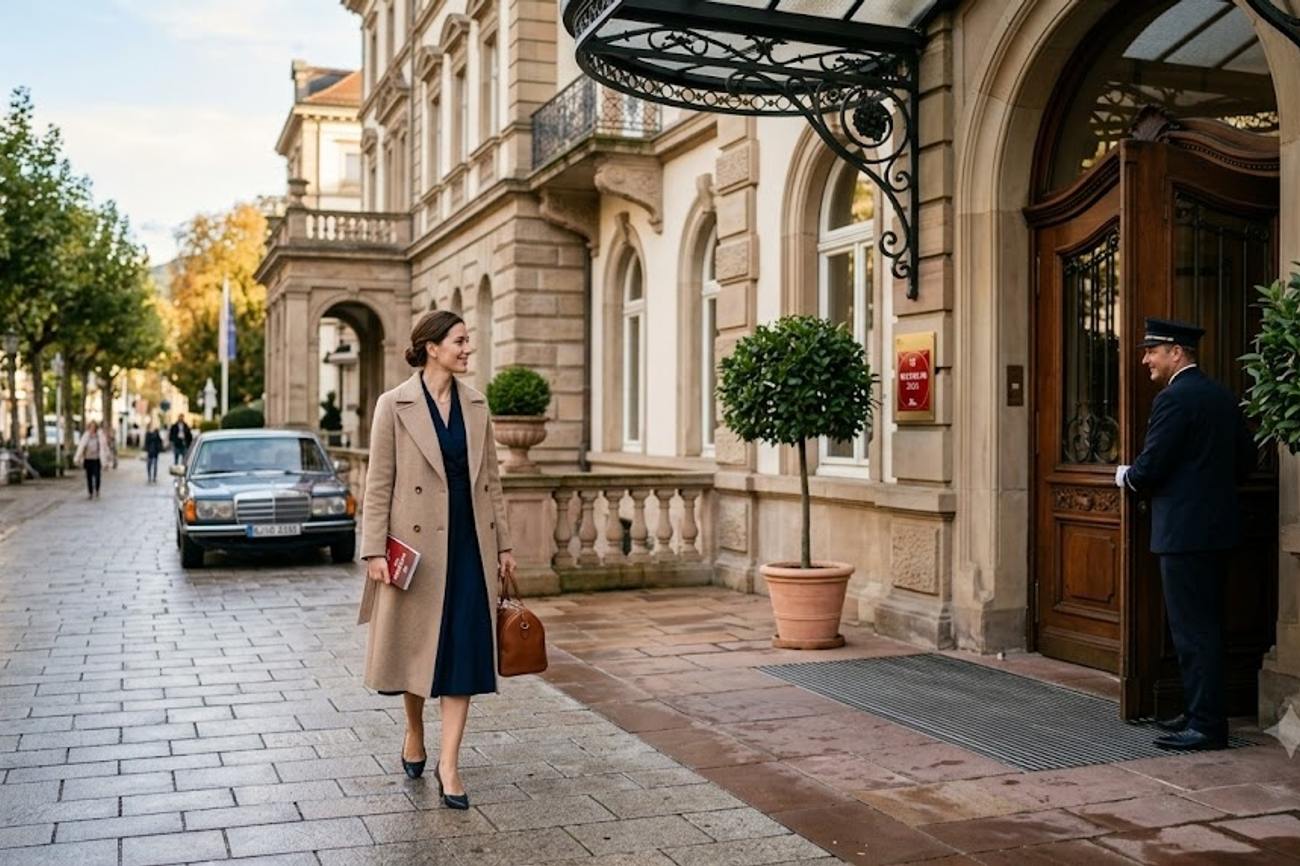
Image generated by AI
Germany's luxury hospitality market has stabilized its top-tier offerings, with the six properties holding the prestigious three-Michelin Key distinction remaining unchanged from the previous year. This stagnation at the apex of the pyramid suggests a high barrier to entry for new luxury entrants and a rigorous standard of consistency required to maintain the highest global rating in a market where 130 hotels now meet the Michelin criteria.
The German Luxury Pyramid in Numbers
The 2026 Michelin Key selection provides a quantitative snapshot of Germany's high-end hospitality distribution. The data reveals a steep pyramid structure, where only 4.6% of recognized properties achieve the three-Key status, while 67% fall into the one-Key category. This distribution indicates that while Germany has a broad base of "exceptional" hotels, the "extraordinary" tier is highly exclusive.
The total count of 130 recognized hotels demonstrates a strategic diversification of luxury. The selection is not concentrated solely in financial hubs like Frankfurt or political centers like Berlin; instead, it spans from the coastal architecture of Hamburg to the alpine retreats of Bavaria and the wellness-centric forests of Baiersbronn. This geographic spread aligns with broader trends reported by the World Tourism Organization (UNWTO), which highlight a global shift toward "slow travel" and the decentralization of luxury tourism away from primary urban centers.
The criteria for these awards move beyond the traditional star-rating system—which often prioritizes physical amenities like gym size or room square footage—and instead weight "personality," "character," and "service consistency." This shift in valuation mirrors a wider industry movement toward experiential luxury, where the emotional resonance of a stay is prioritized over the presence of specific hardware.
Comparative Market Analysis: Urban vs. Regional Luxury
When analyzing the 2026 data, a clear dichotomy emerges between the "Grand Hotel" model and the "Destination Retreat" model. In Hamburg, the three-Key properties represent two opposite ends of the design spectrum. The Hotel Vier Jahreszeiten, operating since 1897 with 156 rooms, anchors the market in Hanseatic tradition. In contrast, The Fontenay, opened in 2018 with 130 rooms, leverages contemporary architectural curves and floor-to-ceiling glass to attract a different demographic of luxury traveler.
Conversely, the Black Forest region, specifically Baiersbronn, demonstrates a synergy between gastronomy and accommodation that is rarely matched in urban settings. Properties like Hotel Bareiss and Hotel Traube Tonbach (the latter operating since 1789) integrate three-Michelin-star dining directly into the stay experience. This creates a "closed-loop" luxury ecosystem where the guest does not need to leave the property to access world-class culinary experiences.
The following table breaks down the distribution of the 2026 Michelin Keys across the German market:
| Michelin Key Category | Number of Hotels (2026) | % of Total Selection | Market Position |
|---|---|---|---|
| Three Keys | 6 | 4.6% | Extraordinary / Global Benchmark |
| Two Keys | 37 | 28.5% | Exceptional / High-Tier |
| One Key | 87 | 66.9% | Distinctive / Premium |
| Total | 130 | 100% | German Luxury Tier |
This distribution shows that for every one "extraordinary" hotel in Germany, there are approximately 14.5 "distinctive" hotels. This suggests a healthy pipeline of properties that are likely to migrate toward two-Key status as they refine their service consistency and architectural identity.
Practical Traveler Advisory and Strategic Insights
For the high-net-worth individual or the luxury-seeking nomad, this data changes the booking strategy for Germany. The concentration of three-Key properties in specific hubs—Hamburg, Baiersbronn, and the Bavarian Alps—means that these locations now function as "luxury clusters."
If you are planning a trip for 2026, the following data-driven recommendations apply:
- Prioritize "Cluster" Destinations: If the primary goal of the trip is the accommodation experience, focusing on Baiersbronn allows for a dual-property stay (Hotel Bareiss and Hotel Traube Tonbach) without significant transit time, maximizing the value of the high-cost stay.
- Book Gastronomy-Linked Stays Early: Because properties like Hotel Vier Jahreszeiten and Hotel Bareiss house three-Michelin-star restaurants (such as Haerlin and Bareiss), room availability often correlates with restaurant demand. Booking 4-6 months in advance is recommended for these specific properties to ensure both a room and a dining reservation.
- Diversify by Design: Travelers seeking modernism should target The Fontenay (opened 2018), whereas those seeking heritage should prioritize the 18th-century foundations of Traube Tonbach. The data shows a clear split in the "Three Key" tier between historicism and contemporary design.
According to data trends from STR, luxury ADR (Average Daily Rate) in European markets has seen significant volatility. By targeting Michelin Key properties, travelers are essentially using a third-party quality audit to ensure that the premium price point is justified by "service consistency" and "character" rather than just brand name.
Forward Projection: The Evolution of the Key
Based on the current trajectory, we can expect the 2027 selection to see a rise in the "Two Key" category. The fact that the six three-Key hotels remained stagnant suggests a "ceiling effect" where the requirements for the top tier are nearly impossible to surpass. However, as more boutique properties in the Bavarian Alps and Black Forest modernize their facilities while retaining their "personality," the mid-tier luxury segment will likely expand.
We are also seeing a convergence of wellness and luxury. The inclusion of Schloss Elmau and Althoff Seehotel Überfahrt highlights a trend where "luxury" is being redefined as "access to nature" and "mental wellness" rather than just opulent interiors. As the International Air Transport Association (IATA) tracks a rise in long-haul travel to secondary European cities, these regional luxury hubs are positioned to capture a larger share of the international market.
The next phase of growth for German luxury hospitality will likely involve the integration of sustainable architecture. While the 2026 list emphasizes "distinctive architecture," the industry is moving toward "regenerative luxury." Properties that can maintain three-Key service standards while implementing carbon-neutral operations will be the ones to break the current stagnation at the top of the pyramid.
FAQ: Germany Luxury Hospitality 2026
Will room rates increase at Michelin Key hotels? Yes. Recognition as a Michelin Key property typically increases demand and allows hotels to adjust their ADR (Average Daily Rate) upward. Expect a premium over standard five-star properties in the same region.
Is it better to book a Three-Key or Two-Key hotel? Three-Key hotels are "extraordinary" global benchmarks, whereas Two-Key hotels are "exceptional." If you prioritize a unique, world-class architectural or culinary experience, go for Three Keys. For high-end comfort without the extreme price premium, Two Keys are often sufficient.
Which region offers the best value for luxury travelers? The Black Forest (Baiersbronn) offers the highest density of culinary-luxury integration. For travelers who value gastronomy as much as lodging, this region provides the most cohesive experience per Euro spent.
How does a Michelin Key differ from a hotel star rating? Star ratings measure facilities (e.g., "Does the hotel have a gym?"). Michelin Keys measure the qualitative experience, including the property's personality, service consistency, and the overall contribution to the travel experience.
The data confirms that German luxury is no longer just about the gold-leafed lobbies of the past, but about the precision of the experience.
Related Travel Guides
Disclaimer
This article is for informational and educational purposes only. It does not constitute legal, financial, or professional advice. While we strive to provide accurate and up-to-date information, travel policies, regulations, and conditions change rapidly. Always verify information with official sources before making travel decisions. Nomad Lawyer makes no representations about the accuracy, reliability, completeness, or suitability of the information provided. Readers should consult qualified professionals for advice specific to their circumstances. The views expressed in this article are those of the author and do not necessarily reflect the views of Nomad Lawyer.
Raushan Kumar
Founder & Lead Developer
Full-stack developer with 11+ years of experience and a passionate traveller. Raushan built Nomad Lawyer from the ground up with a vision to create the best travel and law experience on the web.
Learn more about our team →