
Global Hospitality Sector Gains New Sustainability Roadmap As WSHA And Diversey Launch Strategic Partnership
Global Hospitality Sector Gains New Sustainability Roadmap As WSHA And Diversey Launch Strategic Partnership

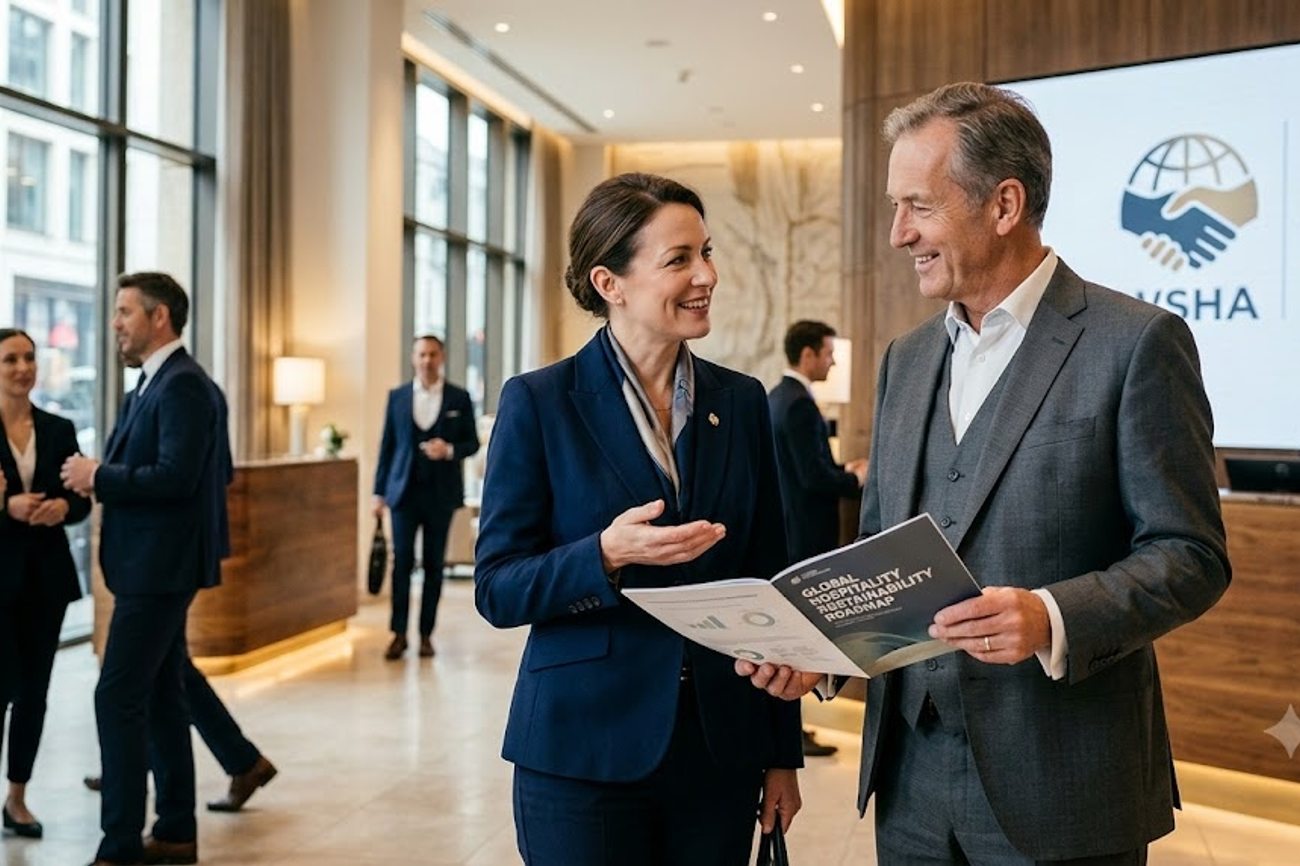
Image generated by AI
[Paris, October 2026] — The World Sustainable Hospitality Alliance (WSHA) and Diversey, a Solenis company, have launched a strategic partnership to convert high-level corporate sustainability pledges into concrete, measurable operational changes within the global hotel sector.
The collaboration seeks to bridge the gap between long-term environmental goals and the daily realities of hotel management. By merging the global network of the World Sustainable Hospitality Alliance with the technical data systems of Diversey, the initiative targets immediate reductions in waste and water consumption across the hospitality supply chain.
The Operational Pivot to Measurable Data
The partnership is triggered by a systemic failure in the hospitality industry to move beyond "aspirational" sustainability. While many hotel chains have announced net-zero targets, the actual implementation at the property level often lacks the technical framework required for measurement. Diversey, backed by the chemical and water treatment expertise of Solenis, provides the hardware and software necessary to track resource depletion in real-time.
The focus is specifically on "back-of-house" operations—the areas of a hotel that guests rarely see but which generate the vast majority of a property's environmental footprint. This includes industrial laundry facilities, commercial kitchens, and hygiene management systems. By applying data-driven solutions, hotel operators can now pinpoint exactly where water is being wasted or where chemical runoff is exceeding safety limits.
The initiative moves the industry toward a "Net Positive Hospitality" model. Rather than simply aiming to "do less harm," the goal is to create a system where hotel operations actively contribute to the restoration of the environments in which they operate. This requires a shift from qualitative reporting (e.g., "we are reducing plastic") to quantitative reporting (e.g., "we have reduced liters of water per occupied room by 12%").
Who Is Affected by the Integration
The rollout of these sustainable practices will impact a wide array of hospitality stakeholders, from luxury resorts to boutique urban hotels. The partnership specifically targets the following operational zones:
- Housekeeping and Hygiene: Implementation of new cleaning protocols and chemical management systems to reduce toxicity and water waste.
- Laundry Services: Optimization of water temperature, detergent volume, and cycle times to lower energy consumption.
- Commercial Kitchens: Integration of resource management tools to track food waste and water usage during food preparation and sanitation.
- Back-of-House Facilities: General utility management and waste stream auditing to improve overall resource efficiency.
- Hotel Management Teams: A shift in KPIs for property managers, who will now be required to report on measurable sustainability metrics rather than vague corporate goals.
This partnership affects any hotel member of the WSHA network and any property utilizing Diversey’s technical solutions. The impact is global, though the initial focus remains on high-density tourism hubs where resource scarcity—particularly water—poses a direct threat to business continuity.
What This Means for Travelers
For the average traveler, these changes will largely happen behind the scenes, but the passenger and guest impact is tangible. The industry is moving away from "performative sustainability"—such as asking guests to reuse towels—toward "structural sustainability," where the hotel's internal systems are efficient by design.
Guest Experience and Hygiene A primary concern for travelers is whether "green" initiatives lead to a drop in cleanliness. Diversey’s role in this partnership is to ensure that reducing resource consumption does not compromise hygiene. Travelers can expect the same—or higher—standards of safety and sanitation, but achieved through more efficient, less toxic chemical applications.
Transparency and Trust As hotels begin to use measurable data, guests will likely see more accurate sustainability reporting. Instead of generic "eco-friendly" labels, travelers may soon see specific data regarding the carbon and water footprint of their specific stay. This reduces "greenwashing" and allows the conscious traveler to make choices based on verified data.
Service Delivery In the short term, some guests may notice changes in the types of cleaning products used or the efficiency of laundry services. However, the objective is to make these transitions invisible to the guest, ensuring that the luxury or convenience of the stay is maintained while the environmental cost is lowered.
The Road to the 2026 Global Summit
The partnership serves as a precursor to a major industry alignment event. The WSHA Global Summit is scheduled for December 8–9, 2026, in Paris. This summit will act as the primary forum for hospitality leaders to evaluate the early results of the Diversey partnership and to scale these operational changes across other sectors of the industry.
The Paris summit will focus on "actionable solutions." The agenda is expected to move away from theoretical discussions about the climate crisis and instead focus on the sharing of "blueprints"—proven operational models that have successfully reduced resource consumption without losing revenue.
Industry experts expect the summit to result in a standardized framework for "Net Positive Hospitality." By establishing a universal set of metrics for what constitutes a "sustainable hotel," the WSHA aims to create a global benchmark that can be audited and verified by third-party agencies. This would effectively create a "gold standard" for the industry, similar to how aviation safety is regulated by bodies like the International Civil Aviation Organization (ICAO).
The timeline suggests that 2027 will be the year of implementation, with the 2026 summit providing the strategic roadmap for thousands of properties to integrate these data-driven tools into their daily workflows.
FAQ: Hotel Sustainability 2026
Will these sustainability changes make hotel rooms less clean? No. The partnership specifically integrates Diversey’s hygiene expertise to ensure that resource reduction does not impact sanitation. The goal is to maintain high safety and cleanliness standards while using fewer chemicals and less water.
How can I tell if my hotel is actually sustainable or just "greenwashing"? Look for specific, measurable data. Hotels following the WSHA and Diversey model will move toward reporting actual numbers (e.g., gallons of water saved) rather than using vague terms like "eco-friendly" or "green."
Does "Net Positive Hospitality" mean hotels will charge more for rooms? Not necessarily. While the initial transition to new technology requires investment, the long-term goal is operational efficiency. Reducing waste and energy consumption typically lowers overhead costs for the hotel, which can stabilize room rates.
What is the main goal of the WSHA Global Summit in Paris? The summit on December 8–9, 2026, aims to move the industry from setting long-term targets to implementing immediate, practical actions. It will serve as a platform for sharing proven operational strategies to achieve Net Positive Hospitality.
The hospitality industry is finally trading vague promises for hard data.
Related Travel Guides
Disclaimer
This article is for informational and educational purposes only. It does not constitute legal, financial, or professional advice. While we strive to provide accurate and up-to-date information, travel policies, regulations, and conditions change rapidly. Always verify information with official sources before making travel decisions. Nomad Lawyer makes no representations about the accuracy, reliability, completeness, or suitability of the information provided. Readers should consult qualified professionals for advice specific to their circumstances. The views expressed in this article are those of the author and do not necessarily reflect the views of Nomad Lawyer.
Preeti Gunjan
Contributor & Community Manager
A passionate traveller and community builder. Preeti helps grow the Nomad Lawyer community, fostering engagement and bringing the reader experience to life.
Learn more about our team →