
Frontier Airlines Flight FFT3058 Airbus A320neo Returns to Raleigh-Durham from Boston in 2026
Frontier Airlines Flight FFT3058, an Airbus A320neo, was forced to divert back to Raleigh-Durham International Airport on August 5, 2026, after a significant departure delay.

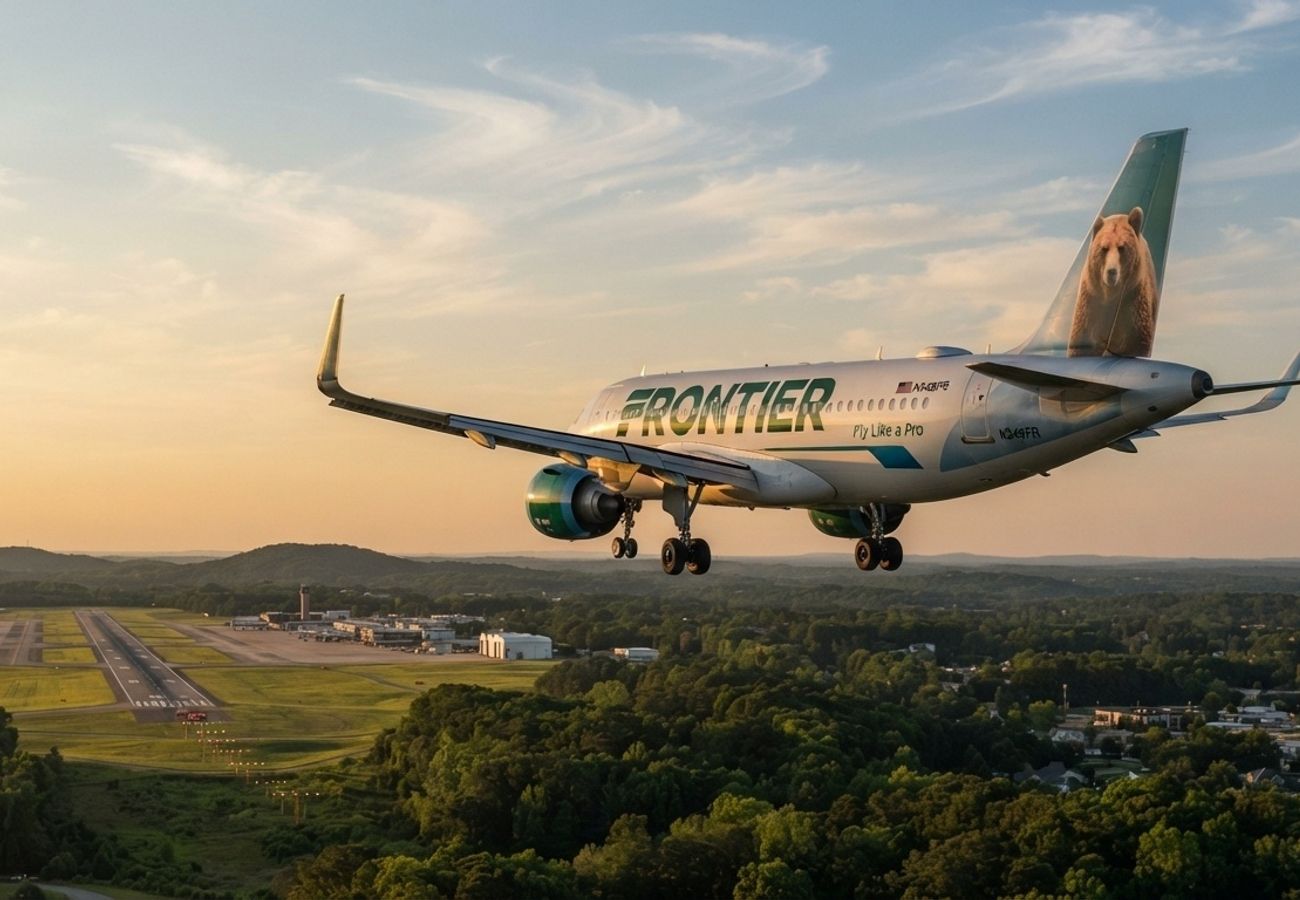
Image generated by AI
A scheduled flight from North Carolina to Massachusetts ended abruptly when Frontier Airlines Flight FFT3058 returned to its origin shortly after takeoff. The incident highlights the strict safety protocols that trigger diversions even after significant scheduling delays.
On Wednesday, August 5, 2026, Frontier Airlines Flight FFT3058, operated by an Airbus A320-251N (registration N393FR), failed to complete its journey from Raleigh-Durham International Airport (RDU) to Boston Logan International Airport (BOS). After spending over 90 minutes in the air, the aircraft diverted back to its departure point in North Carolina.
The diversion occurred following a massive scheduling disruption. The flight departed Raleigh-Durham nearly six hours behind its original schedule, only to return to the same airport shortly after. While the aircraft landed safely, the sequence of events raises questions regarding the operational stability of the flight.
Operational Timeline and Flight Data
The flight data reveals a pattern of significant delays preceding the diversion. The aircraft originally departed from Gate D12 at approximately 2:54 PM EDT, which was five hours and fifty-eight minutes later than the planned departure time.
After a flight duration of one hour and thirty-three minutes, the aircraft touched down back at Raleigh-Durham at approximately 4:27 PM EDT. Upon its return, the plane was directed to Gate B38.
| Flight Detail | Data |
|---|---|
| Flight Number | FFT3058 |
| Aircraft Model | Airbus A320-251N (A320neo) |
| Registration | N393FR |
| Departure Airport | Raleigh-Durham International (RDU) |
| Destination Airport | Boston Logan International (BOS) |
| Departure Gate | D12 |
| Arrival Gate (Return) | B38 |
| Actual Departure | 2:54 PM EDT (Aug 5, 2026) |
| Actual Arrival (Return) | 4:27 PM EDT (Aug 5, 2026) |
| Flight Duration | 1 hour 33 minutes |
| Schedule Delay | 5 hours 58 minutes |
Analysis of Return-to-Base Diversions
In commercial aviation, a return to the departure airport is often a strategic safety decision rather than a sign of catastrophic failure. Flight crews may initiate a return if onboard monitoring systems flag a technical anomaly that requires physical inspection.
Returning to the origin airport is frequently preferred over diverting to an alternate mid-way city because the airline typically has better access to its own engineering teams, spare parts, and backup aircraft at the hub or origin station. Potential triggers for such a decision include:
- Precautionary System Alerts: Modern A320neo aircraft use real-time telemetry to alert pilots of system variances.
- Maintenance Requirements: Minor technical indications that do not compromise immediate safety but prevent a long-haul completion.
- Operational Limitations: Crew duty time limits or air traffic management constraints.
Frontier Airlines has not yet released a formal statement specifying the exact technical or operational cause for Flight FFT3058's return.
Passenger Impact and Airline Obligations
When a flight returns to its origin, the airline's priority shifts to passenger welfare and logistics. Because the aircraft returned to RDU, passengers were subjected to a double disruption: the initial six-hour delay and the subsequent failure to reach Boston.
Standard aviation procedure in these instances involves:
- Immediate Gate Handling: Moving passengers from the aircraft to a secure terminal area.
- Rebooking: Evaluating if a spare aircraft is available or if passengers must be moved to later flights.
- Compensation: Providing meal vouchers or hotel accommodations depending on the length of the new delay and the time of day.
While these diversions are frustrating for travelers, they underscore the industry's "safety first" mandate, where regulatory standards take precedence over punctuality.
Key Takeaways
- Flight FFT3058 (Airbus A320neo N393FR) returned to Raleigh-Durham on August 5, 2026, after failing to reach Boston.
- Severe Delays: The flight left RDU nearly six hours late before diverting back 93 minutes later.
- Safety Protocol: The return was an operational diversion; no emergency landing was declared.
- Logistics: The aircraft shifted from departure Gate D12 to arrival Gate B38 upon its return.
Frequently Asked Questions
Was there an emergency on Frontier Flight FFT3058? There is no evidence from available flight data that the aircraft encountered an emergency landing situation; it was classified as an operational diversion.
Why did the plane return to Raleigh-Durham instead of landing in Boston? While the exact cause is unconfirmed, airlines return to origin airports to access specific maintenance facilities and engineering support that may not be available at the destination.
How long was the flight in the air before returning? The aircraft was airborne for approximately one hour and thirty-three minutes.
Aviation safety remains the primary driver behind operational decisions, ensuring that technical anomalies are resolved on the ground rather than in flight.
Related Travel Guides
Disclaimer
This article is for informational and educational purposes only. It does not constitute legal, financial, or professional advice. While we strive to provide accurate and up-to-date information, travel policies, regulations, and conditions change rapidly. Always verify information with official sources before making travel decisions. Nomad Lawyer makes no representations about the accuracy, reliability, completeness, or suitability of the information provided. Readers should consult qualified professionals for advice specific to their circumstances. The views expressed in this article are those of the author and do not necessarily reflect the views of Nomad Lawyer.
Raushan Kumar
Founder & Lead Developer
Full-stack developer with 11+ years of experience and a passionate traveller. Raushan built Nomad Lawyer from the ground up with a vision to create the best travel and law experience on the web.
Learn more about our team →