
United Airlines Flight 1866 Diverts Airbus A320 to Colorado Springs from Greenville in 2026
United Airlines Flight 1866, an Airbus A320 traveling from Greenville-Spartanburg to Denver, performed an unscheduled diversion to Colorado Springs on August 8, 2026, due to operational constraints.

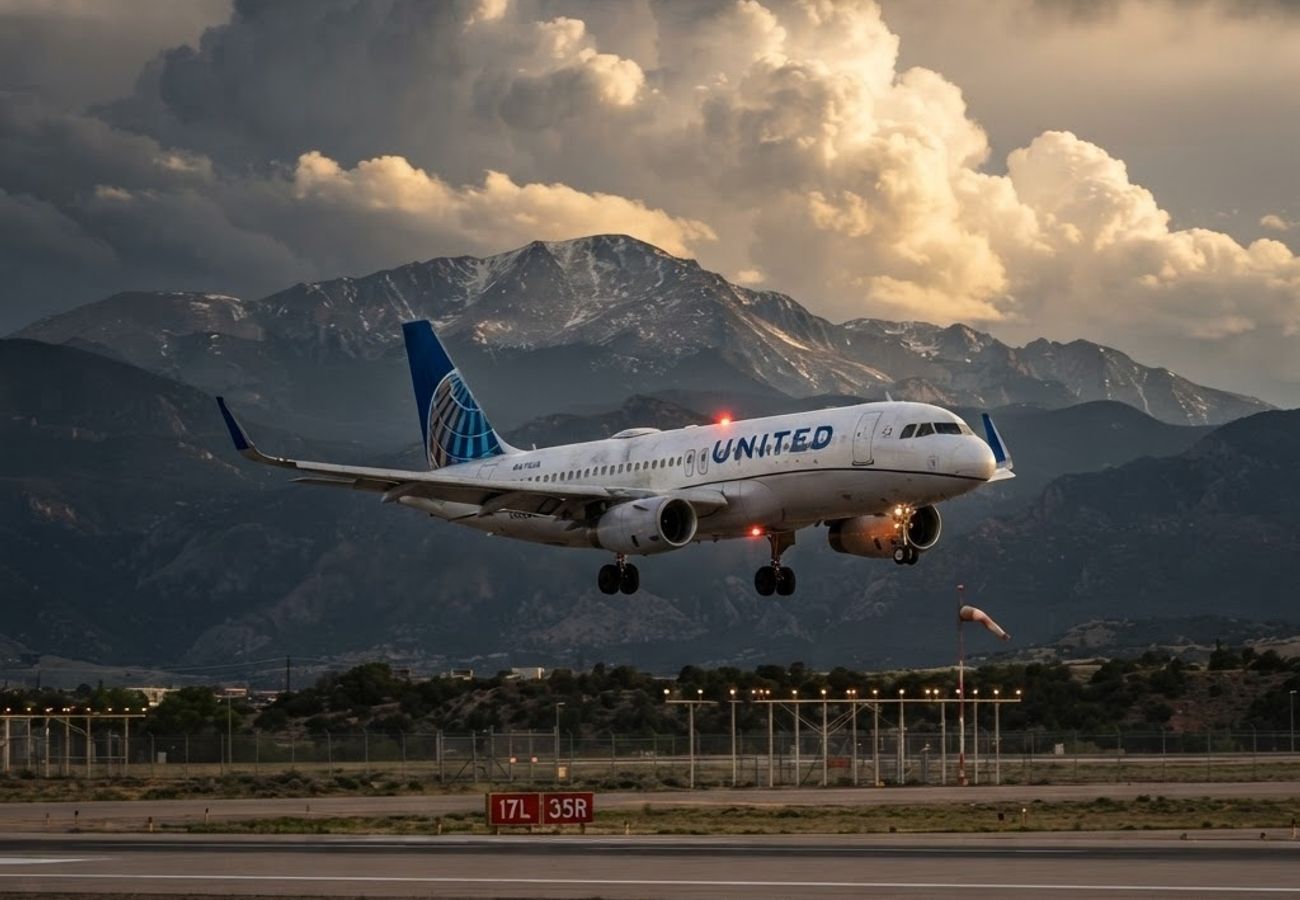
Image generated by AI
A United Airlines flight from South Carolina was forced to land in Colorado Springs on August 8 after an unplanned route change. The diversion highlights the volatile weather patterns and traffic pressures facing Denver's aviation hub.
The Airbus A320 operating as Flight UAL1866 was scheduled for a nonstop journey from Greenville-Spartanburg International Airport to Denver International Airport. However, flight-tracking data confirms that the aircraft altered its course mid-flight, opting for an unscheduled stop at Colorado Springs Airport.
The landing was executed safely, and the aircraft taxied to the gate without incident. While no injuries or onboard emergencies were reported, the diversion interrupted the travel plans of all passengers on board.
Operational Logistics of Flight 1866
Following the landing in Colorado Springs, the aircraft remained on the ground for an assessment period. Airline officials had to coordinate several critical logistics before the journey could be resolved:
- Refueling: Assessing fuel reserves after the diversion.
- Onward Routing: Determining if the A320 would proceed to Denver or be repositioned.
- Passenger Management: Coordinating connections for travelers with further destinations.
Because Denver serves as a primary hub for United Airlines, the diversion caused a ripple effect. Several passengers reported missed connections for subsequent flights to other U.S. cities.
The Strategic Role of Colorado Springs Airport
Colorado Springs Airport frequently serves as a "safety valve" for Denver International Airport (DEN). The facility is specifically equipped to handle narrowbody mainline jets, including the Airbus A320, making it a primary alternate field.
The decision to divert is often driven by the unique geography of Colorado’s Front Range. This region is prone to sudden meteorological shifts, including:
- Severe Thunderstorms: Rapidly forming cells that block arrival corridors.
- High-Velocity Winds: Crosswinds that can make landing at DEN hazardous.
- Airspace Congestion: High traffic volumes that lead to excessive holding patterns.
By diverting to Colorado Springs, flight crews avoid depleting fuel reserves while circling Denver, prioritizing passenger safety over schedule adherence.
Flight Summary and Diversion Details
| Flight Detail | Information |
|---|---|
| Flight Number | UAL1866 |
| Aircraft Model | Airbus A320 |
| Departure Point | Greenville-Spartanburg International Airport |
| Intended Destination | Denver International Airport |
| Diversion Airport | Colorado Springs Airport |
| Date of Incident | August 8, 2026 |
| Outcome | Safe landing; passengers transferred/rebooked |
Aviation Safety and Risk Mitigation
From an industry perspective, the handling of Flight 1866 is viewed as a textbook application of risk-averse aviation protocols. Rather than attempting a landing in suboptimal conditions or extending holding times, the crew utilized a secondary airport to ensure a stable environment.
This operational flexibility is a core component of U.S. aviation safety frameworks. It allows dispatchers and pilots to respond in real-time to air traffic flow programs and weather constraints, ensuring that fuel margins remain within safe limits.
For the passengers of UAL1866, the disruption lasted several hours. Most were either reboarded on the same aircraft after clearance was granted or moved via ground transport to Denver to complete their journeys.
A controlled diversion is a sign of a functioning safety system, ensuring that convenience never supersedes passenger security.
Related Travel Guides
Disclaimer
This article is for informational and educational purposes only. It does not constitute legal, financial, or professional advice. While we strive to provide accurate and up-to-date information, travel policies, regulations, and conditions change rapidly. Always verify information with official sources before making travel decisions. Nomad Lawyer makes no representations about the accuracy, reliability, completeness, or suitability of the information provided. Readers should consult qualified professionals for advice specific to their circumstances. The views expressed in this article are those of the author and do not necessarily reflect the views of Nomad Lawyer.
Preeti Gunjan
Contributor & Community Manager
A passionate traveller and community builder. Preeti helps grow the Nomad Lawyer community, fostering engagement and bringing the reader experience to life.
Learn more about our team →