
Fort Lauderdale Flight Disruptions Expose Spring Network Vulnerabilities
Fort Lauderdale-Hollywood International Airport recorded over 180 flight delays on April 8, 2026, as spring storms and Easter holiday crowds overwhelmed U.S. airline capacity. Network strain spreads to northern hubs and leisure routes.

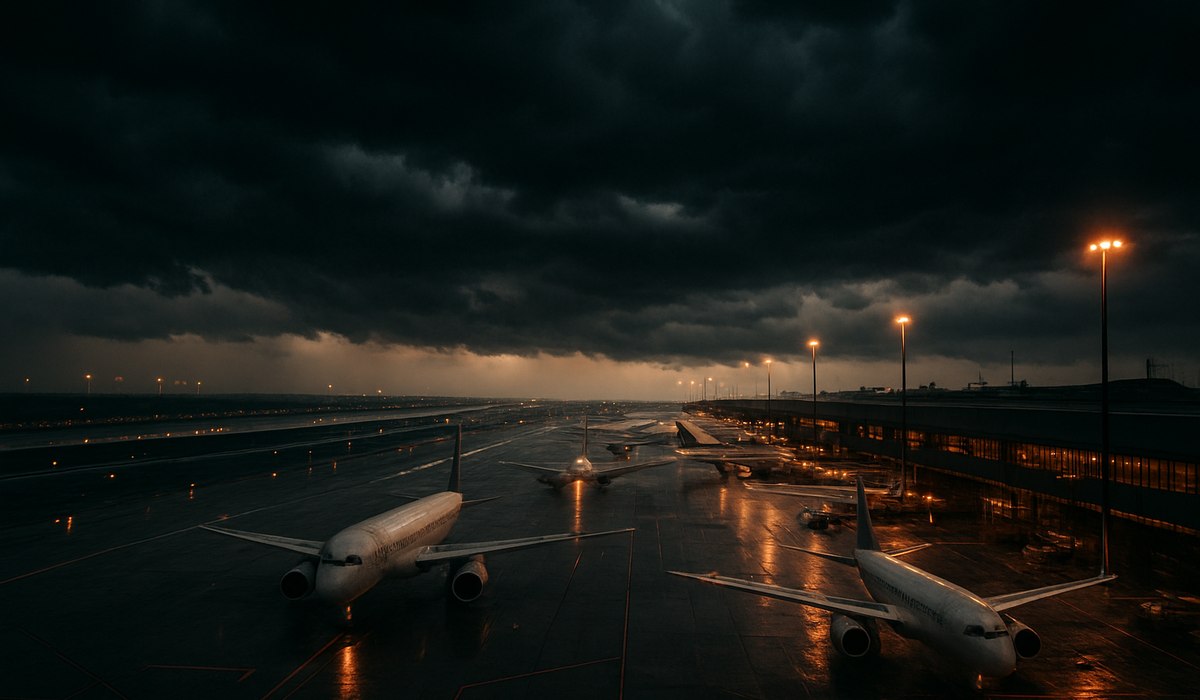
Image generated by AI
Fort Lauderdale Flight Delays Surge as Spring Storms Collide With Peak Travel Season
Fort Lauderdale-Hollywood International Airport experienced severe operational strain on April 8, 2026, logging more than 180 flight delays and multiple cancellations in a single day. Severe thunderstorms, gusty wind gusts, and air traffic control constraints swept across the eastern United States, creating cascading disruptions that extended well beyond South Florida. The disruption coincided with peak Easter holiday travel and spring break season, leaving airlines with minimal recovery capacity when weather systems intensified the pressure on already-strained schedules.
The Fort Lauderdale flight crisis reflects a critical vulnerability in America's airline network: when capacity operates at maximum saturation during peak travel windows, even localized weather events trigger widespread, multi-day disruptions across interconnected hubs and routes.
Spring Storms Trigger Cascading Delays Across Eastern U.S. Hubs
Early April 2026 brought aggressive spring weather patterns to the eastern seaboard, with severe thunderstorms affecting multiple major airports simultaneously. Beyond Fort Lauderdale, disruptions struck Atlanta, New York LaGuardia, Newark Liberty, Miami, and Orlando—creating a domino effect across the national airspace system.
Real-time flight tracking data, accessible via FlightAware, showed unprecedented concentrations of delays at these hub airports during peak operating hours on April 8. The Federal Aviation Administration (FAA) issued ground stop orders and departure delays exceeding two hours at several locations, fundamentally reshaping flight schedules across the region. Airlines scrambled to reposition aircraft and crew members, but the compounding nature of these disruptions meant recovery stretched across multiple days. By April 9 and 10, lingering effects continued to impact Fort Lauderdale flight operations despite improved weather conditions locally.
Fort Lauderdale Bears Brunt of Multi-Day Network Disruption
Fort Lauderdale-Hollywood International Airport functions as a critical hub for low-cost carriers and leisure traffic, making it uniquely vulnerable to sustained operational stress. The airport's tight scheduling margins and high aircraft utilization rates meant that cascading delays from April 8 continued affecting Fort Lauderdale flight schedules well into the following week.
Inbound aircraft delayed from northern hubs—particularly Newark, Boston, and Chicago—arrived progressively later throughout April 8 and 9, creating a ripple effect where each late arrival triggered subsequent Fort Lauderdale flight departures to slip. By late afternoon on April 8, the airport's departure board showed predominantly red indicators, with few flights maintaining on-time status. The concentration of leisure traffic during Easter week meant passengers faced packed airport terminals, extended customer service delays, and compounded frustration as airlines worked through backlogged schedules.
Operational data indicated that aircraft scheduled for multiple quick turnarounds—a standard practice for low-cost carriers—experienced the most severe secondary delays. A flight delayed arriving from Newark could miss its next scheduled departure to a Caribbean destination, affecting 150+ additional passengers within hours.
Low-Cost Carriers Face Exposure on Peak Leisure Corridors
Fort Lauderdale flight operations depend heavily on Spirit Airlines and JetBlue Airways, both of which expanded their South Florida networks substantially through 2026. Spirit operates as the airport's largest low-cost carrier presence, with dense scheduling to cities including Orlando, Dallas, Cleveland, and Northeast markets. JetBlue similarly expanded Fort Lauderdale capacity for routes connecting to New York, Boston, and other high-demand leisure corridors.
This concentrated network structure magnified the impact of April's disruptions. When spring storms halted operations, Spirit and JetBlue faced compounded challenges across their interconnected route systems. A Fort Lauderdale flight delay cascaded across multiple subsequent legs, affecting service throughout their daily flight bank. Industry reports highlighted that both carriers reported dozens of delayed flights on high-utilization routes during the peak disruption window.
The financial models of low-cost carriers depend on maximizing aircraft utilization and minimizing ground time. During severe weather disruptions, this operational strategy becomes a liability—crews hit regulatory rest limits, aircraft fall progressively out of position, and recovery becomes exponentially more difficult. Unlike legacy carriers with larger networks and schedule flexibility, budget operators at Fort Lauderdale faced acute exposure to the spring weather disruptions.
Recovery Efforts Stretch Into Extended Timeline
Weather clearing on April 9 did not immediately restore normal Fort Lauderdale flight operations. The nature of network disruptions means recovery requires sequential downstream correction: aircraft must return to proper positioning, crews must satisfy rest requirements, and passenger connections must be rebuilt before schedules normalize.
Airlines prioritized completing existing bookings and clearing accumulated passenger backlogs rather than resuming normal scheduling. Flight crews at Fort Lauderdale worked overtime hours, and airlines implemented schedule adjustments that extended into the following week. Some carriers issued blanket travel waivers, allowing passengers booked on disrupted Fort Lauderdale flights to rebook without penalty across multiple future dates.
The FAA and Department of Transportation monitored the situation closely, with officials noting that such recovery timelines remain typical following major network disruptions during peak travel periods. Passengers who experienced cancellations or significant delays on Fort Lauderdale flights held rights to compensation and rebooking options under federal regulations enforced by the U.S. Department of Transportation.
Critical Flight Disruption Data: Fort Lauderdale April 2026
| Metric | Details |
|---|---|
| Peak Delay Date | April 8, 2026 |
| Total Delayed Operations | 180+ departures and arrivals |
| Cancellations | Approximately 12-15 flights |
| Primary Cause | Severe thunderstorms, gusty winds, ATC constraints |
| Affected Airlines | Spirit, JetBlue, United, American, Southwest, others |
| Affected Routes | Fort Lauderdale to Newark, Boston, New York, Dallas, Orlando, Caribbean destinations |
| Recovery Timeline | Multiple days (April 9-12) |
| Contributing Factors | Easter holiday peak travel, spring break season, narrow scheduling margins |
| Peak Hours Impacted | 11:00 AM - 8:00 PM local time |
| Connection Points | Newark Liberty, Atlanta Hartsfield, Boston Logan |
What This Means for Travelers
The Fort Lauderdale flight disruptions of April 2026 expose critical vulnerabilities in America's airline capacity planning during peak seasons. Here are essential actions for spring travelers:
1. Monitor conditions obsessively: Check FlightAware and your airline app 24 hours before departure, then again 2 hours before your scheduled departure time.
2. Book flights strategically: During spring break and Easter weeks, prioritize morning departures and direct routes. Avoid tight connection windows through busy hubs like Newark or Atlanta.
3. Understand your compensation rights: Federal rules grant passengers compensation for significant delays and cancellations. Document all disruptions and file claims through the U.S. DOT if entitled.
4. Request waivers immediately: If your Fort Lauderdale flight is disrupted, contact your airline promptly to request standby rebooking, waived change fees, or alternative routing without penalty.
5. Check baggage policies: During widespread disruptions, baggage often separates from passengers. Verify your carrier's policy for delayed baggage compensation.
6. Protect your schedule: Build extra time between connections during April-May travel. One hour connections through major hubs become insufficient
Disclaimer
This article is for informational and educational purposes only. It does not constitute legal, financial, or professional advice. While we strive to provide accurate and up-to-date information, travel policies, regulations, and conditions change rapidly. Always verify information with official sources before making travel decisions. Nomad Lawyer makes no representations about the accuracy, reliability, completeness, or suitability of the information provided. Readers should consult qualified professionals for advice specific to their circumstances. The views expressed in this article are those of the author and do not necessarily reflect the views of Nomad Lawyer.
Raushan Kumar
Founder & Lead Developer
Full-stack developer with 11+ years of experience and a passionate traveller. Raushan built Nomad Lawyer from the ground up with a vision to create the best travel and law experience on the web.
Learn more about our team →