
Flight Disruptions Major: 3,281 Delays Hit Six US Hubs April 2026
Flight disruptions major across six US hubs on April 9, 2026 strand thousands of travelers. Atlanta, Denver, Houston, Las Vegas, Phoenix, and Washington DC report 3,281 delayed flights and 145 cancellations as cascading delays overwhelm airline networks.

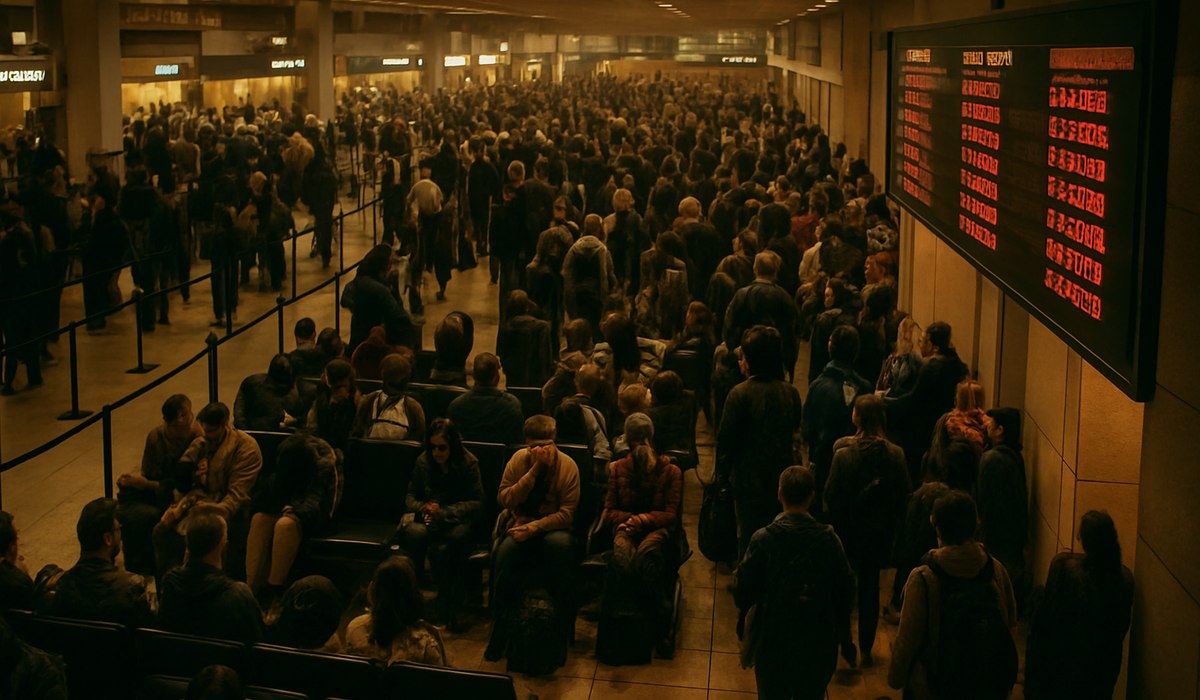
Image generated by AI
Thousands Stranded as Flight Disruptions Major Hits Six US Hubs
Flight disruptions major cascaded across the American aviation system on April 9, 2026, affecting six critical transportation hubs and leaving thousands of passengers facing extended delays and missed connections. Atlanta, Denver, Houston, Las Vegas, Phoenix, and Washington DC airports reported 3,281 delayed flights paired with 145 cancellations throughout the day, creating a domino effect that rippled across domestic networks. American Airlines, Delta Air Lines, SkyWest Airlines, Spirit Airlines, and Frontier Airlines bore the brunt of the operational strain, with passengers spending hours in terminals awaiting aircraft that were themselves delayed on previous legs. The convergence of seasonal weather patterns, congested airspace, and system-wide capacity constraints transformed what began as isolated delays into a nationwide travel crisis affecting remote workers, business travelers, and vacation planners equally.
Major US Hubs Struggle With Widespread Operational Strain
The six airports most affected by Thursday's disruptions serve as critical connection points across distinct geographic regions. Atlanta Hartsfield-Jackson, the world's busiest airport by passenger volume, experienced cascading delays that immediately disrupted its intricate connection banking system where passengers transfer between hundreds of daily flights. Denver International, serving as the primary hub for cross-country Mountain West routing, reported delays that quickly propagated westbound toward California and eastbound toward the Atlantic coast.
Houston's two major airports functioned as crucial waypoints for Gulf Coast-to-everywhere connections, while Las Vegas and Phoenix processed heavy spring leisure traffic mixed with business connections. Washington DC's dual-hub system around Ronald Reagan and Dulles airports manages significant East Coast distribution responsibilities. When flight disruptions major strike these hubs simultaneously, the recovery becomes exponentially more difficult because passengers cannot simply reroute through secondary airports—these are the system's backbone. Real-time data from FlightAware confirmed that delays spreading from these six airports affected secondary markets that depend on hub connections for their only affordable air service options.
How Cascading Delays Unravel Connection Banks in Hub Cities
Hub-and-spoke airline networks depend entirely on precisely timed connection windows where passengers transfer from arriving to departing flights within 40 to 90 minutes. When a single inbound flight arrives 45 minutes late, every outbound flight in that 90-minute connection bank faces potential cascading delays. Flight disruptions major at Atlanta, Houston, and Denver illustrated this principle vividly—initial weather-induced delays triggered crew time-out violations, aircraft positioning problems, and gate congestion that prevented on-time departures for hours afterward.
Airlines maintain minimal spare aircraft and backup crews at hub locations, operating on mathematical precision where a single percentage-point deviation triggers system-wide ripple effects. When flight disruptions major occur during peak hours—like the evening departure waves in Las Vegas and Phoenix when cross-country connections launch—passengers with tight connections discover their downstream flights have already departed. SkyWest Airlines, operating regional feeds into major hubs for partners including Delta and United, experienced particular vulnerability because delays at Denver and Houston immediately stranded their passengers in secondary markets with no alternative flight options same-day. The domino effect extended 48 to 72 hours for some routes as airlines worked through re-accommodation backlogs.
Airlines Most Affected by Thursday's Disruptions
American Airlines and Delta Air Lines, as major network carriers operating expansive hub systems, absorbed the largest absolute number of delays because their entire business models depend on Atlanta, Houston, Dallas, and Denver operations flowing predictably. A single hour of delays at these checkpoints affects hundreds of downstream flights across their networks. SkyWest Airlines, operating under American Eagle and Delta Connection brands, faced acute pressure because it lacks alternative routing capacity—its passengers cannot simply switch to a competing regional carrier on the same route.
Spirit Airlines and Frontier Airlines, operating as ultra-low-cost carriers with minimal schedule buffers and no spare aircraft, experienced disproportionate impacts despite smaller fleet sizes. These carriers schedule planes for back-to-back rotations with no slack, meaning one delayed aircraft cascades through entire day schedules. Smaller carriers and regional operators dependent on feed traffic from affected hubs experienced secondary disruptions as their passenger loads shifted throughout the day. The FAA tracks operational data confirming that recovery from hub-level disruptions requires 24 to 48 additional hours beyond the initial disruption because airlines must systematically unwind backed-up connection banks and reposition misplaced aircraft.
Real-Time Flight Tracking and Passenger Communication
Passengers monitoring their flight status through FlightAware observed a peculiar pattern throughout April 9: rather than massive outright cancellations, airlines opted to hold aircraft on the ground at origin cities or delay departures rather than cancel flights entirely. This approach preserved connectivity theoretically but created the practical outcome where passengers sat in terminals for three to five additional hours awaiting delayed arrivals of inbound aircraft.
Major airlines deployed text message and app push notification alerts to enrolled passengers, though communication often lagged behind actual flight status changes by 15 to 30 minutes. Gate information remained uncertain until minutes before scheduled departure, forcing passengers to remain near gate areas rather than exploring terminal facilities. The pattern reflected deliberate airline strategy: maintaining operational statistics showing low cancellation rates while accepting passenger experience degradation through extended delays. This distinction matters for passenger compensation eligibility under Department of Transportation rules—cancellations trigger automatic rebooking and compensation rights, while delays do not unless they exceed specific thresholds.
What This Means for Nomadic Professionals and Remote Workers
For remote workers and location-independent professionals, April 9's flight disruptions major created urgent workplace complications. Travelers expecting to reach new bases by evening found themselves in airport hotels, unable to access critical workspace setup on their target timeline. Digital nomads holding flexible accommodation bookings could extend stays and work from airport lounges, but those with fixed co-working start dates or scheduled client meetings faced professional consequences beyond mere inconvenience.
International connections proved particularly challenging because missed domestic hub connections create missed international departures—and rebooking on international flights involves far greater financial and temporal implications. Several nomadic professionals reported losing access to booked accommodations because hotel cancellation policies expired while they remained stranded at hub airports. Business travelers dependent on same-day arrival lost billable hours and had to renegotiate client meetings. The incident reinforced why location-independent professionals should maintain 24-hour buffer windows between domestic and international connections and why travel insurance carrying delay coverage matters significantly for remote workers whose income depends on geographic mobility.
Traveler Action Checklist
If you find yourself affected by flight disruptions major at hub airports:
-
Check your airline's app or website first before relying on printed departure boards, which lag behind current operational status by 10 to 15 minutes.
-
Document your flight confirmation number and departure time before approaching agent counters, accelerating rebooking conversations and preventing information re-entry delays.
-
Photograph your boarding pass and booking confirmation immediately—this digital backup prevents delays if you need to reference booking details at multiple airport locations.
-
Verify your inbound connection aircraft type and tail number using FlightAware to assess whether physical aircraft delays (versus schedule padding) explain your delay.
-
Ask specifically about meal vouchers and hotel accommodation rights—airlines often provide these without passengers asking, but verbal confirmation prevents later disputes.
-
Collect written statements from airline representatives detailing your flight disruptions major circumstances, which support compensation claims under Department of Transportation rules exceeding specific delay thresholds.
-
Contact your travel insurance provider immediately if your policy covers delay compensation, providing them documentation of original itinerary and rebooking decisions.
-
**Research
Disclaimer
This article is for informational and educational purposes only. It does not constitute legal, financial, or professional advice. While we strive to provide accurate and up-to-date information, travel policies, regulations, and conditions change rapidly. Always verify information with official sources before making travel decisions. Nomad Lawyer makes no representations about the accuracy, reliability, completeness, or suitability of the information provided. Readers should consult qualified professionals for advice specific to their circumstances. The views expressed in this article are those of the author and do not necessarily reflect the views of Nomad Lawyer.
Raushan Kumar
Founder & Lead Developer
Full-stack developer with 11+ years of experience and a passionate traveller. Raushan built Nomad Lawyer from the ground up with a vision to create the best travel and law experience on the web.
Learn more about our team →