
Flying Through Doha 2026: Industry Leader Reports Safe Transit Despite Warnings
APT & Travelmarvel CEO confirms flying through Doha feels safe in 2026, with Qatar Airways flights operating at 80% capacity. Australian government maintains travel warnings despite on-ground confidence signals.

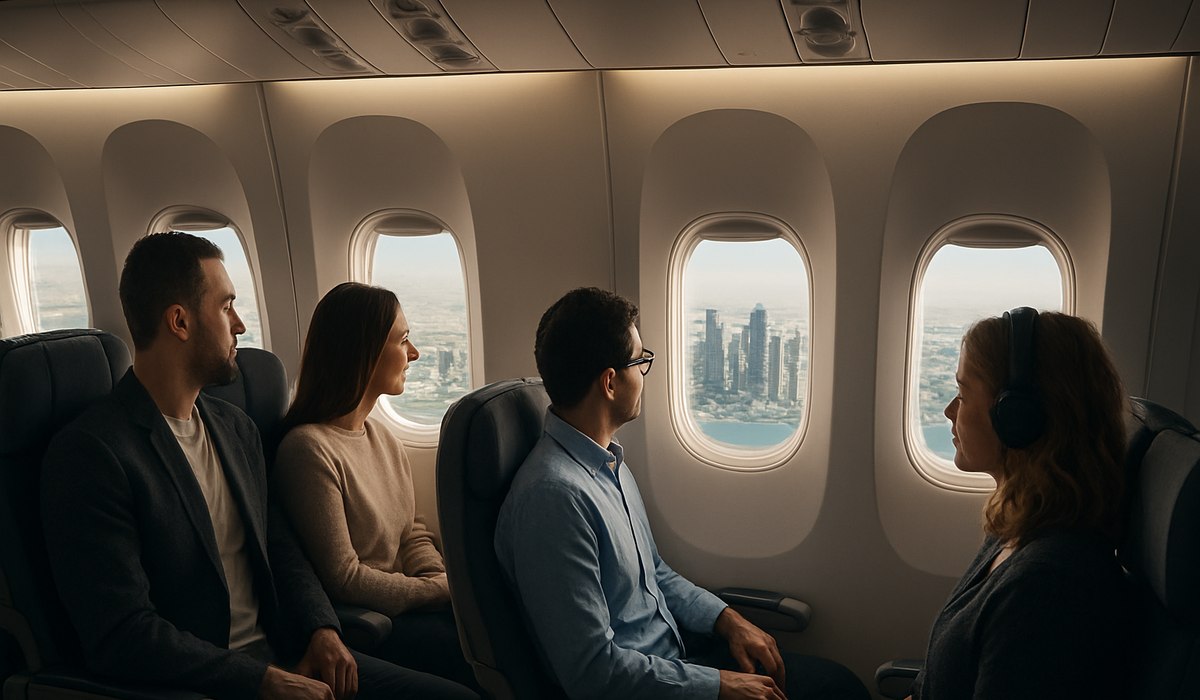
Image generated by AI
CEO Confirms Safe Experience Flying Through Doha
APT & Travelmarvel Global CEO David Cox recently completed a Melbourne-to-London journey via Doha, reporting that flying through Doha felt entirely safe despite ongoing Australian government travel warnings. Cox's first-hand account arrives as Europe-bound travelers face a critical decision: whether official cautions outweigh visible operational confidence at the region's busiest hub. His observations signal a widening gap between government advisories and ground-level passenger sentiment during the 2026 Northern Hemisphere travel season.
CEO's First-Hand Doha Experience
David Cox's transit through Hamad International Airport revealed a functioning, customer-ready hub operating with noticeably lighter passenger loads than pre-2026 levels. Both his Melbourne-Doha and Doha-London Qatar Airways flights operated near 80 percent capacity across economy and business cabins—a metric suggesting simultaneous recovery in leisure and corporate travel segments.
Cox described the terminal experience as orderly and stress-free. Retail outlets, dining venues, and airport lounges maintained full operational status. Security processing moved efficiently, with minimal congestion typical of peak transit windows. Flight information displays showed on-time performance across all scheduled departures. While Qatar Airways had negotiated designated safe airspace corridors, the overall airport atmosphere reflected normalcy rather than heightened security posturing. His assessment carries weight given his position overseeing one of Australia's largest tour operators managing hundreds of European itineraries annually.
Flight Capacity Signals Market Recovery
The 80 percent cabin fill rate observed by Cox indicates structural recovery beyond leisure reopening. Business-class utilization matching economy occupancy suggests corporations are resuming international travel protocols, signaling confidence in regional stability. Qatar Airways has actively restored Australian capacity through its Doha hub following temporary regional restrictions that affected Emirates, Etihad, and flydubai operations.
Visit Qatar's publicly announced recovery initiative aims to rebuild international passenger confidence through enhanced marketing and operational transparency. The UAE's removal of temporary airspace constraints has permitted schedule expansion across Middle Eastern carriers. These infrastructure improvements directly support Australia-Europe routing through Doha, traditionally one of the fastest connections from Oceania to continental Europe. Flight tracking platforms like FlightAware now display consistent on-time performance metrics for Qatar Airways operations, reinforcing operational reliability data.
Official Warnings vs. On-Ground Reality
Australia's Department of Foreign Affairs and Trade (DFAT) maintains travel warnings advising against transiting Qatar, citing volatile regional security conditions. This guidance remains the official position affecting travel insurance underwriting, visa requirements, and traveler decision-making protocols.
Yet Cox's observations align with broader industry signals: passenger movement continues, flight schedules normalize, and operational metrics improve weekly. Travel advisors face legitimate client pushback when government warnings persist despite visible airline confidence and capacity restoration. The disconnect creates genuine tension between regulatory caution and market-driven reopening. Travelers accessing U.S. Department of Transportation and FAA advisories observe similar patterns—official guidance lagging operational reality in post-disruption recovery phases.
Cox spoke with fellow passengers during transit, observing unanimous confidence in the routing and sentiment that "all systems go and let's get business back." This passenger-to-passenger validation reinforces perception of normalized conditions, though individual risk tolerance varies significantly among travelers with different health circumstances, family considerations, or insurance constraints.
What This Means for Australian Travellers
Australia's peak Europe-bound travel season (May through September) presents immediate decision points for thousands of booked passengers. Cox's testimony provides transparency absent from official channels, yet doesn't supersede regulatory guidance requiring consideration.
Australian travelers currently booking or transiting through Doha should:
-
Review current DFAT advisories specific to Qatar before finalizing itineraries; assessments update quarterly or when security conditions shift materially.
-
Verify airline-specific routing guarantees—contact Qatar Airways directly to confirm whether your booking includes Doha transits or permits rerouting through alternative hubs.
-
Consult travel insurance wording regarding coverage applicability in regions with active government warnings; some policies exclude claims involving transit through advised-against destinations.
-
Check real-time flight performance using FlightAware to assess current on-time metrics and actual flight frequency through Doha International Airport.
-
Discuss regional developments with your travel advisor specifically regarding recent UAE airspace reopening and Visit Qatar's operational recovery timeline.
-
Monitor official DFAT updates weekly if traveling within 30 days; the Smartraveller website provides the authoritative Australian government position on transiting Qatar.
Traveler Action Checklist
Before flying through Doha, complete these steps:
- Check DFAT Smartraveller website for current Qatar travel advisory status
- Confirm your airline's Doha hub routing and ask about alternative routing options
- Review your travel insurance policy exclusions regarding government-advised destinations
- Verify flight capacity and on-time performance via FlightAware
- Document your airline's confirmation regarding safe corridor routing
- Save your travel advisor's contact information for real-time routing support
- Register with DFAT's Smartraveller app for location-based alerts
- Photograph your booking confirmation and routing details before departure
- Confirm business class and economy cabin service availability with Qatar Airways directly
- Establish a contingency contact plan if your flight experiences unexpected rerouting
Key Data: Doha Transit Operations May 2026
| Metric | Status | Source |
|---|---|---|
| Qatar Airways Melbourne-Doha capacity | 80% | APT & Travelmarvel CEO observation |
| Qatar Airways Doha-London capacity | 80% | APT & Travelmarvel CEO observation |
| Business class occupancy ratio | Similar to economy | First-hand assessment |
| Airport terminal shops & cafes | Fully operational | Ground observation |
| Flight on-time performance | 100% (observed flights) | Terminal departure display |
| Passenger crowding level | Below pre-2026 baseline | Ground observation |
| Terminal security processing speed | Expedited | Ground observation |
| DFAT advisory status | Travel warning maintained | Official regulatory position |
FAQ: Flying Through Doha in 2026
Is flying through Doha currently safe in 2026? Ground-level reports from industry leaders like APT & Travelmarvel's CEO indicate normalized airport operations, on-time performance, and passenger confidence. However, Australia's Department of Foreign Affairs and Trade maintains travel warnings for Qatar. Individual safety assessments depend on personal risk tolerance, medical circumstances, and insurance coverage applicability.
Do I need special permission to transit through Doha from Australia? Qatar Airways operates scheduled flights from Australia through Doha without special visa requirements for transit passengers. However, you should verify current entry requirements with Qatar Airways directly and cross-reference DFAT advisory language regarding transit authorization. Your travel insurance provider must confirm coverage for your specific routing.
What's the actual passenger load on Doha-bound flights right now? Recent observations indicate Qatar Airways flights operating at approximately 80 percent capacity across both economy and business classes, suggesting sustained demand from both leisure and business travelers. Check real-time capacity using airline booking systems or contact Qatar Airways directly for specific flight dates.
Should I rebook my flight to avoid Doha if Australia warns against transiting Qatar? This depends on your personal circumstances, insurance coverage, and risk assessment. Review your policy's exclusions for government-advised destinations, consult your travel advisor regarding alternative routing through Singapore or other hubs, and evaluate whether the time/cost of rebooking justifies the regulatory warning's ongoing status. DFAT maintains official caution language; your insurance provider determines coverage eligibility.
Related Travel Guides
- LaGuardia Airport Cancellations: 315 Flights Halted, 383 Delayed in March 2026
- Six Aircraft Redefining Ultra-Long-Haul Aviation: Inside the Engineering Behind the World's Longest-Range Commercial Jets
- American Airlines Deploys Smart Boarding Gates at Dallas-Fort Worth, Targets 40% Efficiency Surge This Summer
Disclaimer
This article is for informational and educational purposes only. It does not constitute legal, financial, or professional advice. While we strive to provide accurate and up-to-date information, travel policies, regulations, and conditions change rapidly. Always verify information with official sources before making travel decisions. Nomad Lawyer makes no representations about the accuracy, reliability, completeness, or suitability of the information provided. Readers should consult qualified professionals for advice specific to their circumstances. The views expressed in this article are those of the author and do not necessarily reflect the views of Nomad Lawyer.
Raushan Kumar
Founder & Lead Developer
Full-stack developer with 11+ years of experience and a passionate traveller. Raushan built Nomad Lawyer from the ground up with a vision to create the best travel and law experience on the web.
Learn more about our team →