
Fly Baghdad Airlines Resumes Regional Flights After US Sanctions Lifted in 2026
Fly Baghdad Airlines is initiating a cautious return to regional skies following the removal of US Treasury sanctions, though EU safety bans continue to restrict European access.

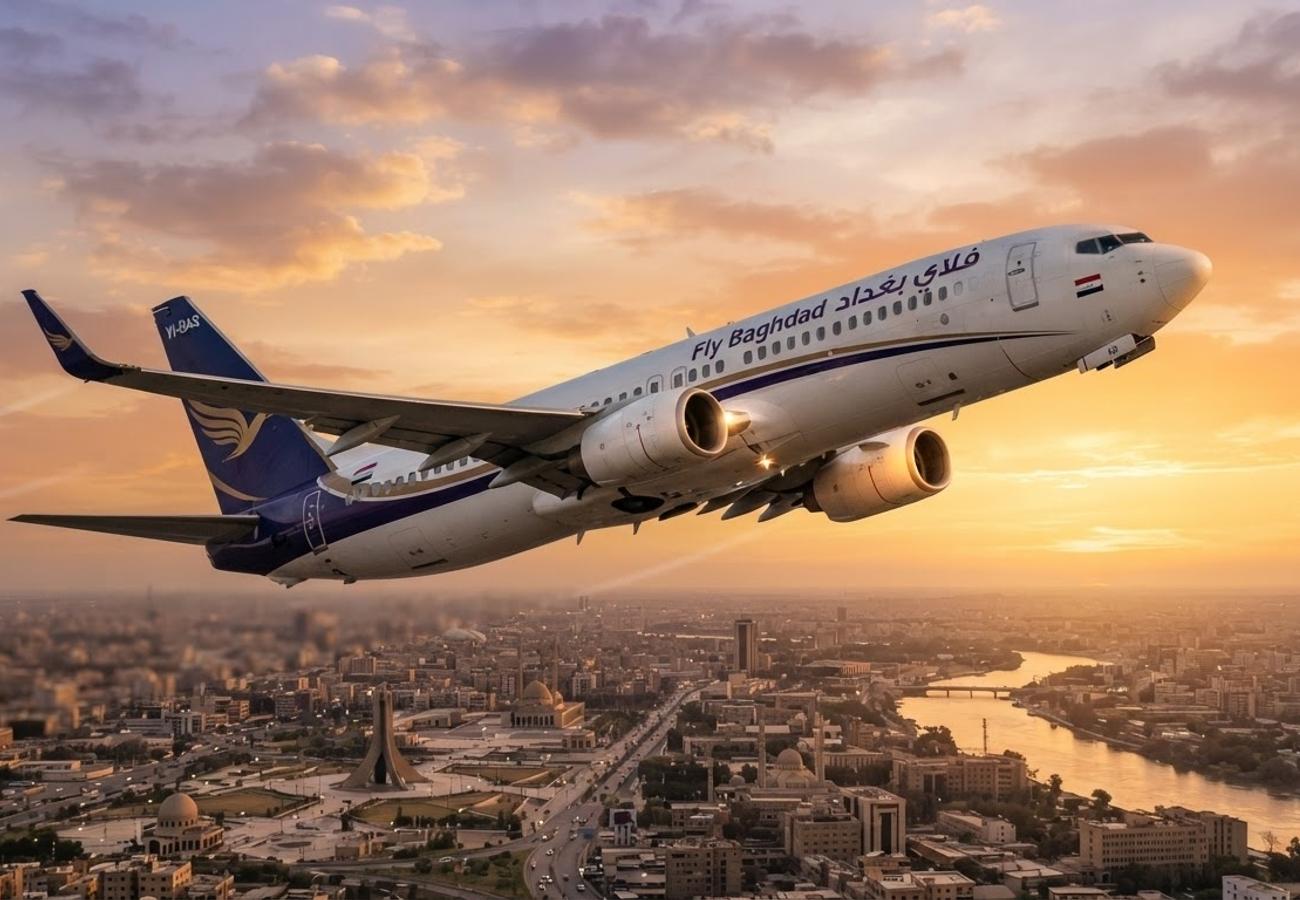
Image generated by AI
The lifting of US Treasury sanctions has opened a narrow window for Fly Baghdad Airlines to resume operations, though the carrier remains barred from European airspace.
The return of Fly Baghdad Airlines marks a tentative recovery for the privately owned carrier after a period of severe operational paralysis. Once a growing alternative to the state-owned Iraqi Airways, the airline was forced into an open-ended suspension of all flights in early 2024.
The Path to Grounding: Sanctions and Safety Bans
Fly Baghdad entered the market in 2015, utilizing a fleet of Boeing 737s and regional jets to connect Baghdad and Najaf with key markets in Turkey, Georgia, Syria, Kuwait, and Bahrain. However, this growth was halted by a two-pronged regulatory crisis.
First, the European Union placed Fly Baghdad on its air safety list, a move that prohibited the airline from operating any flights into EU member states. This ban was part of a broader push by Brussels for Iraq to improve its overall aviation oversight standards.
The situation deteriorated in January 2024 when the United States imposed sanctions on the carrier. These measures were based on allegations that Fly Baghdad supported Iranian-linked armed groups via flights to Lebanon and Syria. The sanctions targeted the company and specific aircraft, cutting off the airline's access to essential aircraft parts, maintenance services, and international financial systems.
Regulatory Shifts Enabling the 2026 Comeback
The trajectory changed in mid-2026 when the U.S. Treasury’s sanctions office removed Fly Baghdad from its counterterrorism list. This decision also applied to two of the airline's Boeing 737s, effectively restoring the carrier's ability to engage in commercial dealings with American partners.
While the U.S. relief is a critical prerequisite for survival, the recovery is not absolute. The European Union continues to maintain its operating ban on Fly Baghdad and Iraqi Airways. Although Iraqi authorities are in discussions with the EU to implement corrective safety measures, the carrier remains on the EU's restricted annex.
The removal of U.S. sanctions primarily solves three operational bottlenecks:
- Insurance: Restoring the ability to secure valid international aviation insurance.
- Leasing: Enabling new or renewed aircraft leasing agreements.
- Payments: Facilitating cross-border financial transactions and payroll.
Strategic Re-entry and Route Recovery
Fly Baghdad is avoiding a full-scale relaunch, opting instead for a phased return to high-demand regional corridors. Current data from schedule aggregators indicates the airline is testing the market on specific city pairs, most notably between Baghdad and Cairo.
Similar activity has been noted on routes connecting Iraq to Turkey and various Gulf states. This incremental approach allows the airline to manage risk while gauging passenger trust.
Parallel to route restoration, the airline has launched recruitment drives for Boeing 737 flight crews based in Baghdad. These multi-year contracts suggest a shift toward permanent scheduled services rather than short-term charter operations.
Operational Hurdles and Market Competition
Despite the regulatory relief, Fly Baghdad faces a challenging environment. Regional security remains a volatile factor, with European aviation advisories citing risks of drone and missile activity in Iraqi airspace.
The airline also faces a steep climb in regaining market share. During its absence, Iraqi Airways and major Gulf carriers—operating through hubs in Doha, Dubai, and Istanbul—absorbed much of the demand.
| Challenge Category | Primary Obstacle | Current Status |
|---|---|---|
| Regulatory | EU Air Safety List | Still Banned |
| Financial | US Treasury Sanctions | Lifted (Mid-2026) |
| Operational | Fleet Maintenance | Rebuilding via B737 hiring |
| Security | Airspace Stability | Elevated risk advisories |
| Competitive | Gulf Hub Dominance | High competition from Qatar/Emirates/Turkish |
Rebuilding Brand Trust
The carrier's previous association with sanctions related to weapons transfers has created a reputational deficit. Corporate travelers and high-value clients continue to favor established Gulf network carriers for their perceived reliability and connectivity.
To succeed, Fly Baghdad must pivot back to its original niche: serving price-sensitive passengers and pilgrims traveling from Najaf and Basra to regional religious centers. Success will depend on operational consistency—specifically punctuality and safety transparency—to convince the public that the airline has fundamentally restructured its operations.
A cautious return to the skies suggests that while sanctions can ground a fleet, the demand for local Iraqi connectivity remains a powerful driver for recovery.
Related Travel Guides
Disclaimer
This article is for informational and educational purposes only. It does not constitute legal, financial, or professional advice. While we strive to provide accurate and up-to-date information, travel policies, regulations, and conditions change rapidly. Always verify information with official sources before making travel decisions. Nomad Lawyer makes no representations about the accuracy, reliability, completeness, or suitability of the information provided. Readers should consult qualified professionals for advice specific to their circumstances. The views expressed in this article are those of the author and do not necessarily reflect the views of Nomad Lawyer.
Preeti Gunjan
Contributor & Community Manager
A passionate traveller and community builder. Preeti helps grow the Nomad Lawyer community, fostering engagement and bringing the reader experience to life.
Learn more about our team →