
Flights Diverted Jaipur: 11 Aircraft Forced Down as Delhi Fog Chaos Strands Hundreds
Dense fog at Delhi's Indira Gandhi International Airport forced 11 flights to divert to Jaipur on May 7, 2026, stranding hundreds of passengers for hours amid cascading schedule disruptions and operational strain.

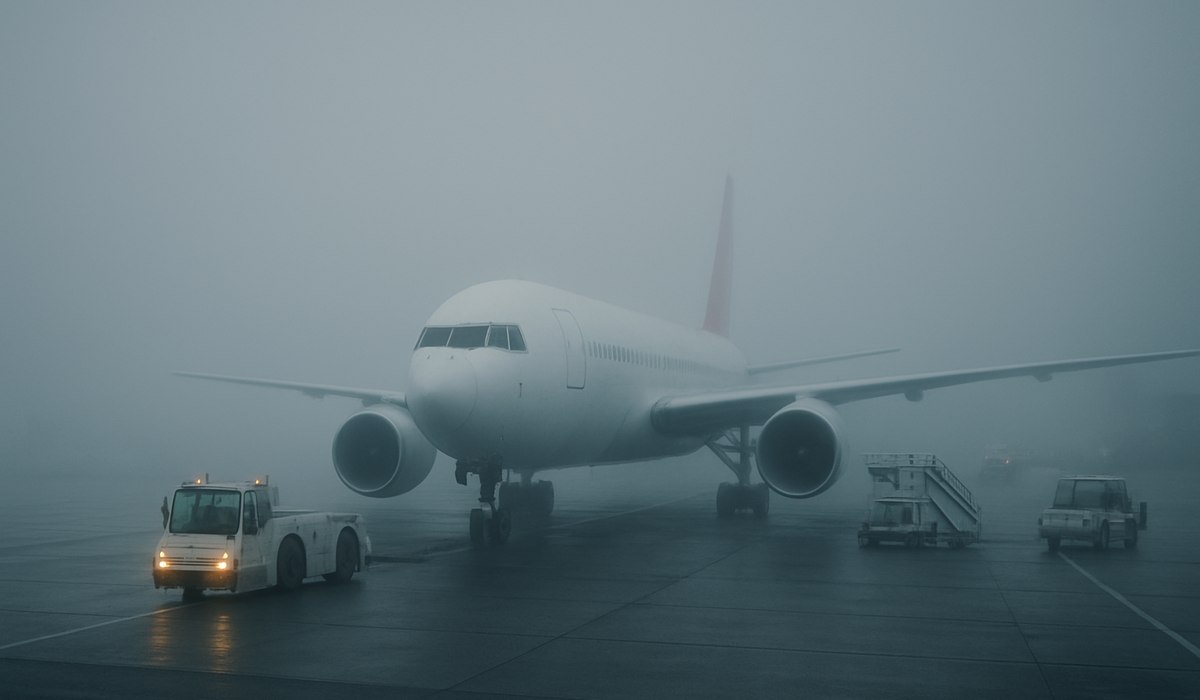
Image generated by AI
Dense Fog Forces Historic Diversion Surge at Delhi Airport
Eleven aircraft heading for Delhi's Indira Gandhi International Airport were forced to divert to Jaipur International Airport on May 7, 2026, leaving approximately 400-500 passengers stranded for extended periods as visibility plummeted below safe landing minimums. The morning fog event triggered the largest single-day diversion cluster in recent months, with incoming flights from major Indian cities including Mumbai, Bengaluru, Ahmedabad, and Kolkata redirected to the Rajasthan capital roughly 280 kilometers southwest. Cascading delays rippled across northern India's aviation network as crews faced duty-time restrictions, ground handling bottlenecks, and uncertainty about when conditions would clear sufficiently for return flights to the capital.
Low Visibility Over Delhi Triggers Series of Diversions
Dense winter fog descended over the National Capital Region early on May 7, reducing approach visibility at Delhi airport below the critical operating minimums required by Indian civil aviation regulations. When visibility drops below 400 meters horizontally, most commercial aircraft cannot execute standard instrument approaches safely, forcing air traffic control to redirect inbound traffic to alternate airports with acceptable weather conditions.
Jaipur emerged as the primary diversion hub due to its 280-kilometer proximity to Delhi and relatively clearer weather windows. The city's runway infrastructure and instrument landing systems proved adequate to accept the surge, yet the concentrated arrival created unprecedented ground congestion. By mid-morning, the airport's 11 unscheduled arrivals represented roughly 40% of its normal daily traffic, overwhelming parking stands, fuel trucks, and ground service crews accustomed to predictable schedules.
Flights diverted Jaipur included scheduled services operated by major Indian carriers, with aircraft arriving between 6:45 AM and 9:30 AM local time. Affected airlines scrambled to coordinate with dispatch centers, notify passengers, and arrange ground handling across an airport not prepared for simultaneous multi-aircraft processing. Visit FlightAware to review real-time tracking data from disruption periods.
Jaipur Airport Overwhelmed by Unscheduled Arrivals
The sudden influx of 11 aircraft strained every operational system at Jaipur International Airport. Ground handling providers had mere minutes to mobilize additional staff, fuel trucks, and catering vehicles for aircraft they had never scheduled to service. Terminal facilities designed for 3,500-4,000 daily passengers faced an unexpected surge of 400+ displaced travelers seeking information, seating, restrooms, and customer service assistance simultaneously.
Baggage handling became a critical bottleneck as ground crews worked to unload cargo and luggage from aircraft while simultaneously preparing passenger areas. Several airlines' ground operations teams were physically absent from Jaipur, requiring remote coordination with Delhi-based dispatchers unfamiliar with the secondary airport's specific procedures and equipment configurations. The operational complexity escalated as incoming aircraft competed for limited ground power units, GPU connections, and parking positions with regularly scheduled departures attempting to maintain their assigned rotations.
Jaipur's own outbound schedule suffered collateral damage. Aircraft assigned to depart for Hyderabad, Pune, and Goa remained grounded, awaiting crew duty clearances and repositioning clearances to return to Delhi. This cascading effect prevented normal traffic flow through the airport until approximately 2:00 PM when Delhi's visibility improved sufficiently for return operations to commence.
Passengers Face Long Waits and Missed Connections
Travelers aboard flights diverted Jaipur experienced hours of uncertainty, limited communication, and missed downstream connections. Many passengers remained on board their aircraft for 90-120 minutes while crews monitored Delhi weather updates and awaited revised flight plans from air traffic control. Once it became evident that immediate return flights were impossible, airlines deplaned passengers into Jaipur's terminal, where confusion replaced clarity about rebooking procedures, accommodation arrangements, and ground transportation options.
A passenger traveling to Mumbai reported waiting five hours at Jaipur without firm departure information, describing inadequate meal vouchers, limited seating in public areas, and airline staff unable to confirm connection outcomes for onward international flights. Another traveler with a same-day business meeting in Delhi abandoned airline rebooking options entirely, opting instead for a three-hour ground transfer via commercial taxi—a costly workaround that would not qualify for airline compensation.
Business travelers with tight connection windows experienced particular hardship. International departures from Delhi scheduled for early afternoon proved impossible to reach, triggering automatic rebooking onto flights 24-48 hours later. Hotel night losses, missed meetings, and postponed medical appointments compounded the financial impact beyond airline ticket refunds.
Winter Fog Season Challenges for Northern India Routes
Meteorological patterns across northern India create persistent fog hazards during winter and early spring months, from December through March, with occasional episodes extending into April and May. Delhi fog events result from temperature inversions trapping moisture near ground level, reducing visibility to dangerously low levels that persist for 6-10 hours during severe episodes.
Aviation regulators across India's Directorate General of Civil Aviation (DGCA) maintain strict visibility minimums to prevent accidents, but these safety thresholds inevitably trigger diversions when fog envelops major airports. Delhi handles nearly 1,500 daily flights, making it extraordinarily vulnerable to weather disruptions that ripple across regional and international networks.
Historical data from the India Meteorological Department and DGCA operational records document that fog-induced diversions occur in roughly 15-20% of winter days at Delhi, with secondary airports including Jaipur, Lucknow, and Chandigarh absorbing diverted traffic. The May 7 event highlights how unseasonal late-spring fog can still generate significant disruption even as winter wanes.
Airlines serving this region increasingly build buffer capacity into schedules during vulnerable months, yet sudden visibility collapse within 30-minute windows still overwhelms mitigation strategies. Ground handling infrastructure at secondary airports remains undersized for absorbing 10+ simultaneous diversions, revealing systemic capacity gaps that persist despite years of documented fog-related disruptions.
Key Disruption Metrics
| Metric | Value |
|---|---|
| Flights Diverted | 11 aircraft |
| Primary Diversion Destination | Jaipur International Airport |
| Affected Passengers (Estimated) | 400-500 travelers |
| Visibility Level (Minimum Safe) | Below 400 meters (critical minimum) |
| Duration of Diversions | 4-6 hours per aircraft |
| Average Delay at Jaipur | 180-300 minutes |
| Airlines Impacted | 4-6 major Indian carriers |
| Origin Cities Affected | Mumbai, Bengaluru, Ahmedabad, Kolkata, Hyderabad |
| Distance: Delhi to Jaipur | 280 kilometers |
| Jaipur Airport Emergency Capacity Activation | Yes |
What This Means for Travelers
Traveler Action Checklist
-
Monitor weather forecasts proactively during December-March travel to northern India. Check FAA weather resources and Indian Meteorological Department alerts before departure.
-
Book flights with generous layover buffers—minimum 3 hours between Delhi arrivals and onward connections during fog season to account for potential diversions.
-
Purchase travel insurance with weather event coverage before traveling to high-disruption regions. Verify that your policy covers diversions, missed connections, and accommodation costs.
-
Understand your passenger rights under Indian aviation regulations. Airlines must provide accommodation, meals, and reboo
Preeti Gunjan
Contributor & Community Manager
A passionate traveller and community builder. Preeti helps grow the Nomad Lawyer community, fostering engagement and bringing the reader experience to life.
Learn more about our team →