
Flight Chaos Strands Thousands Across Major US Hubs April 2026
Flight chaos strands nearly 2,800 passengers as systemic congestion at Chicago, Atlanta, and Newark cascades disruptions nationwide. April 2026 sees major airlines Southwest, American, and Delta hit hardest.

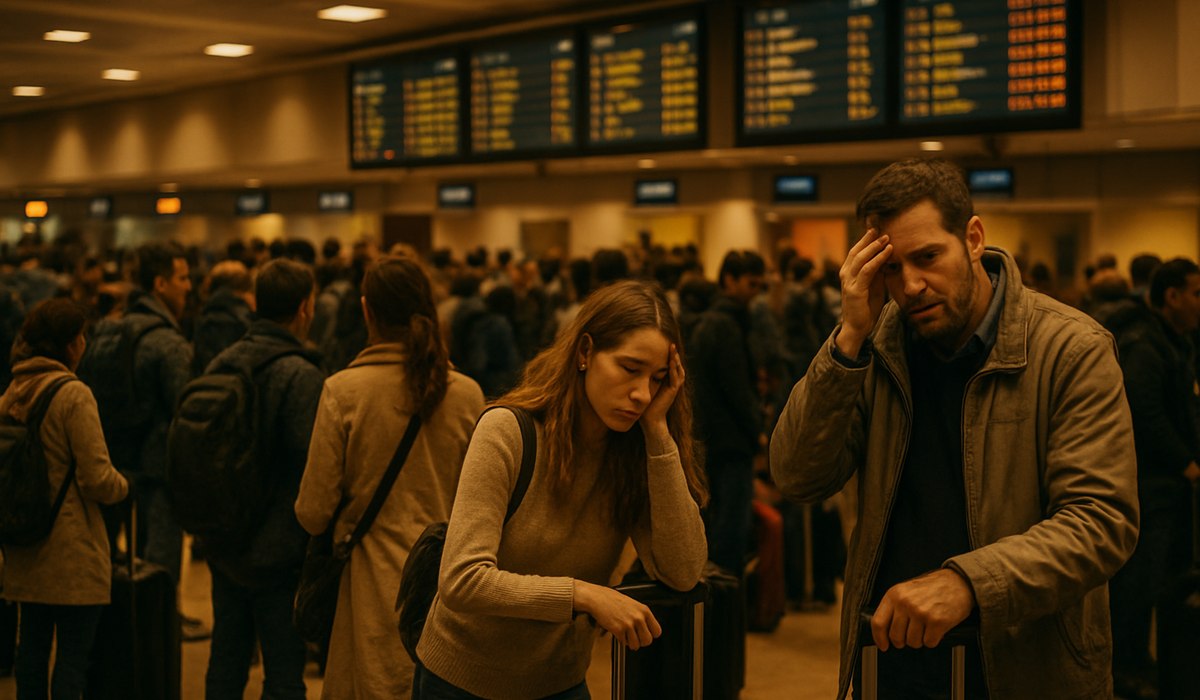
Image generated by AI
Flight Chaos Strands Thousands: Major US Airport Hubs Overwhelmed by Cascading Disruptions
Nearly 2,800 flights delayed and 99 canceled across six major US airport hubs left thousands stranded on April 11, 2026, as systemic congestion at Chicago O'Hare, Hartsfield-Jackson Atlanta, and Newark Liberty sparked a nationwide domino effect. The disruption rippled through connecting banks at Detroit Metropolitan, Minneapolis-St. Paul, and San Antonio International, affecting Southwest Airlines, American Airlines, Delta Air Lines, and regional carriers operating under major-brand codes. Unlike isolated weather events, today's flight chaos strands reflected deeper operational vulnerabilities in America's hub-and-spoke network during peak travel season.
Major US Hubs Hit by Widespread Disruptions
The April 11 disruption concentrated its heaviest impact at three critical gateways: Chicago O'Hare, Hartsfield-Jackson Atlanta, and Newark Liberty. These three airports alone handle nearly 40% of domestic connecting traffic, meaning delays at any one location instantly ripple across the entire eastern half of the country and the Upper Midwest corridor.
Chicago O'Hare reported check-in lines extending beyond security checkpoints as customer service counters were overwhelmed with passengers seeking alternative flights. The airport's central position in the Southwest Airlines network made it particularly vulnerable—when Southwest's aircraft fell out of sequence across Chicago, Austin, and other mid-continent stations, the carrier's tight turnaround requirements amplified the cascading effect.
Newark Liberty faced similar pressure from American Airlines' hub operations, where relatively small cancellation volumes combined with significant delay numbers disrupted entire coordinated waves of departures and arrivals. Secondary hubs in Detroit, Minneapolis, and San Antonio amplified the problem by experiencing late inbound arrivals that compressed turnaround windows and forced downstream schedule changes.
How Delays at Key Airports Cascade Nationwide
The flight chaos strands mechanism operates through the hub-and-spoke model itself. When a major carrier loses just two hours at Chicago O'Hare, crews begin approaching federal duty-time limits. Aircraft miss scheduled maintenance windows. Connecting passengers fail to make flights to secondary destinations. By evening, those crews and planes are positioned incorrectly across the network, forcing cancellations on routes that experienced no weather or congestion directly.
Endeavor Air and other regional operators that feed mainline hubs face particular exposure. A 90-minute mainline delay means a regional departure scheduled 40 minutes later must either launch without its feeder traffic or absorb additional delay. Either choice degrades service across thousands of passengers on connecting itineraries.
The April 11 scenario followed a familiar pattern: weather complications (thunderstorms and reduced visibility around key hubs) required air traffic controllers to meter departures during peak hours. When holding patterns coincide with already dense schedules, even brief slowdowns generate exponential delays. Check FlightAware for real-time tracking of how individual delays propagate through connected flights.
Systemic Congestion Rather Than Isolated Incidents
Aviation analysts distinguish today's disruption from weather-driven meltdowns. The underlying cause reflects structural constraints: staffing shortages at certain FAA air traffic facilities, crowded airspace corridors around the Northeast and Upper Midwest, and schedules that assume 99% operational efficiency.
According to FAA monitoring systems, the April 11 incident stemmed from a combination of patchy weather, holding patterns, and ground delays that exposed how little margin exists in the system. When one node experiences congestion, the network lacks capacity to absorb the shock because airlines have optimized schedules for speed, not resilience.
The 2,757 delayed flights significantly outnumbered the 99 cancellations—a ratio that indicates systemic pressure rather than localized failure. High delay volumes force crews toward duty-time limits, trigger missed maintenance windows, and disrupt overnight positioning flights, setting the stage for follow-on problems into April 12's schedule.
What This Means for Nomadic Professionals
Remote workers and digital nomads relying on predictable flight schedules face compounded challenges. A 3-hour delay at a major hub doesn't just cost time—it disrupts accommodation check-ins, client meetings across time zones, and plans to work from airport lounges.
Professionals connecting through Chicago, Atlanta, or Newark should maintain flexible itineraries during peak season. Building in 4+ hour layover windows prevents missed connections when flight chaos strands other passengers. Consider routing through smaller hubs (Nashville, Houston) even if flight times increase—operational resilience often trumps schedule optimization for nomadic workers.
Traveler Action Checklist
If your flight is affected by April 11's disruptions or similar incidents:
- Check real-time status on FlightAware before contacting your airline—the data updates faster than phone lines
- Document all communication with airline representatives including names, times, and confirmation numbers
- Request meals and ground transportation if delays exceed 3 hours under US DOT passenger rights rules
- Rebook proactively onto other carriers if your airline's next available flight exceeds 6+ hours rather than waiting for rebooking
- Photograph your boarding pass and itinerary to establish timeline proof for compensation claims
- File a DOT complaint within 60 days if your airline denies accommodations you're entitled to
- Contact your hotel about late check-in policies immediately upon learning of delays
- Inform your next connection of your delayed arrival time to reserve your seat
Disruption Impact by Airport and Airline
| Hub Airport | Primary Carriers | Delayed Flights | Cancellations | Primary Routes Affected |
|---|---|---|---|---|
| Chicago O'Hare | Southwest, American | 640+ | 18 | Midwest-West Coast, Midwest-Northeast |
| Hartsfield-Jackson Atlanta | Delta, Southwest | 580+ | 22 | Southeast-Northeast, Southeast-West Coast |
| Newark Liberty | American, United | 520+ | 24 | Northeast-Florida, Northeast-West Coast |
| Detroit Metro | Delta, Southwest | 310+ | 14 | Midwest-East Coast, Midwest-South |
| Minneapolis-St. Paul | Delta, Southwest | 290+ | 12 | Upper Midwest-Southeast, Upper Midwest-West |
| San Antonio | Southwest, American | 260+ | 9 | South-Northeast, South-West Coast |
Frequently Asked Questions
Q: Will airlines compensate me for delays caused by systemic congestion? A: US airlines are not required to provide monetary compensation for delays caused by air traffic congestion, weather, or mechanical issues—only for airline-caused delays like crew scheduling errors. However, they must provide meals, ground transportation, and hotel accommodations if delays exceed defined thresholds. Check US DOT rules for specific eligibility criteria.
Q: How long does it typically take the network to recover after major hub disruptions? A: Recovery typically requires 18–36 hours. Delayed aircraft and crews remaining out of position create follow-on cancellations the next morning. Airlines prioritize getting crews to duty-time limits before scheduling new flights, extending recovery into a second day.
Q: Should I rebook on a different airline if offered the choice? A: Yes, if another carrier offers a departure within 4 hours. Different airlines' hubs experience different pressure points, and Delta flights from Chicago may be less delayed than Southwest flights using the same airport due to their different network structures.
**Q:
Disclaimer
This article is for informational and educational purposes only. It does not constitute legal, financial, or professional advice. While we strive to provide accurate and up-to-date information, travel policies, regulations, and conditions change rapidly. Always verify information with official sources before making travel decisions. Nomad Lawyer makes no representations about the accuracy, reliability, completeness, or suitability of the information provided. Readers should consult qualified professionals for advice specific to their circumstances. The views expressed in this article are those of the author and do not necessarily reflect the views of Nomad Lawyer.
Kunal K Choudhary
Co-Founder & Contributor
A passionate traveller and tech enthusiast. Kunal contributes to the vision and growth of Nomad Lawyer, bringing fresh perspectives and driving the community forward.
Learn more about our team →