
Flight Chaos Reveals $34 Billion Crisis in Global Aviation
Flight chaos reveals a $34 billion structural crisis in global aviation. Persistent delays and cancellations across 2026 expose chronic underinvestment in aircraft maintenance, infrastructure, and air traffic control affecting millions of travelers worldwide.

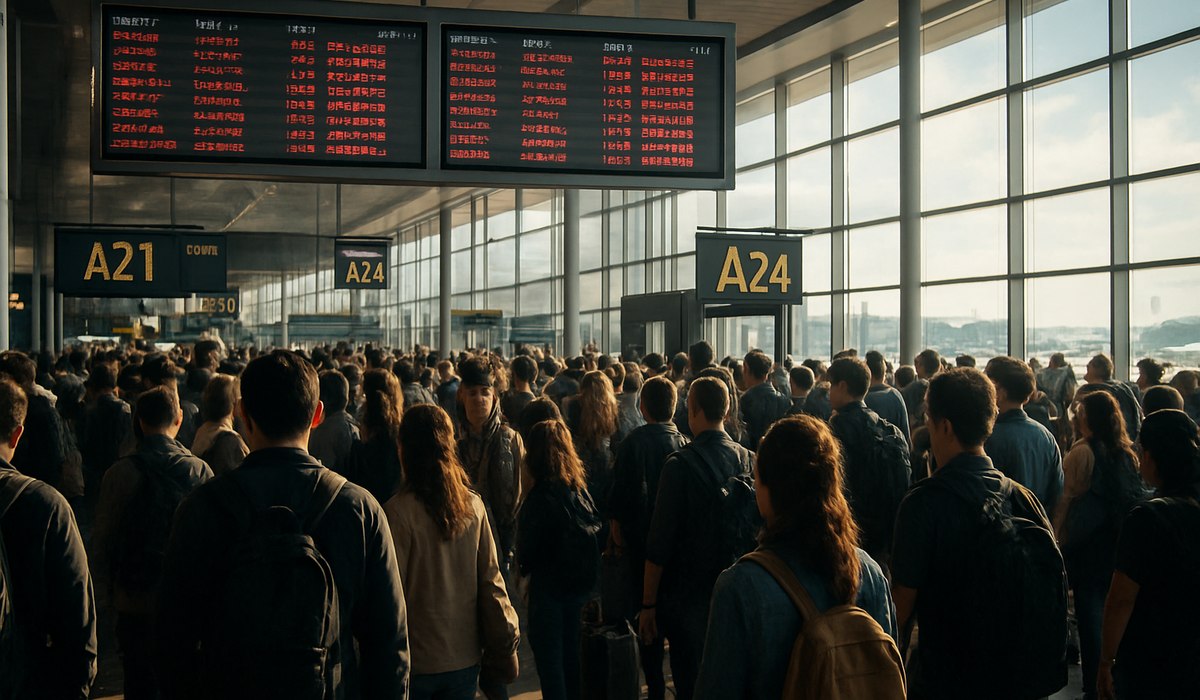
Image generated by AI
Flight Chaos Reveals a $34 Billion Structural Crisis in Global Aviation
Widespread flight delays and mass cancellations across North America and Europe are exposing what aviation economists describe as a $34 billion annual structural crisis. This disruption stems from chronic underinvestment in aircraft fleets, maintenance capacity, and air traffic infrastructure. The situation affects major carriers including ITA Airways, IndiGo, Spirit Airlines, and Porter Airlines, alongside European hubs struggling with air traffic control staffing shortages. Unlike temporary pandemic-related disruptions, analysts now recognize this crisis as systemic and recurring, requiring sustained multi-year investment strategies to resolve.
The $34 Billion Disruption Bill: Breaking Down Aviation's Economic Crisis
Recent economic analysis quantifies the annual cost of flight disruptions at $30 to $34 billion globally. This figure encompasses direct airline losses, airport operational strain, passenger compensation, hotel accommodations for rebooking, missed connection expenses, crew and aircraft cascading delays, and lost traveler productivity. The breakdown reveals that this isn't a single-market problem—disruption patterns repeat across summer peaks in North America and Europe.
Airlines operating at fleet capacity limits face reduced network flexibility and diminished customer confidence. When flight chaos reveals systemic problems, recovery becomes exponentially more expensive. Airports report squeezed margins from higher operating costs, while passengers experience extended delays and crowded rebooking processes at major hubs like Frankfurt, Paris, and London Heathrow. Industry associations emphasize that short-term stabilization measures implemented post-pandemic have proven insufficient for long-term resilience.
For nomadic professionals and frequent international travelers, this crisis directly impacts work schedules and project timelines. The FAA and European air navigation providers acknowledge the structural nature of these constraints, moving beyond temporary explanations toward acknowledging capacity shortfalls.
Beyond Pandemic Recovery: Why Flight Chaos Is Now Systemic
The transition from pandemic-related disruptions to structural crisis occurred incrementally throughout 2024–2026. Airlines initially blamed recovery backlogs and staffing retraining periods. However, persistent patterns indicate underlying capacity problems rather than temporary operational friction.
Demand for air travel continues growing while infrastructure investments lag significantly behind requirements. Maintenance facilities operate at or beyond rated capacity. Spare engine availability remains constrained. Air traffic control staffing shortages persist in critical regions like southern Europe and France, where industrial actions cascade into network-wide delays.
Airlines have responded by leasing older aircraft, reducing flight frequencies, and abandoning marginal routes entirely. This strategy temporarily addresses costs but ultimately reduces market competition and increases fares for business travelers. When flight chaos reveals such structural gaps, consumer choice diminishes alongside service reliability. The crisis particularly impacts low-cost carriers operating single-aircraft fleets, where grounding affects profitability disproportionately compared to full-service network carriers.
Grounded Jets and Global Maintenance Bottlenecks
Engine reliability issues dominate the maintenance crisis. More than 700 aircraft from the Airbus A320neo family have been grounded at various points due to Pratt and Whitney geared turbofan engine problems and mandatory inspection programs.
Regional impacts illustrate the severity:
- Europe: ITA Airways experienced approximately 30% fleet unavailability during peak seasons
- India: IndiGo grounded 70–80 aircraft before gradual recovery commenced
- North America: Spirit Airlines and Porter Airlines reported double-digit fleet percentages idle simultaneously
Engine overhaul facilities worldwide operate beyond design capacity. Turnaround times extend 40–60% above historical norms. Parts shortages and skilled labor constraints further bottleneck recovery. Airlines lease older, less fuel-efficient aircraft as temporary replacements, increasing operating expenses precisely when margins compress from schedule reductions.
This maintenance bottleneck feeds directly into the $34 billion disruption figure. Aircraft missing from schedules for months force revenue-destructive choices: reduce flying or stress remaining assets. Either option increases vulnerability to weather events, technical glitches, or crew fatigue incidents.
Air Traffic Control Strain: Europe's Infrastructure Crisis
European airspace illustrates infrastructure underinvestment most acutely. Eurocontrol reports sharp increases in en-route delays per flight during peak periods. Capacity limitations and staffing shortfalls at control centers in France, Italy, and Spain create bottlenecks affecting transcontinental traffic flows.
French airspace control actions cascade dramatically. Because French airspace sits central to major north-south and east-west European corridors, local industrial action or technical failures affect flights neither originating nor landing in France. A single control center delay triggers network disruptions across multiple countries.
Southern European facilities lack adequate controller staffing while relying on aging radar and communication systems. This combination creates systemic vulnerability during peak holiday travel when traffic volumes approach limits. The FAA and Eurocontrol both acknowledge these structural constraints require infrastructure modernization and controller recruitment initiatives spanning five or more years.
What Meaningful Recovery Requires: Multi-Year Investment Strategy
Addressing the $34 billion annual crisis demands sustained investment across three domains: aircraft procurement and engine reliability improvements, maintenance facility expansion with modern equipment and trained technicians, and air traffic control infrastructure modernization with digital systems and adequate staffing.
Airlines must increase fleet capacity beyond 2026 growth rates. Current procurement pipelines fall short of demand projections. Engine manufacturers require accelerated reliability testing and parts production scaling. Maintenance networks globally need facility expansion, modern diagnostics equipment, and workforce development programs.
Governments and airport operators must invest in air traffic control infrastructure. France requires additional controller hiring and scheduling flexibility. Southern European facilities need modern radar replacement and digital communication systems. These initiatives typically require 3–5 year timelines for implementation.
Regulatory agencies including the US DOT and European aviation authorities must harmonize reporting standards and coordinate investment priorities across borders. Without coordinated strategy, regional improvements remain insufficient for global network resilience.
Check real-time flight status using FlightAware before traveling and verify all information directly with your airline operator.
Traveler Action Checklist
Managing travel during aviation's structural crisis requires proactive planning and flexibility:
- Book flights 60+ days in advance to access expanded seat inventory and better schedule reliability
- Choose morning departures when air traffic control systems have fewer backlog hours
- Monitor real-time delays via FlightAware before arriving at airports
- Book flexible fares enabling free rebooking when schedule changes occur
- Travel mid-week (Tuesday–Thursday) when capacity stress is lowest
- Avoid European hubs during peak summer (June 15–August 31) when disruption rates peak
- Check airline maintenance alerts by reviewing fleet availability reports before booking
- Document all delays exceeding three hours for EU Regulation 261/2004 compensation claims
- Contact airlines directly for compensation inquiries rather than relying on automated systems
- Purchase travel insurance covering flight disruptions and cancellation expenses
Key Data: Aviation Crisis by the Numbers
| Metric | Value | Source/Period |
|---|---|---|
| Annual global disruption cost | $34 billion | 2026 economic analysis |
| A320neo aircraft grounded (peak) | 700+ units | Fleet tracking, 2025–2026 |
| ITA Airways unavailable fleet | ~30% | Peak season 2025 |
| IndiGo grounded aircraft (peak) | 70–80 units | India operations, 2025 |
| French airspace control delays | +40% vs. baseline | Eurocontrol 2026 summer data |
| Engine overhaul capacity utilization | 100%+ | Industry maintenance surveys |
| Expected recovery timeline |
Disclaimer
This article is for informational and educational purposes only. It does not constitute legal, financial, or professional advice. While we strive to provide accurate and up-to-date information, travel policies, regulations, and conditions change rapidly. Always verify information with official sources before making travel decisions. Nomad Lawyer makes no representations about the accuracy, reliability, completeness, or suitability of the information provided. Readers should consult qualified professionals for advice specific to their circumstances. The views expressed in this article are those of the author and do not necessarily reflect the views of Nomad Lawyer.
Kunal K Choudhary
Co-Founder & Contributor
A passionate traveller and tech enthusiast. Kunal contributes to the vision and growth of Nomad Lawyer, bringing fresh perspectives and driving the community forward.
Learn more about our team →