
Flight disruptions drain $30-34B annually from U.S. aviation system
New economic analysis reveals flight disruptions drain $30-34 billion annually from U.S. aviation, with costs extending far beyond airline operations to airports and passengers in 2026.

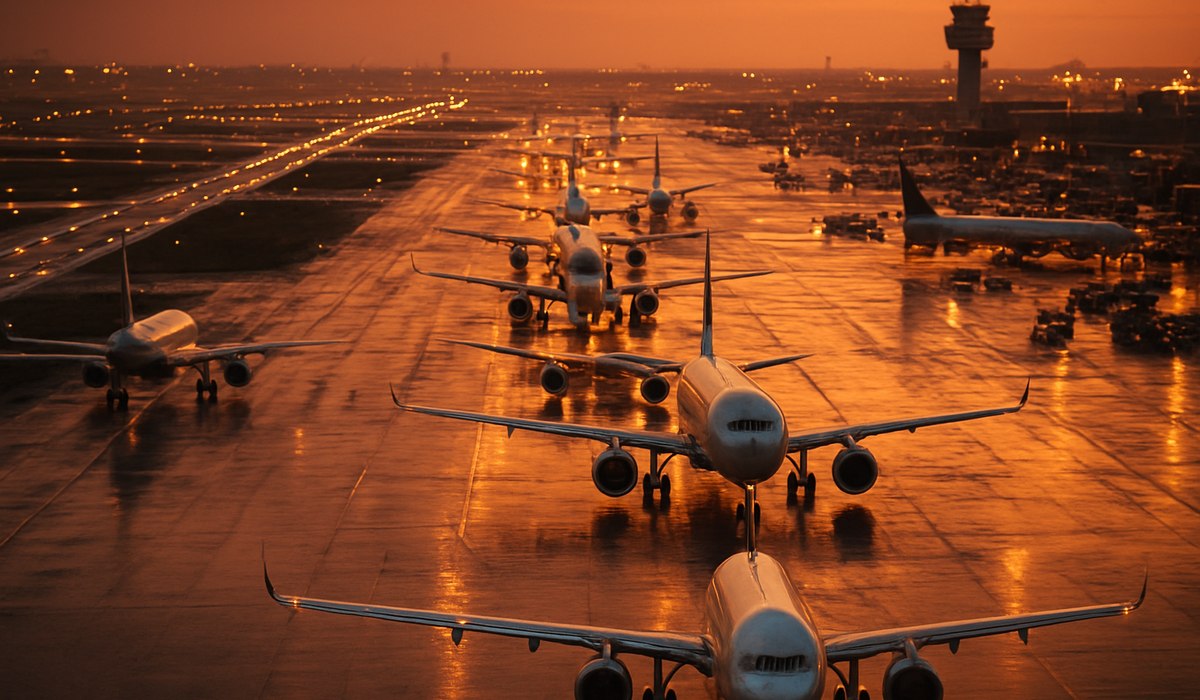
Image generated by AI
Flight Disruptions Drain Billions: A Structural Crisis in U.S. Aviation
American aviation faces a silent financial crisis. Flight delays and cancellations drain between $30 billion and $34 billion annually from the U.S. aviation system, according to recent economic analyses. This isn't isolated volatility—it's a structural cost that affects airlines, airports, and millions of travelers every single year. The scale of this drain reveals how interconnected disruptions are to operational failures, weather challenges, and systemic staffing shortages across the industry.
The financial toll extends far beyond missed flights. Airlines absorb direct operating costs while passengers lose productivity hours. Airports struggle with congestion management. Entire networks cascade into dysfunction when one component fails. Understanding where these costs originate and who pays them matters for anyone planning air travel in 2026.
A Structural Cost, Not an Occasional Shock
Recent aviation resilience studies challenge the assumption that flight disruptions drain value only during peak crisis periods. Instead, data compiled from the Federal Aviation Administration and industry analysts reveals that disruption costs represent a permanent, predictable burden on the system.
A 2025 aviation resilience assessment referenced earlier research estimating annual disruption costs between $30 billion and $34 billion. These figures aren't theoretical—they reflect measurable operational expenses, crew overtime, fuel inefficiency, and passenger compensation obligations. Airlines for America previously documented that delay costs alone, including both airline and passenger time losses, reached approximately $33 billion in pre-pandemic baseline years.
The critical insight: this $30-34 billion annual drain occurs even during relatively normal years. When severe weather events, technology failures, or staffing crises hit, costs spike dramatically higher. For an industry operating on margins typically under 5%, this structural drain fundamentally constrains profitability and investment capacity. Airlines cannot simply absorb these losses—they're reflected in ticket prices, reduced route expansion, and deferred fleet modernization.
Breaking Down the $30-34 Billion Annual Impact
The actual composition of disruption costs reveals how broadly this burden spreads across the aviation ecosystem.
Direct airline operating expenses dominate the cost structure. Industry data consistently cites approximately $75 in incremental operating costs per minute of delay. This covers fuel consumption while aircraft idle on taxiways, overtime compensation for crew members and ground personnel, and the operational complexity of repositioning aircraft out of position. When hundreds of thousands of flights experience delays across the year, per-minute costs accumulate into multibillion-dollar totals.
Recent U.S. Department of Transportation automatic refund rules have added another cost layer. Large carriers now face mandatory refund obligations for cancellations and significant delays, regardless of cause classification. Analyses suggest these new regulations could cost major U.S. carriers billions of dollars collectively during years when operational disruptions spike. Poor performance now translates directly into regulatory compliance costs.
Passenger time loss compounds the financial picture significantly. Using industry-standard valuation of approximately $47 per hour of passenger time, millions of delayed travelers represent staggering lost productivity. A passenger stuck overnight due to cancellation loses work hours, sleep quality, and sometimes destination revenue. Multiply that across the 2.9 million daily U.S. air passengers, and individual inconveniences become macro-economic losses.
Airport-specific costs often escape public attention. Hub airports managing rolling delays experience reduced efficiency in their tightly sequenced departure bank structures. Fewer aircraft cycles mean lower throughput. Stranded passengers spend time in queues rather than terminal retail spaces, reducing concession revenue for airport operators. Ground handling, gate management, and customer service staffing all increase during disruption periods.
Where the Bill Lands: Airlines, Airports and Passengers
The distribution of disruption costs varies by stakeholder, yet no party escapes the burden.
Airlines absorb the most visible costs. Aircraft sitting idle burn fuel, require crew overtime, and generate maintenance complications. A single weather-induced delay cascade can cost carriers millions in direct expenses within 24 hours. When cascading delays force flight cancellations, airlines simultaneously lose ticket revenue while incurring refund and rebooking obligations. For carriers operating on thin margins, this dual squeeze—revenue loss plus mandatory payouts—directly threatens profitability.
Technology failures create particularly acute airline expenses. The January 2023 Federal Aviation Administration safety notification system failure triggered the first nationwide ground stop since 2001, demonstrating how single-point failures ripple across entire networks. Individual airline IT outages affecting crew scheduling or data centers have forced carriers to cancel thousands of flights, obliterating daily revenue while generating customer compensation costs.
Airports face secondary but significant impacts. Congestion from delays requires additional gate personnel, ramp staff, and customer service resources. At major hubs, disruptions break apart carefully orchestrated arrival and departure banks, reducing operational efficiency. Terminal concessions suffer when stranded passengers shift from retail spending to survival mode. Parking facilities and ground transportation demand spikes unpredictably, straining airport infrastructure planning.
Passengers ultimately shoulder the heaviest burden, though costs remain invisible in airline billing. Missed connections mean overnight hotel stays, rental cars, and lost work productivity. Business travelers lose customer meetings and deal closure opportunities. Leisure travelers forfeit vacation time or destination activities. The cumulative value of passenger time loss—measured in billions annually—rarely appears on passenger bills because it's absorbed through lost wages and opportunity costs.
Industry Profitability and Future Investment at Risk
The $30-34 billion annual flight disruptions drain creates a structural headwind against industry growth and modernization. Airlines cannot invest in new aircraft, expand routes, or improve customer amenities when billions flow toward disruption recovery costs.
Consider the investment implications: a major U.S. airline with $50 billion in annual revenue loses 1-2% of total revenue to disruption costs alone. That's capital that cannot fund pilot hiring, mechanic training, or gate infrastructure improvements. For a system already struggling with air traffic controller shortages and aging airport facilities, disruption costs perpetuate underinvestment in capacity.
Passenger confidence also suffers measurable damage. When travelers experience repeated delays and cancellations, they shift demand toward alternative transportation or reconsider trip necessity. This elasticity effect—where disruptions reduce total travel—compounds revenue losses beyond direct operational costs.
Root Causes: Weather, Staffing, and Technology Vulnerabilities
Understanding why flight disruptions drain such enormous value requires examining the cause structure.
Weather remains the primary external driver. Winter storms and summer convective activity routinely produce thousands of delays over multi-day periods. A single major winter storm system can cascade delays for days when aircraft and crews end up out of position across the network. Weather-driven disruptions are largely uncontrollable, yet their cost remains the airline's responsibility.
Air traffic control staffing shortages have become persistent contributors to delays. Publicly available data from the Federal Aviation Administration and airline industry analyses document that controller shortages have accounted for a substantial portion of National Airspace System delay minutes. When facilities operate below staffing targets, the FAA implements ground delay programs and flow restrictions that slow traffic even during clear weather. These artificial constraints reduce system throughput and create cascading delays industry-wide.
Technology failures expose critical vulnerabilities. The 2023 FAA safety notification system failure demonstrated how dependent modern aviation is on fragile digital infrastructure. Large-scale airline crew scheduling system failures and data center outages have independently forced individual carriers to cancel thousands of flights. These aren't weather events—they're preventable failures that nonetheless generate massive disruption costs.
Key Data Table: Disruption Costs and Impact Metrics
| Metric | Annual Value | Impact | Affected Stakeholders |
|---|---|---|---|
| Total system disruption cost | $30-34 billion | Primary financial drain | Airlines, airports, passengers |
| Direct airline operating cost per minute delay | $75 | Fuel, crew overtime, repositioning | Airlines, passengers |
| Passenger time valuation per hour | $47 | Lost productivity and wages | Passengers, |
Disclaimer
This article is for informational and educational purposes only. It does not constitute legal, financial, or professional advice. While we strive to provide accurate and up-to-date information, travel policies, regulations, and conditions change rapidly. Always verify information with official sources before making travel decisions. Nomad Lawyer makes no representations about the accuracy, reliability, completeness, or suitability of the information provided. Readers should consult qualified professionals for advice specific to their circumstances. The views expressed in this article are those of the author and do not necessarily reflect the views of Nomad Lawyer.
Preeti Gunjan
Contributor & Community Manager
A passionate traveller and community builder. Preeti helps grow the Nomad Lawyer community, fostering engagement and bringing the reader experience to life.
Learn more about our team →