
Flight disruptions strain aviation with $34B annual cost in 2026
Flight disruptions strain U.S. aviation with a $34 billion annual economic toll in 2026, evolving from seasonal delays into a permanent structural crisis affecting 200 million passengers and reshaping airline strategy.

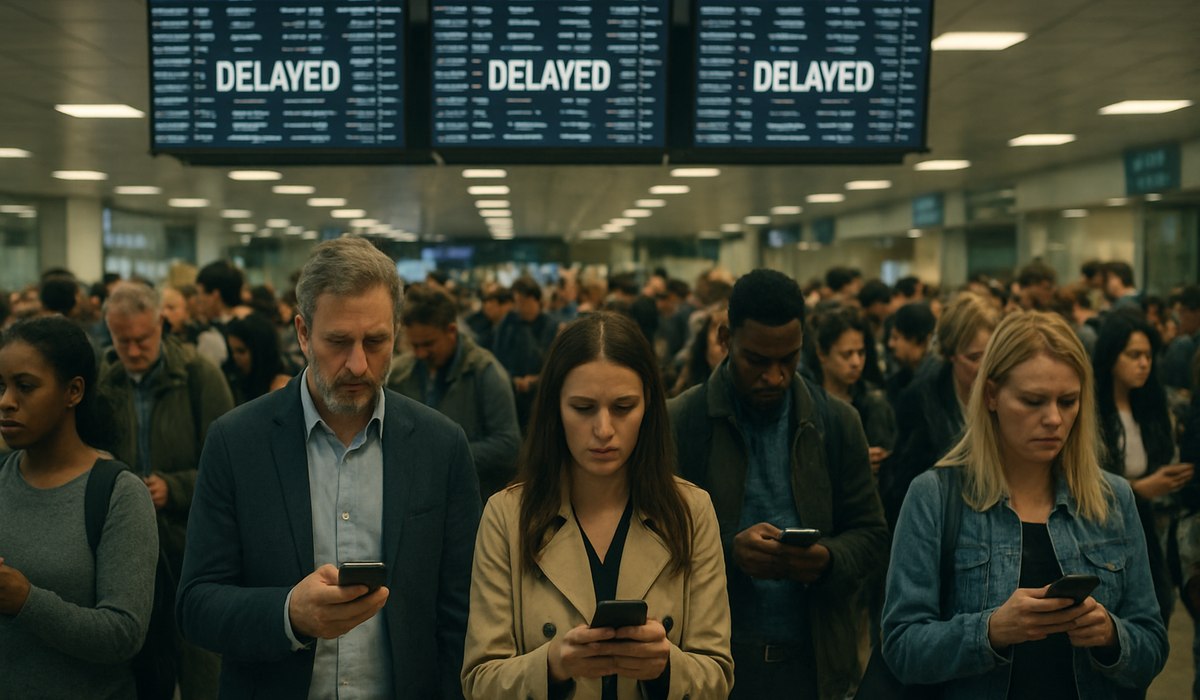
Image generated by AI
The New Reality: Flight Disruptions Strain Aviation Beyond Recovery
Flight disruptions strain the U.S. aviation system with estimated losses of $30–$34 billion annually in 2026, according to regulatory filings and industry economic analyses. What began as seasonal weather-related delays has crystallized into a chronic structural weakness affecting over 200 million passengers yearly. Major carriers including American, Delta, United, and Southwest report that disruption costs now consume a measurable portion of operational budgets, forcing strategic recalibration across the industry. The scale represents not a temporary disruption but a permanent reconfiguration of how airlines, airports, and regulators must operate.
From Seasonal Nuisance to Systemic Crisis
Industry data compiled since 2022 reveals a troubling pattern: flight disruptions are no longer isolated incidents but embedded inefficiencies in the aviation ecosystem. The $30–$34 billion annual toll encompasses three primary cost categories: direct airline operating expenses for rebooking, ground handling, and crew repositioning; the quantified economic value of passenger time lost; and spillover effects on hospitality, ground transportation, and retail sectors dependent on reliable air travel.
Research cited in U.S. Department of Transportation dockets demonstrates that disruption intensity has remained consistent despite post-pandemic traffic recovery. Airlines absorbed verified losses exceeding $30 billion in 2023 alone, while 2024 and 2025 saw no measurable improvement. Global consultancies identify disruptions as the primary margin-eroding factor across major carriers heading into 2026. Unlike cyclical downturns, this systemic weakness shows no natural recovery mechanism without structural intervention.
The true burden likely exceeds $34 billion when accounting for deferred travel, diminished airline loyalty, and mode-shift to ground transportation or remote work solutions. These indirect costs remain unmeasured but substantial.
The $34 Billion Price Tag: Where Costs Add Up
Flight disruptions strain financial performance across multiple vectors. Direct airline costs include crew repositioning, passenger meal vouchers, hotel accommodations, and mechanical inspections triggered by irregular operations. Rebooking on competitor flights or alternative carriers creates revenue leakage that compounds per-disruption losses.
Passenger time loss represents the second major expense category. Using Federal government benchmarks valuing travel time at approximately $15–$25 per hour, a single three-hour delay affecting 150 passengers generates $6,750–$11,250 in lost economic productivity. Multiplied across millions of annual disrupted passengers, this component alone reaches billions annually.
Broader economic spillover effects ripple through connected industries. Convention cancellations, missed business meetings, and postponed medical procedures create secondary costs absorbed by sectors beyond aviation. Supply chain disruptions cause manufacturing delays. Tourism revenue declines when travelers redirect leisure trips to reliability-proven alternatives.
Additional pressure stems from regulatory compensation requirements, particularly EU261 mandates requiring carriers to pay €250–€600 per passenger for delays exceeding three hours. U.S. carriers operating transatlantic routes face exponential liability accumulation during widespread disruption events.
200 Million Passengers Feel the Impact
U.S. aviation serves approximately 2.9 million daily passengers, generating roughly 1 billion annual trips. Conservative estimates suggest 200 million passengers—roughly 20 percent of annual traffic—experience meaningful disruption annually through delays, cancellations, missed connections, or rebooking complications.
Behavioral data indicates substantial passenger response to disruption anxiety. Surveys from 2025 show approximately 40 percent of leisure travelers have deferred or cancelled flights due to prior negative experiences. Business travelers increasingly specify non-stop routing and avoid tight connections at historically congested hubs like Atlanta, Dallas-Fort Worth, and Chicago-O'Hare.
This behavioral shift creates a demand paradox: passengers abandon flights at chronically disrupted airports, concentrating traffic at perceived reliable alternatives and creating new bottleneck pressure points. Airlines struggle simultaneously with overcapacity at secondary hubs and insufficient gates at primary destinations.
For real-time tracking of current delays, check FlightAware's live delay maps to monitor your specific airport before arrival.
Root Causes: Staffing, Aging Assets, and Supply Chain Fragility
Flight disruptions strain the system primarily through air traffic control staffing shortages. The Federal Aviation Administration operates many facilities below authorized staffing levels, requiring extensive overtime and resulting in capacity restrictions during peak hours. Peak-period traffic caps at major hubs—particularly New York, Los Angeles, and Miami—cascade delays across entire regional networks. FAA data confirms that staffing-related restrictions contributed to thousands of daily delay minutes since 2023.
Aircraft availability represents the second critical constraint. Global supply chain disruptions extend maintenance timelines, keeping older aircraft in extended service and reducing spare capacity for operational recovery. A joint analysis from the International Air Transport Association projected an $11 billion global impact from maintenance bottlenecks in 2025, with effects persisting into 2026.
Technology vulnerabilities heighten systemic fragility. The 2024 cybersecurity vendor outage triggered thousands of cancellations across multiple carriers simultaneously, demonstrating how single points of failure cascade catastrophically. Grounding of specific aircraft models compounds pressure on reduced fleets.
Weather, while volatile, accounts for only 30–35 percent of disruptions. The remainder stems from these controllable infrastructure and supply-chain factors, suggesting significant optimization potential remains untapped.
What Airlines and Regulators Must Do in 2026
The aviation industry faces urgent imperatives to address structural weaknesses. Airlines are implementing predictive scheduling algorithms to build operational resilience, pre-positioning aircraft and crews based on historical disruption patterns. Hub redesigns at major carriers aim to reduce connection complexity and improve recovery time following irregular operations.
Regulators face mounting pressure to address air traffic control staffing deficits. Congressional proposals for increased FAA funding to hire and retain controllers gained momentum in 2025, with industry projections suggesting that full authorized staffing could eliminate 15–20 percent of chronic delay minutes within 18 months of implementation.
Supply chain diversification initiatives aim to reduce maintenance timeline dependencies. Airlines increasingly source alternative parts suppliers and establish redundant service center agreements with competing maintenance providers. Accelerated retirements of oldest aircraft reduce time-intensive heavy maintenance checks.
Technology infrastructure hardening represents a critical cross-industry initiative. Carriers have invested substantially in redundant booking systems, distributed cloud infrastructure, and backup communication protocols following high-profile outage impacts.
For current FAA operational updates and capacity information, visit the FAA Aviation Safety website.
Traveler Action Checklist
When flight disruptions strain your travel plans, take these concrete steps to protect your interests:
-
Monitor disruption forecasts 48 hours before departure. Check FlightAware and your airline's operational status pages for weather and staffing alerts affecting your route.
-
Arrive at airports 3+ hours for domestic flights, 4+ for international. Extra buffer time accommodates security lines lengthened during irregular operations and rebooking desk congestion.
-
Photograph boarding passes and booking confirmations. Digital backups help substantiate compensation claims if disruptions trigger rebooking complications.
-
Request written delay acknowledgment from airline customer service. Printed confirmation of disruption time and circumstances strengthens regulatory compensation petitions under DOT rules.
-
Document all out-of-pocket expenses separately. Meals, ground transportation, hotels, and connection costs incurred due to airline-caused delays remain reimbursable when properly documented.
-
Know your rights under DOT regulations. The Department of Transportation guarantees compensation, rebooking, and expense coverage for carrier-caused delays exceeding specific thresholds. Review DOT consumer protections.
-
File complaints with airline customer relations within 60 days. Timely filing preserves appeal rights and creates documentation for potential regulatory intervention.
Disclaimer
This article is for informational and educational purposes only. It does not constitute legal, financial, or professional advice. While we strive to provide accurate and up-to-date information, travel policies, regulations, and conditions change rapidly. Always verify information with official sources before making travel decisions. Nomad Lawyer makes no representations about the accuracy, reliability, completeness, or suitability of the information provided. Readers should consult qualified professionals for advice specific to their circumstances. The views expressed in this article are those of the author and do not necessarily reflect the views of Nomad Lawyer.
Preeti Gunjan
Contributor & Community Manager
A passionate traveller and community builder. Preeti helps grow the Nomad Lawyer community, fostering engagement and bringing the reader experience to life.
Learn more about our team →