
Flight Chaos Delays 477 Travelers Across Four Major U.S. Hubs in April 2026
Flight chaos delays strand 477 passengers at four major U.S. airline hubs during spring 2026 travel surge. Operational fragility, weather systems, and staffing constraints compound disruptions affecting remote workers and business travelers.

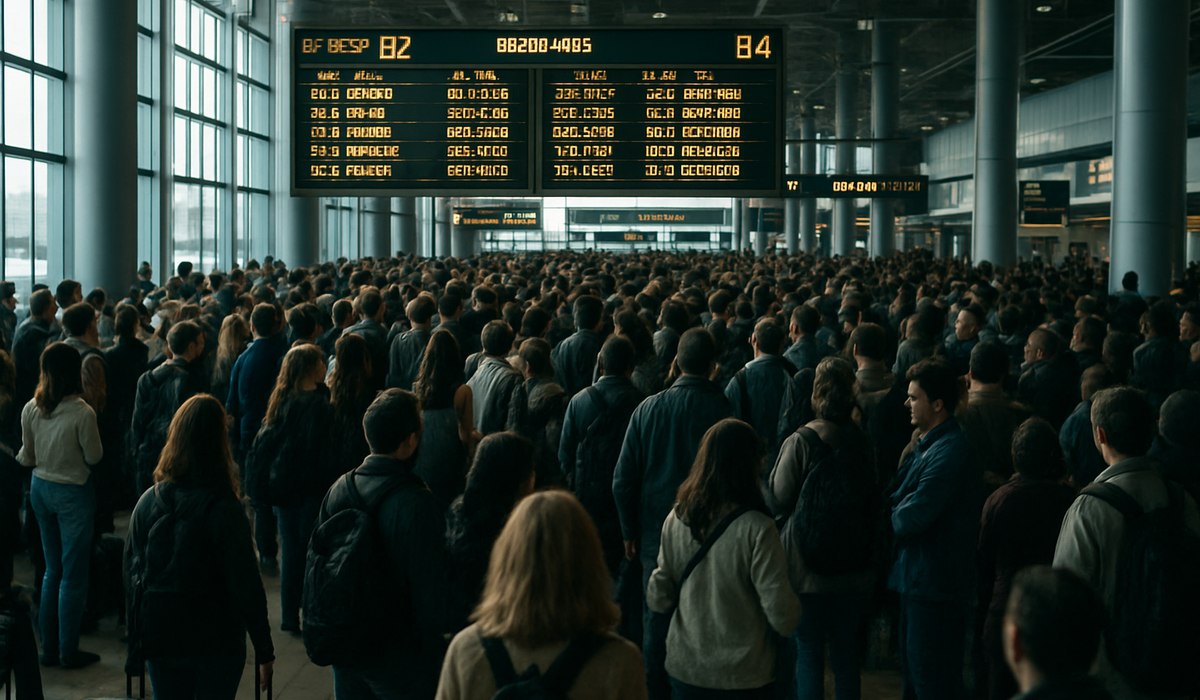
Image generated by AI
Flight Chaos Delays Hundreds at Four Major Airline Hubs
Spring 2026 brought severe flight chaos delays to four major U.S. airline hubs, stranding 477 passengers during peak travel season. Operational disruptions rippled through connecting airports in early April, exposing systemic fragility within the broader U.S. aviation network. The incident highlights how vulnerable airline schedules remain when weather, staffing, and air traffic constraints converge simultaneously. These cascading delays affected travelers heading to leisure and business destinations across the country, many missing critical onward connections.
Spring Surge Meets Strained Airline Operations
The April 2026 disruption unfolded during record-breaking spring travel demand. Airlines had added extra flights and deployed larger aircraft to capture booming passenger volumes, yet operational pressures were already mounting across the industry. Passenger advocacy organizations report that nearly one in four travelers experienced delays or cancellations in recent years, indicating how precarious schedules have become.
When weather or staffing issues emerge, the entire network becomes vulnerable. The four impacted hubs—each serving as critical connection points for at least one major airline—struggled to recover from a combination of localized storms and earlier schedule disruptions. Rolling pushbacks cascaded through departure boards, forcing crew reassignments and triggering hundreds of missed connections. Travelers found themselves stranded in busy terminal concourses, uncertain whether they would reach their final destinations.
This concentration of flight chaos delays at just four hubs amplified the passenger impact considerably. Unlike disruptions scattered across multiple airports, the cluster effect meant that recovery resources were stretched thinner, and alternative routing options became limited. For remote workers and traveling professionals dependent on arrival times, these delays created ripple effects beyond the airport itself.
Four Hub Concentration Amplifies Passenger Impact
The geographic concentration of the 477 delayed travelers at four major hubs created a magnified disruption effect. When disruptions are dispersed across a dozen airports, passengers may find alternative flights more readily available. However, the hub-and-spoke model of U.S. aviation means that sudden capacity losses at major connection points immediately cascade downstream to dozens of smaller markets.
Each of the four affected hubs serves as a primary connection point for multiple airline networks. When operations stalled at these locations, passengers with tight connection windows faced impossible situations. Airlines had limited flexibility to reroute travelers through alternative hubs because competing carriers were simultaneously managing their own disruptions.
The bottleneck phenomenon revealed in this incident reflects deeper structural challenges. Modern airline networks operate with minimal slack—aircraft are scheduled back-to-back throughout the day, and ground crews work at near-capacity levels. When one flight is delayed, the next scheduled use of that aircraft must also slip. This compression effect means that morning disruptions often contaminate afternoon and evening schedules, multiplying passenger impact exponentially.
Real-time tracking data from FlightAware documented the rolling nature of these delays, showing how initial weather impacts transformed into operational failures spanning many hours.
Weather Systems and Air Traffic Constraints Compound Delays
Weather emerged as the primary trigger for flight chaos delays throughout early April 2026. A series of fast-moving storm systems brought high winds, low visibility, and convective activity across the Midwest, Northeast, and South. These conditions prompted the Federal Aviation Administration to implement traffic management initiatives that reduced both arrival and departure rates at several major airports.
The meteorological impact was compounded by air traffic control constraints. Even temporary ground stops or flow restrictions at key hubs create prolonged knock-on effects throughout the entire system. When early-morning and midday departures face delays, crews and aircraft miss their next planned rotations. This compression reduces available staff and equipment at downline airports, creating a domino effect that extends far beyond the initial weather event.
At the four hubs linked to the 477 delayed travelers, the combination of weather-related spacing requirements and temporary congestion on departure and arrival corridors proved overwhelming. Aircraft waited extended periods for available departure slots. Boarding times were repeatedly revised as air traffic control withheld release clearances. Passengers were sometimes held on the tarmac, uncertain when—or if—they would depart.
Industry observers note that these conditions emerge predictably during peak travel seasons, but the scale of 2026 traffic volumes magnifies their impact. With runways and gate space operating near capacity, each additional minute of delay reduces operational flexibility. Carriers cannot easily reroute flights or protect missed connections when the entire system is saturated.
The FAA maintains real-time delay tracking that allows monitoring of current conditions and historical patterns.
Staffing, Security Bottlenecks, and Infrastructure Pressures Fuel Disruption
Operational pressures behind the scenes substantially contributed to flight chaos delays experienced by the 477 passengers. Staffing challenges across security screening, ramp operations, and air traffic control have intensified despite overall demand surpassing pre-pandemic benchmarks.
Security screening represents a critical vulnerability. Earlier in March 2026, federal security officials reported widespread delays as checkpoint staffing and equipment issues created hourly-long queues at major airports. While April incidents at the four hubs were more localized, the same core vulnerabilities surfaced whenever passenger flows spiked during peak times.
Ramp operations and terminal staffing created additional bottlenecks. When storms or airspace restrictions forced irregular gate usage or diversions, ground crews faced compressed windows to reset aircraft, tow equipment, and reposition vehicles. These constraints increased the risk of cascading slowdowns affecting subsequent departures.
Airport infrastructure also showed limitations. Many hubs operate gates at near-maximum utilization rates. Expanded capacity projects, improved deicing systems, and upgraded passenger-information tools are underway at numerous airports, but these improvements unfold over multiple years while high-volume disruption events occur regularly.
What This Means for Remote Workers and Traveling Professionals
Flight chaos delays create particular challenges for remote workers and business travelers who depend on predictable arrival times. Unlike leisure passengers with flexible schedules, professionals often have client meetings, conference presentations, or team collaborations scheduled on arrival days. Missing connections forces immediate rescheduling of business commitments, potentially damaging professional relationships.
The 477 travelers affected in early April 2026 likely included significant numbers of business passengers. Airlines increasingly attract corporate travel as remote work becomes more prevalent—professionals spread across multiple locations need reliable air transportation. When flight chaos delays strand these passengers, the economic impact extends beyond refund costs to include lost productivity, rescheduled meetings, and damaged client relationships.
For remote workers managing schedules across time zones, delays compound the disruption. A six-hour delay transforms a next-day arrival into late evening, eliminating work-from-hotel time and reducing recovery period before important commitments.
The incident underscores why business travelers should maintain flexible corporate policies, consider premium airline memberships for priority rebooking, and book flights with generous buffer time before critical meetings. Industry trends indicate that flight reliability pressures will likely persist as travel demand remains elevated through 2026 and beyond.
Traveler Action Checklist
When facing flight chaos delays like those affecting the 477 passengers in April 2026, consider these priority steps:
-
Monitor real-time tracking: Use FlightAware or airline apps to detect delays before heading to the airport; early awareness enables faster decision-making.
-
Contact your airline immediately: Call the reservation line or app messaging feature once delays exceed two hours; earlier communication improves rebooking options before standby lists grow long.
-
Document all costs: Save receipts for meals, hotel rooms, ground transportation, and other delay-related expenses; you may qualify for reimbursement under Department of Transportation rules.
-
Request written confirmation: Obtain written confirmation of your original flight, the new booked flight, and compensation eligibility; this documentation supports claims if airlines initially deny responsibility.
-
**Check compensation
Disclaimer
This article is for informational and educational purposes only. It does not constitute legal, financial, or professional advice. While we strive to provide accurate and up-to-date information, travel policies, regulations, and conditions change rapidly. Always verify information with official sources before making travel decisions. Nomad Lawyer makes no representations about the accuracy, reliability, completeness, or suitability of the information provided. Readers should consult qualified professionals for advice specific to their circumstances. The views expressed in this article are those of the author and do not necessarily reflect the views of Nomad Lawyer.
Raushan Kumar
Founder & Lead Developer
Full-stack developer with 11+ years of experience and a passionate traveller. Raushan built Nomad Lawyer from the ground up with a vision to create the best travel and law experience on the web.
Learn more about our team →