
Asia-Pacific Airlines Face Jet Fuel Price Shock: 5 Carriers and Divergent Financial Outcomes in 2026
Jet fuel prices have more than doubled from 2025 baselines, exposing critical vulnerabilities in hedging strategies across five major Asia-Pacific carriers as operating costs surge.

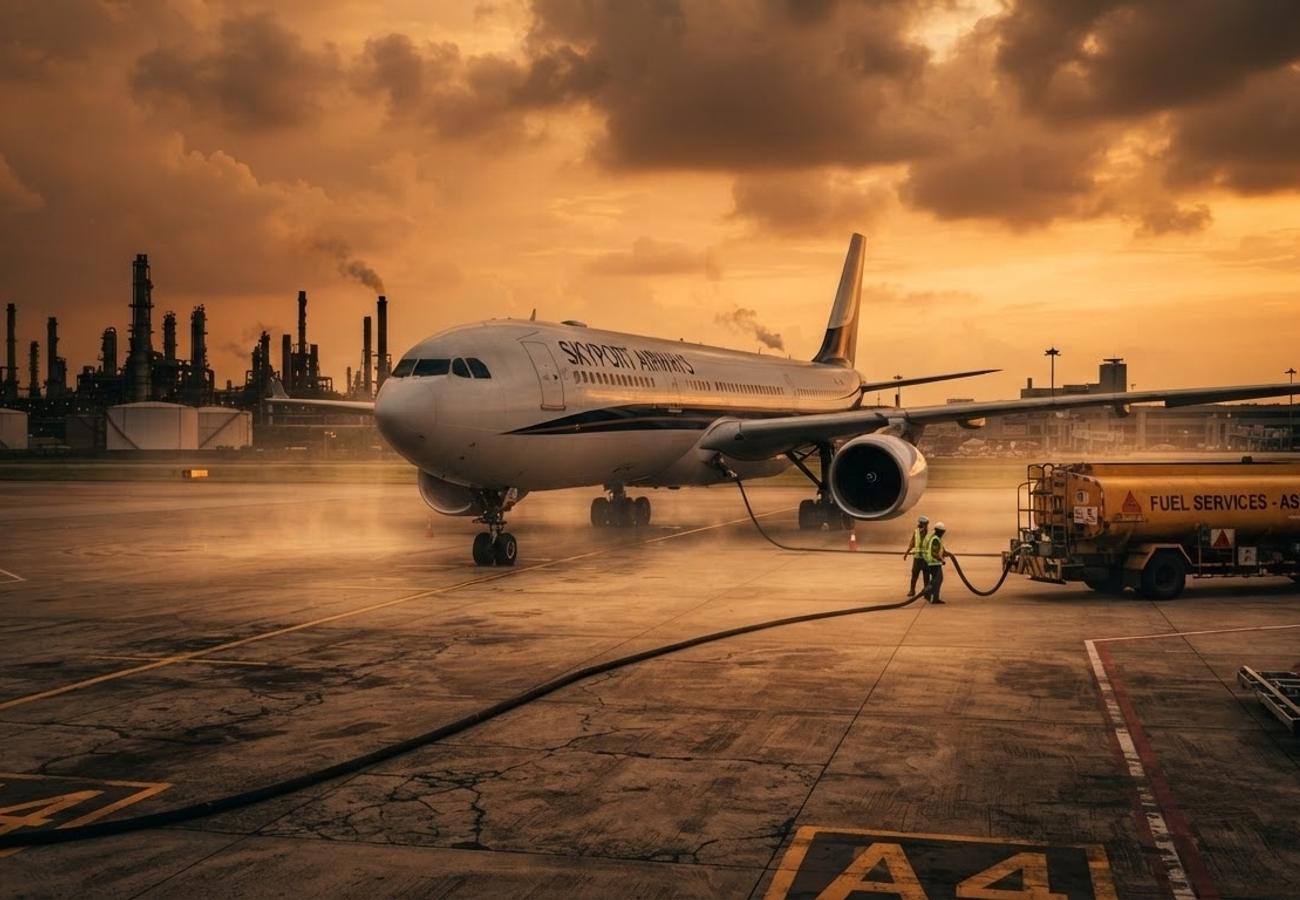
Image generated by AI
Jet fuel prices have more than doubled from their 2025 baseline, creating a financial crisis for Asia-Pacific carriers. Divergent hedging strategies and balance sheet strengths are now dictating which airlines survive the surge and which are forced to cut capacity.
The current volatility is driven by Middle East conflicts disrupting crude flows and tightening refining capacity. For most carriers, fuel represents over 25% of total operating expenses. The timing of this spike is particularly damaging, as many operators scaled back or abandoned hedging programs during the low-volatility window of 2024 and 2025.
Regional Impact and Strategic Failures
The Asia-Pacific region is currently experiencing jet fuel prices significantly above global averages due to the closure of key shipping lanes and production cuts in Gulf states. While the shock is universal, the outcomes are not.
Our analysis of the current market indicates that carriers entering 2026 unhedged, or with hedges tied solely to crude benchmarks rather than refined jet fuel, are facing the most severe margin compression.
Carrier Performance Breakdown
- Singapore Airlines (SIA): Despite disciplined hedging and forward cover on crude and jet fuel, the group has slipped into the red. The pressure stems from rolling hedging contracts and losses linked to its Air India investment.
- Japan Airlines (JAL): Utilizing a conservative hedging profile, JAL has remained exposed to spot prices. The carrier has responded by implementing temporary fuel surcharges on international tickets to pass costs to passengers.
- Cebu Pacific: The low-cost carrier secured fuel supplies through mid-2026 via inventory management and contracting. While this has prevented schedule disruptions, fares are rising in anticipation of more expensive replacement fuel.
- Asiana Airlines: Facing a fragile balance sheet, Asiana has entered an "emergency management regime." The airline has curtailed capacity on long-haul routes, specifically to North America, to conserve cash.
- Indian Carriers: Airlines in India face a double penalty: surging fuel costs combined with geopolitical airspace restrictions that force longer westbound detours to Europe, increasing total fuel burn per flight.
Comparative Fuel Management Strategies
| Airline | Primary Strategy | Immediate Outcome | Long-term Risk |
|---|---|---|---|
| Singapore Airlines | Aggressive Hedging | Softened initial blow | Hedge roll-off vs. spot prices |
| Japan Airlines | Spot Market Exposure | Rapid surcharge implementation | Price-sensitive leisure demand |
| Cebu Pacific | Physical Inventory | Short-term stability | High renewal costs post-mid-2026 |
| Asiana Airlines | Minimal Hedging | Emergency regime / Route cuts | Potential insolvency/restructuring |
| Indian Carriers | Mixed/Variable | Margin compression on EU routes | Sustained airspace detours |
Why This Matters: The Logistical Reality
For travelers and industry stakeholders, this is not merely a corporate accounting issue; it is a structural shift in how Asia-Pacific aviation operates.
From a logistical perspective, the "fuel shock" is manifesting as a tiered service decline. We are seeing a clear divide: premium carriers (like SIA) are leveraging brand equity to raise ancillary fees, while weaker carriers (like Asiana) are simply deleting routes from their maps.
For passengers on long-haul routes from India or South Korea, the real impact is a combination of higher "fuel surcharges" and reduced flight frequencies. The reliance on surcharges rather than base fare increases allows airlines to pivot quickly, but it creates price instability for the consumer.
Industry Outlook
Market trends suggest that the "buffer period" for low-cost carriers like Cebu Pacific will expire by late 2026. As these physical inventories are depleted, a second wave of fare hikes is likely.
Furthermore, the disparity in credit access is becoming a competitive weapon. Carriers with strong balance sheets can afford to ride out the volatility, while those without hedging instruments are being forced into emergency restructuring. Expect further consolidation in the South Korean and Indian markets as smaller players struggle to absorb the cost of detour-heavy routes and spot-market fuel pricing.
The aviation sector is now entering a period where financial hedging is as critical to survival as fleet efficiency.
Related Travel Guides
Disclaimer
This article is for informational and educational purposes only. It does not constitute legal, financial, or professional advice. While we strive to provide accurate and up-to-date information, travel policies, regulations, and conditions change rapidly. Always verify information with official sources before making travel decisions. Nomad Lawyer makes no representations about the accuracy, reliability, completeness, or suitability of the information provided. Readers should consult qualified professionals for advice specific to their circumstances. The views expressed in this article are those of the author and do not necessarily reflect the views of Nomad Lawyer.
Raushan Kumar
Founder & Lead Developer
Full-stack developer with 11+ years of experience and a passionate traveller. Raushan built Nomad Lawyer from the ground up with a vision to create the best travel and law experience on the web.
Learn more about our team →