
Poland's Nieśpieszny Retro Train: Slow Tourism Meets Communist-Era Heritage
PKP Intercity launches Nieśpieszny, a restored 1980s heritage train service celebrating slow tourism, authentic Polish cuisine, and cultural immersion across Poland's most scenic routes.

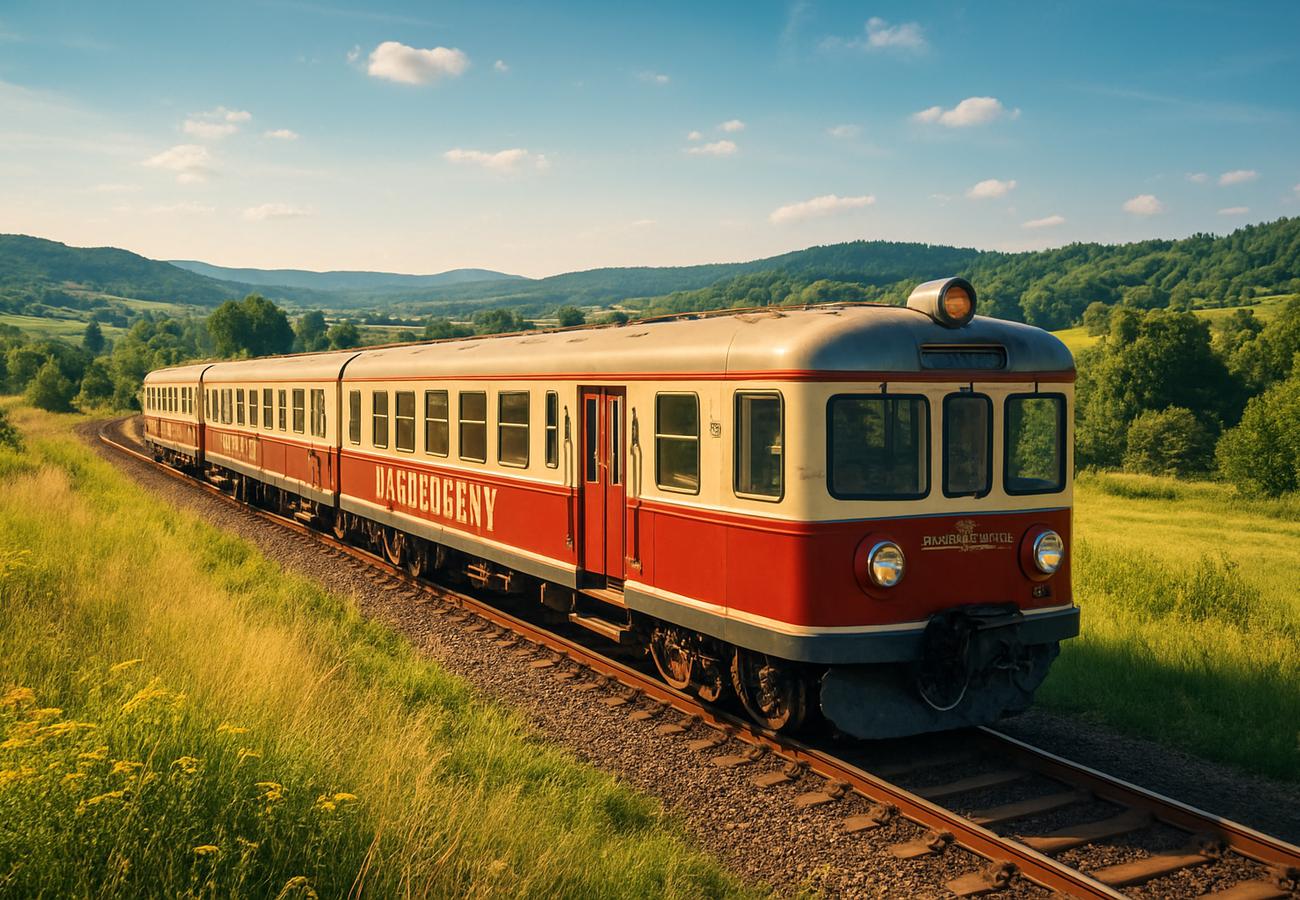
Image generated by AI
Poland's Communist-Era Train Just Became Europe's Most Authentic Slow Tourism Experience
In spring 2026, PKP Intercity — Poland's national rail operator — did something counterintuitive in an era obsessed with speed: it launched a deliberately slow train service. The Nieśpieszny (Polish for "Unhurried") is a fully restored fleet of 1980s electric locomotives and vintage carriages, now operating 40 planned weekend journeys through summer 2026. What began as a nostalgic nod to Poland's rail heritage has become a masterclass in experiential travel.
This isn't just about nostalgia. The Nieśpieszny represents a seismic shift in how tourists approach journeys — choosing depth over distance, culture over convenience, and the journey itself as the destination.
The Year of Polish Railways: Heritage Meets Modern Tourism
The Nieśpieszny project launched on April 17, 2026, anchoring Poland's Year of Polish Railways campaign. The timing is symbolic: the initiative marks both the centenary of Polish state railways and PKP Intercity's 25th anniversary. Rather than celebrate with high-speed services alone, Poland's rail leadership made a deliberate choice to resurrect a romanticized past.
Each train consists of authentic 1980s rolling stock — a period that stirs deep cultural memories for Polish travelers and global railway enthusiasts. The modernization strategy is deliberately restrained. Original design elements, compartment layouts, color schemes, and even period-appropriate signage remain intact. Contemporary safety systems and reliability upgrades operate invisibly beneath the vintage veneer.
Reddit: "Finally, a train journey that treats the experience as more important than arrival time." — r/travel
This approach positions Nieśpieszny as a distinct competitor in the heritage tourism market, where authenticity commands premium pricing and fierce loyalty.
Slow Tourism Philosophy: The Antidote to Speed
The global travel industry has fundamentally changed. Mainstream tourism prioritizes destination stacking and rapid transit between Instagram-worthy locations. Nieśpieszny inverts this model entirely.
Slow tourism — the philosophy anchoring this service — emphasizes deep cultural immersion, unhurried exploration, and meaningful human connection. Passengers spend extended hours onboard, watching Polish landscapes unfold through fully openable windows (a rarity in modern rail stock), engaging in genuine conversations with fellow travelers, and sharing meals in communal dining spaces.
This strategy deliberately targets a growing demographic: affluent travelers aged 35-65 seeking alternatives to mainstream city tourism. International visitors from Germany, Austria, and the UK have emerged as early adopters, according to preliminary PKP Intercity ridership data.
Onboard Dining: Where WARS Heritage Meets Nostalgia
The culinary experience aboard Nieśpieszny is where memory becomes tangible. WARS — a legendary Polish catering company operating since 1948 — manages the dining car, curating menus that evoke 1980s comfort.
Classic dishes dominate: żurek (sour rye soup), bigos (hunter stew with game and cabbage), and fried eggs with dill potatoes. Traditional Polish beverages complete the journey through taste. The dining car itself functions as a social anchor — passengers linger, converse, and form connections over shared meals and period-appropriate tableware.
One first-time passenger noted the transformative effect: "You're not just eating dinner. You're experiencing how Polish families traveled together thirty years ago."
The compartments themselves enhance this sensory journey. Original upholstery in period colors, vintage luggage racks, reading lamps, and those functional windows create an atmosphere impossible to replicate in contemporary rail design. The tactile details — wooden armrests, manual window latches, original door hardware — transport travelers across four decades instantaneously.
Routes Through Poland's Diverse Cultural Landscape
Nieśpieszny winds through multiple Polish regions, each offering distinct cultural and geographical experiences. Routes span from the forested southern highlands to Baltic Sea coastal cities, deliberately alternating weekly to expose passengers to different regions.
Poznań anchors one route cluster — famous for St Martin's croissants (pączki) and Renaissance architecture. Gdańsk showcases Baltic maritime heritage with its revitalized old town, while Toruń presents medieval charm along the Vistula River. Wrocław, the cultural capital of Lower Silesia, completes the major city circuit.
Smaller towns and intermediate stops hold equal importance in the itinerary design. Passengers disembark at regional villages to explore local markets, historic sites, and traditional architecture — experiences that mainstream tourism packages typically exclude.
Accessibility and Ticketing: Democratizing Heritage Travel
Ticket sales launched in March 2026 through PKP Intercity's official channels — website, mobile app, and station ticket offices. The operator has prioritized accessibility across multiple ticket classes and promotional pricing tiers, deliberately avoiding the premium-only trap that isolates heritage experiences.
Themed journeys expand the appeal: photography-focused expeditions for visual storytellers, family-friendly services featuring onboard activities for children, and group packages designed for tour operators across Central Europe. Integration into multi-destination European itineraries signals PKP Intercity's ambition to position Nieśpieszny as a circuit-breaker experience within larger travel programs.
The Broader Rail Modernization Context
While Nieśpieszny celebrates the past, PKP Intercity continues aggressive modernization across other services. High-speed and hybrid rolling stock deployments improve frequency and efficiency on major corridors. The company recently received recognition at the Rail Champion Award in Brussels for its contribution to European rail networks.
This dual strategy — cutting-edge infrastructure paired with heritage experiences — reflects sophisticated market segmentation. Speed-focused travelers have modern options. Experience-seeking travelers now have Nieśpieszny. The coexistence strengthens Poland's broader rail ecosystem and reinforces the country's status as a strategic European mobility hub.
Why Travelers Are Choosing Unhurried Over Efficient
The Nieśpieszny phenomenon reveals a fracture in contemporary travel psychology. Instagram culture and bucket-list tourism have exhausted themselves. Savvy travelers now recognize that racing through twelve European cities produces twelve forgettable experiences — not twelve adventures.
Nieśpieszny's model inverts this calculus: spend 48 hours on a single train journey, learning regional history through conversation, tasting authentic cuisine, and observing landscape transformation in real-time. The memories generated exceed those of typical multi-destination tours by orders of magnitude.
Early data suggests strong demand. Booking windows for summer 2026 journeys filled rapidly, particularly for May and June departures. International booking patterns indicate particular interest from Scandinavian, German, and British travelers — markets with high disposable income and demonstrated preference for experiential tourism.
A Template for European Heritage Tourism
Nieśpieszny's success will likely trigger imitation. Other European rail operators — particularly in Austria, Switzerland, and Germany — operate heritage services, but none integrate authentic dining cars, regional cultural programming, and weekly route variation with such intentionality.
Poland has positioned itself as the primary innovator in slow rail tourism. This distinction matters for destination branding, particularly as Europe's overtourism crisis intensifies. Cities like Prague, Vienna, and Budapest face visitor saturation and infrastructure stress. Nieśpieszny offers a distributed tourism model: passengers spread across regional towns and villages, spending locally, and bypassing congested urban centers entirely.
Poland's reluctance to rush just became Europe's most compelling travel argument.
Related Travel Guides
CDC Warns: Medical Tourism Surgery Risks Include Infections, Blood Clots
Disclaimer
This article is for informational and educational purposes only. It does not constitute legal, financial, or professional advice. While we strive to provide accurate and up-to-date information, travel policies, regulations, and conditions change rapidly. Always verify information with official sources before making travel decisions. Nomad Lawyer makes no representations about the accuracy, reliability, completeness, or suitability of the information provided. Readers should consult qualified professionals for advice specific to their circumstances. The views expressed in this article are those of the author and do not necessarily reflect the views of Nomad Lawyer.
Raushan Kumar
Founder & Lead Developer
Full-stack developer with 11+ years of experience and a passionate traveller. Raushan built Nomad Lawyer from the ground up with a vision to create the best travel and law experience on the web.
Learn more about our team →