
Fiji Transforms into Global Sports Tourism Hub in 2026: Suva and Lautoka Lead Expansion
Fiji is aggressively expanding its sports tourism sector in 2026, leveraging Suva's athletics growth, the Fijian Drua's rugby surge in Lautoka, and elite surfing at Cloudbreak to drive international visitation.

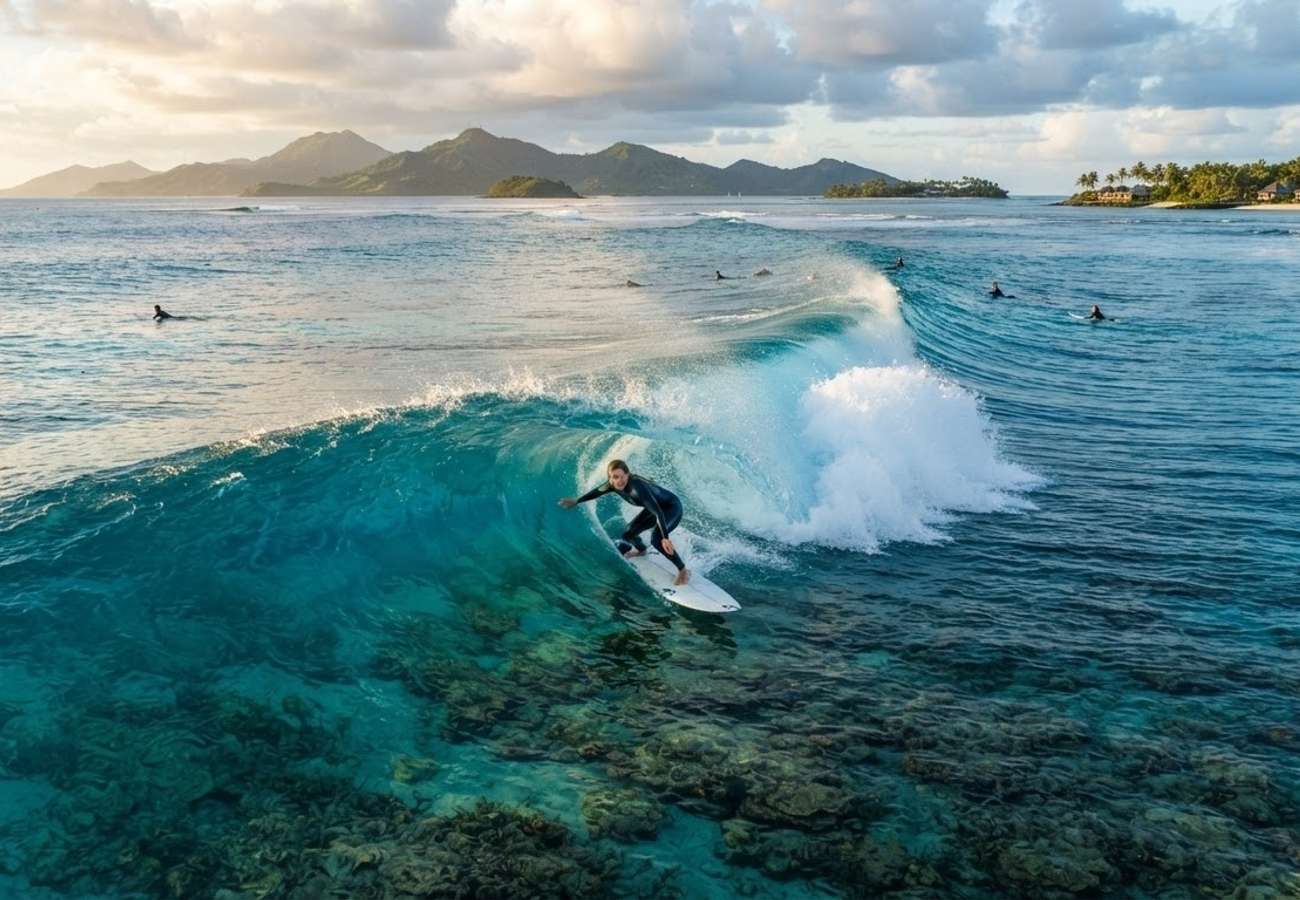
Image generated by AI
Fiji is aggressively diversifying its economy in 2026 by transforming into a premier global sports tourism destination, utilizing a strategic blend of high-profile international competitions and its natural geography. From the urban tracks of Suva to the reef breaks of the Mamanuca Islands, the archipelago is seeing a massive influx of international athletes and spectators, driving significant economic growth across multiple provinces.
Historically known primarily for leisure and honeymoon travel, Fiji has shifted its strategy to target "active" travelers. This transition is evident in the way the nation has decentralized its sporting events, ensuring that economic benefits reach beyond the main tourist hubs of Nadi and Denarau. By integrating professional rugby, world-class surfing, and endurance athletics into its national tourism brand, Fiji is positioning itself as a competitive alternative to traditional sports destinations in the Asia-Pacific region.
Suva Emerges as Pacific Athletics and Marathon Center
The capital city of Suva has undergone a significant rebranding in 2026, moving beyond its role as a political center to become a hub for endurance sports. The primary catalyst for this change is the Rexona Suva Marathon, held on August 8, which has evolved into a major economic engine for the city. By converting major urban thoroughfares into race tracks, city officials have created a festival atmosphere that attracts thousands of international runners and corporate teams.
Beyond the marathon, Athletics Fiji has implemented a rigorous 14-event calendar for 2026. These events, hosted at the HFC Bank Stadium and Albert Park, include critical trials for the Oceania and Commonwealth games. This strategic focus on qualifying events ensures a steady stream of high-spending visitors, including professional coaches, athletic delegations, and international media, cementing Suva's status as a serious competitive athletics venue.
Lautoka and Ba Leverage Super Rugby Pacific Momentum
In the western division of Viti Levu, the passion for rugby has been commercialized through the success of the Fijian Drua in the Super Rugby Pacific tournament. For 2026, the cities of Lautoka and Ba have become essential strongholds for the franchise, turning local stadiums into high-revenue zones.
Churchill Park in Lautoka served as the epicenter for the season's start, hosting the opener against Moana Pasifika in February. Simultaneously, Govind Park in Ba hosted high-stakes fixtures against the Highlanders and the ACT Brumbies. This surge in professional rugby has forced a rapid upgrade of local infrastructure and hospitality services. Local vendors and hotels in these sugar-producing regions report peak capacity during match days, proving that professional sports can drive tourism into secondary cities that were previously overlooked by international travelers.
Coral Coast Maintains Dominance in Rugby 7s
While professional 15s rugby thrives in the west, Sigatoka and the Coral Coast remain the undisputed home of Rugby 7s. The Coral Coast 7s, held every January at Lawaqa Park, continues to be a primary draw for sports tourists in 2026. The tournament is unique for its blend of grassroots Fijian talent and international prestige, featuring the national 7s team alongside invitational squads from the United States, New Zealand, and Australia.
The local hospitality sector has adapted by creating "rugby-centric" tourism packages. Resorts in the Sigatoka area now offer bundled deals that include VIP stadium access and cultural experiences, ensuring that the sporting event translates directly into extended hotel stays and increased local spending.
Fiji Sports Tourism Destinations and Key Events 2026
| City / Region | Sporting Focus | Key Events & Activities in 2026 | Primary Venues / Locations |
|---|---|---|---|
| Suva | Athletics, Rugby, Marathon | Rexona Suva Marathon (Aug 8); Super Rugby Pacific; 14 Athletics Fiji events | Albert Park, HFC Bank Stadium |
| Lautoka | Professional Rugby | Super Rugby Pacific: Season opener vs Moana Pasifika (Feb) | Churchill Park |
| Ba | Professional Rugby | Super Rugby Pacific: Fixtures vs ACT Brumbies and Highlanders | Govind Park |
| Denarau Island | Golf, Water Sports | Fiji Golf Classic (July 30 – Aug 1); Luxury golf tours | Denarau Golf & Racquet Club |
| Sigatoka | Rugby 7s, River Sports | Coral Coast 7s (January); Jet boat safaris | Lawaqa Park, Sigatoka River |
| Mamanuca Islands | Elite Surfing | 2026 Fiji Pro (WSL Championship Tour) | Cloudbreak (Tavarua) |
| Yasawa & Beqa | Eco-Sports, Adventure | Shark diving, Waya Island hiking, coral planting | Kuata Island, Beqa Lagoon, Waya Island |
Cloudbreak and the Return of the World Surf League
The Mamanuca Islands reclaimed their spot on the global stage in August 2026 with the return of the Fiji Pro as part of the World Surf League (WSL) Championship Tour. The event, centered at the legendary Cloudbreak reef break, brought global visibility to Fiji's offshore capabilities.
The 2026 tour featured elite surfers such as Vahine Fierro and Erin Brooks, alongside local wildcards Teo Degei and Ulukilupetea “Tea” Kurop. The economic impact of the WSL tour extends far beyond the competition itself, providing a massive revenue boost to specialized surf guides, boat operators, and luxury island resorts like Namotu and Tavarua. This reinforces Fiji's position not just as a vacation spot, but as a high-stakes arena for professional extreme sports.
Luxury Golf and Eco-Adventure Expansion
Fiji is also targeting the high-net-worth demographic through luxury sports. Denarau Island and Natadola Bay have focused on the Fiji Golf Classic, held from July 30 to August 1, 2026. By offering "stay and play" packages that link five-star resorts with championship courses, Fiji is competing directly with traditional luxury golf destinations in the Caribbean and Hawaii.
Parallel to this luxury push is the growth of decentralized adventure sports in the Yasawa and Beqa Islands. Waya Island has become a destination for extreme trekking due to its grueling volcanic trails. In the waters of Beqa Lagoon and Kuata Island, the focus has shifted toward "eco-sports," where shark diving and open-water swimming are paired with conservation efforts, such as the Loloma Hour coral planting initiatives.
Why This Matters: The Shift in Traveler Behavior
For the modern traveler, this shift means Fiji is no longer just a destination for relaxation, but a place for active engagement. From a logistical standpoint, the decentralization of events—moving them from Nadi to Suva, Ba, and the outer islands—reduces the pressure on a single hub and spreads wealth across the archipelago.
For the sports enthusiast, this creates a "pilgrimage" effect. Whether it is a rugby fan traveling to the authentic atmosphere of Govind Park or a surfer tackling the heavy barrels of Cloudbreak, the experience is rooted in authenticity rather than curated tourism. This strategy effectively increases the "average length of stay" for visitors, as sports tourists typically remain in-country longer to follow tournament brackets or train for endurance events.
Fiji's strategic pivot to sports tourism is transforming the nation from a passive paradise into an active global arena.
Related Travel Guides
Disclaimer
This article is for informational and educational purposes only. It does not constitute legal, financial, or professional advice. While we strive to provide accurate and up-to-date information, travel policies, regulations, and conditions change rapidly. Always verify information with official sources before making travel decisions. Nomad Lawyer makes no representations about the accuracy, reliability, completeness, or suitability of the information provided. Readers should consult qualified professionals for advice specific to their circumstances. The views expressed in this article are those of the author and do not necessarily reflect the views of Nomad Lawyer.
Kunal K Choudhary
Co-Founder & Contributor
A passionate traveller and tech enthusiast. Kunal contributes to the vision and growth of Nomad Lawyer, bringing fresh perspectives and driving the community forward.
Learn more about our team →