
Face Fuel Crunch: UK and EU Airlines Confront Hormuz Crisis
European airports face critical jet fuel shortages as Hormuz strait closure disrupts 25-30% of aviation fuel supply in 2026. UK and EU airlines brace for travel delays and potential recession.

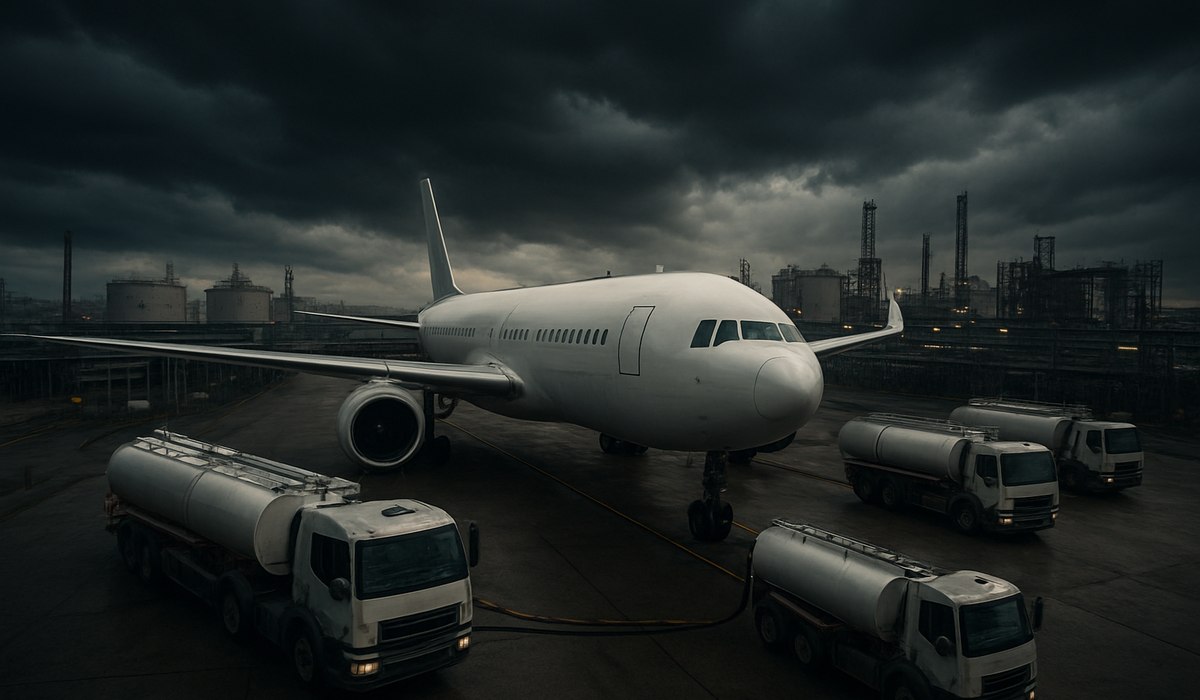
Image generated by AI
European Airlines Face Critical Jet Fuel Shortage Within Three Weeks
European airports and carriers are confronting a systemic jet fuel crisis as the Strait of Hormuz closure intensifies supply disruptions across the continent. The face fuel crunch threatens to ground flights and spike airfares throughout the United Kingdom and European Union within the next three weeks, according to urgent warnings from Airports Council International Europe. Between 25 and 30 percent of Europe's aviation fuel originates from or transits through the Persian Gulf, leaving the region critically exposed to prolonged shipping disruptions. Industry analysts warn that unless the chokepoint reopens soon, storage tanks across major European hubs will deplete faster than suppliers can replenish them, triggering widespread flight cancellations and potential recession risks.
Three-Week Countdown: Europe's Jet Fuel Crisis Timeline
The timeline for resolution has become increasingly urgent as aviation fuel reserves dwindle across European airports. Storage facilities in major hub cities are being drawn down at unprecedented rates since late February when the Hormuz strait effectively closed to commercial traffic. Although a conditional ceasefire between the United States and Iran was announced, insurance companies and tanker operators have not yet resumed large-scale shipping through the chokepoint. This hesitation leaves the market in limbo precisely when the busy summer travel season approaches, compounding operational challenges for carriers already dealing with elevated fuel costs.
Industry sources indicate that if the strait remains closed beyond three weeks, fuel rationing at airports could force airlines to cancel or consolidate routes. The Airports Council International Europe's letter specifically highlights this critical window, noting that alternative shipping routes through longer pipelines cannot replace lost capacity in the short term. Meanwhile, jet fuel prices remain volatile, reflecting market uncertainty about supply restoration. Carriers have already begun adjusting schedules for late spring travel, signaling early preparation for potential broader disruptions ahead.
Gulf Supplies Account for Quarter of Europe's Aviation Fuel
The Strait of Hormuz serves as the lifeline for European aviation infrastructure, with approximately one-quarter to one-third of the continent's jet fuel normally flowing from or through the Persian Gulf region. This dependency underscores how quickly disruptions at the chokepoint cascade throughout European airports and airlines. Publicly available analyses from aviation bodies and energy consultancies confirm these supply chains lack redundancy for extended closures.
Refineries across Europe now face competing pressures to allocate limited crude supplies between diesel, gasoline, and jet fuel production. When crude imports drop significantly, refinery margins compress, forcing difficult choices about which fuel types to prioritize. Aviation fuel often becomes secondary to consumer-facing products like gasoline, potentially creating sharper shortages for the industry. The German industrial base and Italian energy infrastructure—both historically dependent on Gulf sourcing—face particular exposure to prolonged disruptions.
The economic implications extend beyond aviation. According to recent reporting from the International Energy Agency, energy market stress from the 2026 Iran conflict has already driven sharp increases in European gas and power prices compared to pre-crisis levels. These elevated energy costs filter quickly into consumer inflation, threatening economies already struggling with sluggish growth and persistent price pressures.
Recession Risks Mount as Energy Markets Face Extended Disruption
Economists and financial institutions have begun warning that the face fuel crunch could push the United Kingdom and key EU economies toward recession if the Hormuz crisis extends beyond the critical three-week window. The UK, though no longer an EU member, remains tightly integrated into shared aviation and energy networks dependent on Gulf supplies. Reporting from financial think tanks notes that the country's vulnerability to energy shocks—combined with recent weak growth—increases recession risk from sustained fuel price elevation.
Higher transport and energy costs are already filtering into airfares and freight charges as carriers attempt to pass fuel surcharges to consumers. For economies with persistent inflation challenges, another external energy shock represents a serious downside risk. However, current analyses suggest the immediate three-week horizon is unlikely to trigger systemic collapse. Instead, most economists frame the situation as a "gradual squeeze" that becomes recessionary only if the Hormuz closure persists beyond April or if financial markets lose confidence in government policy responses.
Germany faces particular vulnerability given its export-driven economy and industrial reliance on stable energy costs. France's aviation sector, one of Europe's largest, depends heavily on accessible jet fuel supplies. Spain and Italy confront similar energy dependencies inherited from historical Gulf sourcing patterns. The compound effect across these major economies multiplies recession risks, particularly if summer travel demand collides with constrained fuel availability and elevated prices.
Airlines and Airports Brace for Travel Disruptions
Major European carriers have already begun contingency planning, with some UK-linked airlines and regional operators canceling or consolidating services into late spring to manage fuel exposure. These early cuts represent a warning signal of broader disruptions if the face fuel crunch intensifies beyond current forecasts. Flight reductions directly impact travelers through limited seat availability, higher ticket prices, and possible itinerary changes.
Airports are implementing fuel allocation protocols to stretch existing reserves across competing carriers. Some facilities have begun prioritizing longer-haul and connecting flights over regional services, a strategy that will likely disadvantage European leisure travelers. Airlines are also adjusting cargo policies, with some carriers reducing freight capacity to prioritize passenger services during fuel constraints.
Travelers should expect increased volatility in airfare pricing as markets price in fuel surcharges and supply uncertainty. Holiday bookings and summer vacation plans may face availability pressures, particularly on European routes. Ground transportation alternatives—including trains and coaches—may see increased demand as air travel becomes less accessible or more expensive. The logistics industry, dependent on air freight for time-sensitive cargo, is also implementing contingency plans, potentially affecting delivery times for consumer goods and business supplies across Europe.
| Metric | Current Status | Impact Zone | Risk Level |
|---|---|---|---|
| Hormuz Strait Traffic | Effectively Closed | European Aviation | Critical |
| European Jet Fuel from Gulf | 25-30% of Supply | UK & EU Airlines | High |
| Storage Tank Depletion Rate | Accelerating | Major Hubs | Increasing |
| Time to Systemic Shortage | 3 Weeks | Continental Europe | Imminent |
| Alternative Route Capacity | 40-50% of Lost Volume | Energy Markets | Insufficient |
| Recession Probability (if closure extends) | 35-45% | UK & Major EU | Moderate-High |
| Summer Travel Season Proximity | 6-8 Weeks | Leisure Travelers | Medium-High |
What This Means for Travelers
The face fuel crunch creates immediate and evolving challenges for anyone planning European travel during spring and summer 2026. Here's what you need to know:
-
Book flights immediately if travel dates are fixed. Seat availability will likely tighten as carriers reduce capacity, and fuel surcharges will push prices higher. Securing reservations now protects you against worse options later.
-
Expect airfare increases across European routes. Airlines are layering fuel surcharges onto base fares to offset elevated operating costs. Budget-conscious travelers should compare prices daily, as volatility will remain elevated.
-
Consider alternative routes and transportation modes. Instead of flying directly, explore rail options via companies like Eurail or Renfe, particularly for Western European routes where train infrastructure is robust. Coach services offer budget alternatives.
-
Build extra time into connections. Potential fuel constraints may force schedule adjustments, increasing the likelihood of missed connections. Opt for longer layovers and direct flights where possible.
-
Monitor airline announcements and maintain trip flexibility. Carriers may cancel or consolidate specific routes with little notice. Travel insurance covering cancellations and delays becomes increasingly valuable during this period.
-
Avoid peak summer weeks if possible. Traveling in June rather than July, or in early May instead of late May, may yield better availability and pricing before supply constraints peak.
Frequently Asked Questions
**How long will the Hormuz
Disclaimer
This article is for informational and educational purposes only. It does not constitute legal, financial, or professional advice. While we strive to provide accurate and up-to-date information, travel policies, regulations, and conditions change rapidly. Always verify information with official sources before making travel decisions. Nomad Lawyer makes no representations about the accuracy, reliability, completeness, or suitability of the information provided. Readers should consult qualified professionals for advice specific to their circumstances. The views expressed in this article are those of the author and do not necessarily reflect the views of Nomad Lawyer.
Preeti Gunjan
Contributor & Community Manager
A passionate traveller and community builder. Preeti helps grow the Nomad Lawyer community, fostering engagement and bringing the reader experience to life.
Learn more about our team →