
European River Cruise Sector Shifts Toward Active Cycling Models
Analysis of the rise in active river cruising in Europe. Key data on Riverside's 2027 Danube programme, Uniworld partnerships, and Austrian tourism recovery.
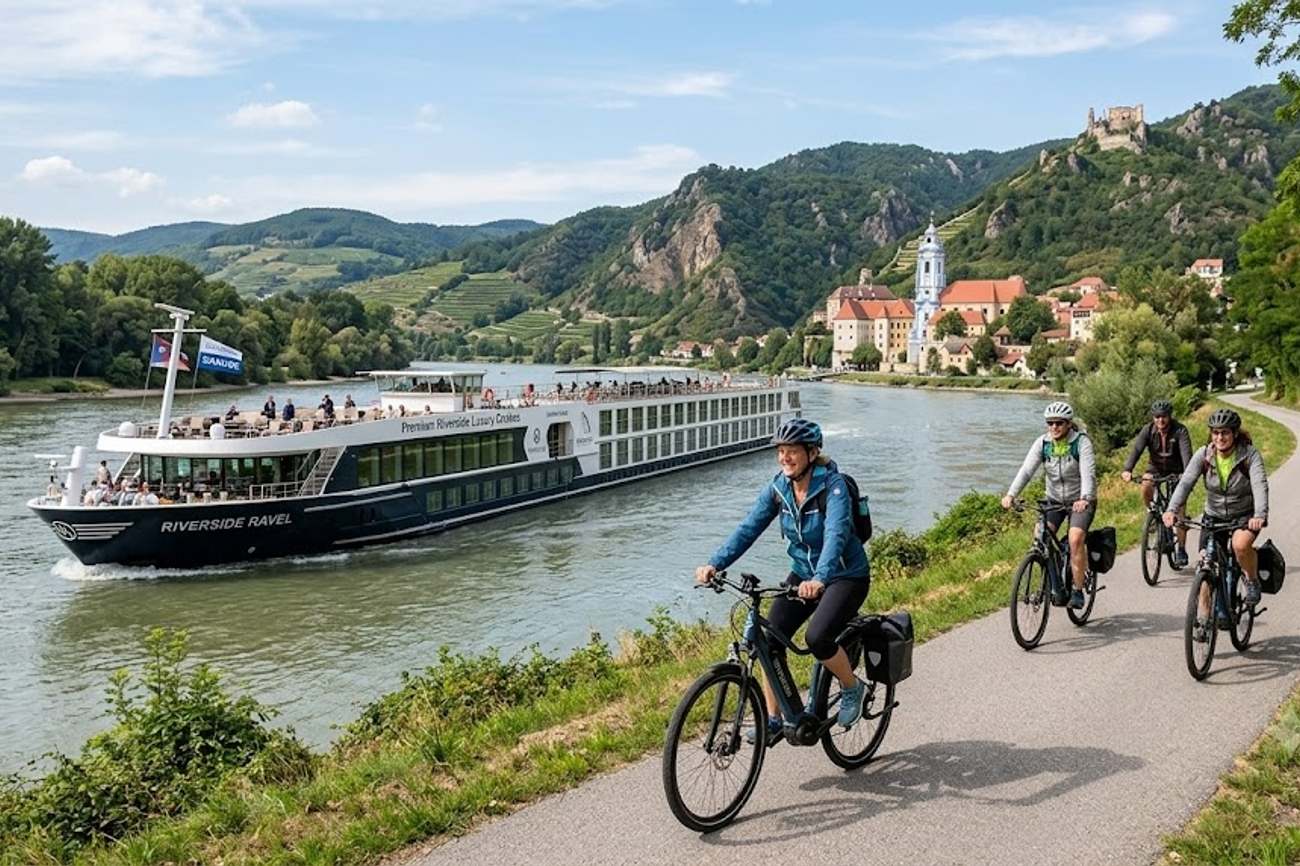
Image generated by AI
The Disruption of Traditional Cruising
The traditional model of river cruising—characterized by coach tours and sedentary sightseeing—is being disrupted by a surge in demand for active experiences. Leading operators are now integrating cycling as a core product rather than an optional shore excursion.
This shift is most evident in the 2027 programming for the Danube region, where luxury vessels are being repurposed as mobile hotels for long-distance cycling expeditions.
Flight & Route Impact Breakdown
Analysis of current and upcoming active cruise deployments reveals a concentration of activity in Central Europe:
- Riverside Active (Riverside Mozart):
- Launch Date: 22 July 2027.
- Primary Route: Passau to Budapest (Combined 14-night itinerary).
- Cycling Volume: 650+ km total; daily ranges between 29–100 km (18–62 miles).
- Key Hubs: Passau, Linz, Vienna, Bratislava, and Budapest.
- Uniworld Boutique River Cruises:
- Partnership: Butterfield & Robinson.
- Tech Integration: Samsung Galaxy tablets with RideWithGPS preloaded.
- Focus: Rhine and European countryside itineraries.
- AmaWaterways:
- Fleet Status: First operator to provide a full fleet of complimentary bicycles.
- Featured Route: 18-mile Melk-to-Dürnstein ride (Wachau Valley, Austria).
Passenger Rights & Advisory
For the passenger transitioning from a standard cruise to an active cycling cruise, the contractual and operational expectations change. Our analysis of the industry shift suggests the following:
- Equipment Liability: Passengers using personal bicycles must verify onboard storage dimensions and insurance coverage for transit. Those using provided e-bikes should confirm the scope of the operator's liability for mechanical failure during guided rides.
- Support Frameworks: High-end active cruises (such as Riverside and Uniworld) now include dedicated safety vehicles and cycling guides. Passengers should ensure their booking explicitly includes "support vehicle" access to avoid out-of-pocket costs for emergency transfers.
- Flexibility Clauses: Unlike fixed coach tours, active models allow for "variable effort." Passengers should confirm in writing that they can opt-out of a cycling stage for a standard excursion without forfeiting the daily cruise fare.
Industry Analyst View
The growth of active cruising is supported by broader tourism recovery data. According to Statistics Austria, tourism-year arrivals rose from 20.03 million in 2021 to 47.71 million in 2025. For the calendar year 2025, arrivals reached 48.17 million with 157.29 million overnight stays.
While global ocean-going cruise volume hit a record 37.2 million in 2025 (per CLIA), the river sector is differentiating itself through "slow travel" and physical wellness. By removing the logistical friction of luggage transport and hotel changes, operators are capturing a demographic that previously avoided cruising due to its perceived passivity.
Related Travel Guides
Disclaimer
This article is for informational and educational purposes only. It does not constitute legal, financial, or professional advice. While we strive to provide accurate and up-to-date information, travel policies, regulations, and conditions change rapidly. Always verify information with official sources before making travel decisions. Nomad Lawyer makes no representations about the accuracy, reliability, completeness, or suitability of the information provided. Readers should consult qualified professionals for advice specific to their circumstances. The views expressed in this article are those of the author and do not necessarily reflect the views of Nomad Lawyer.